Conceptual Framework of REVERSA
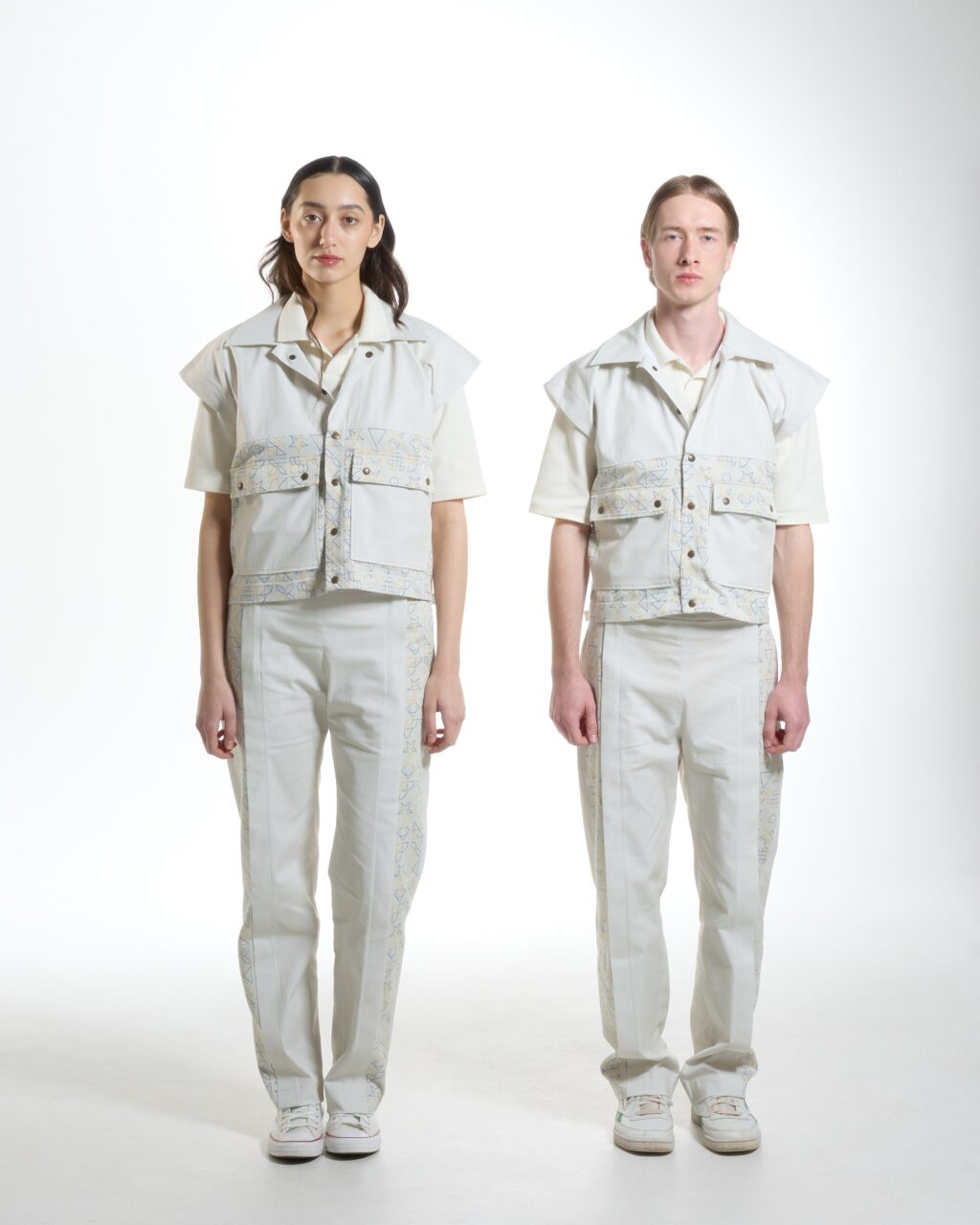
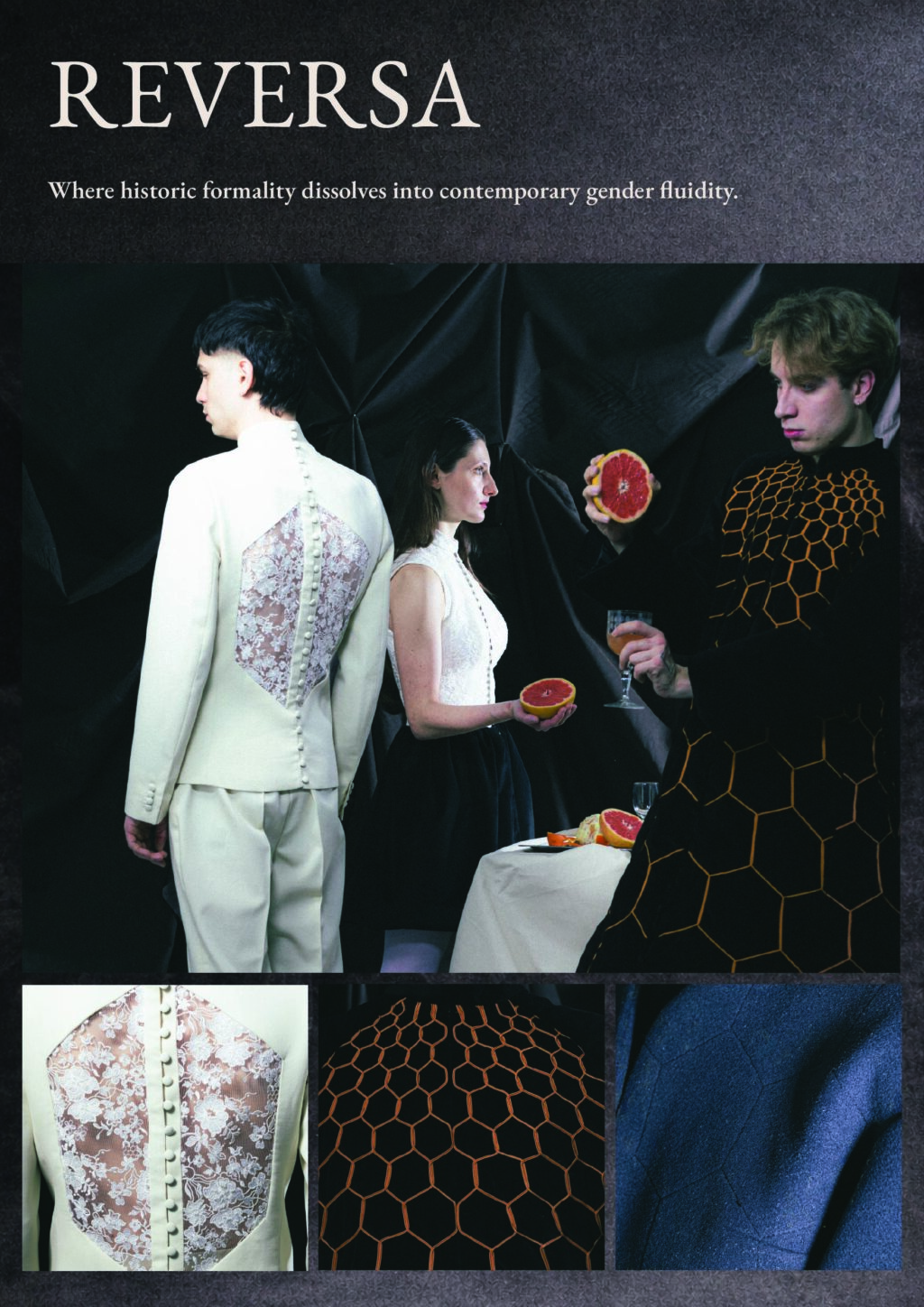
The REVERSA collection by Tomáš Maliňak is built on the concept of gender-fluid tailoring. It reinterprets historical identity through a contemporary design perspective and explores the evolution of gender roles across four distinctive garments.
The collection draws inspiration from the strict silhouettes of Renaissance Spain. However, instead of copying historical forms, it softens and transforms them through a modern authorial approach. The result is a focused exploration of cut, proportion, and garment construction. Rather than relying on decoration, REVERSA enters a broader discussion about identity, power, and social hierarchy through tailoring.
Historical Inspiration and Constructive Reversal
Fashion in Renaissance Spain was defined by rigidity, verticality, and controlled silhouettes. Clothing functioned as a clear marker of social status and gender identity. REVERSA does not imitate these codes. Instead, it analyzes and reinterprets them.
The collection reverses traditional archetypes by transferring feminine construction principles into menswear and masculine structures into womenswear. This is not a surface-level exchange of design elements. It is a structural intervention in tailoring logic. Through this reversal, gender-fluid tailoring becomes an architectural method that challenges fixed gender categories.
Silhouette as a Design Method
Each of the four garments represents a study of proportion and structure. The designs reference corseted forms, elongated torsos, sharply defined shoulders, and voluminous skirts. However, their structural application is intentionally inverted.
The body no longer serves as a carrier of stereotype. Instead, it becomes a space for experimentation. In REVERSA, gender-fluid tailoring functions as a methodology. It systematically redefines what traditional tailoring has labeled as “masculine” or “feminine.”
Material Strategy and Contemporary Fashion Context
The material selection reflects Renaissance aesthetics while introducing a modern interpretation. Structured fabrics, contrasting textures, and precise detailing evoke historical nobility and authority.
At the same time, playful and individualized elements disrupt this rigidity. These interventions reflect a contemporary understanding of identity as fluid and evolving. As a result, the collection connects to the broader discourse on gender-fluid fashion and progressive tailoring practices.
Social Relevance of Gender-Fluid Tailoring
REVERSA responds to changing perceptions of gender roles in contemporary society. During the Renaissance, clothing reinforced hierarchy and social control. Today, identity is increasingly understood as fluid rather than fixed.
Through its structural reversals, the collection symbolizes gender equality and flexibility. The transformation of historical forms becomes more than an aesthetic choice. It represents a visible shift in social thinking and reflects the growing importance of gender-fluid tailoring in contemporary fashion design.





https://www.instagram.com/reel/DFiuYUpITct/?igsh=bmVjN3ZoeGpjbzJp