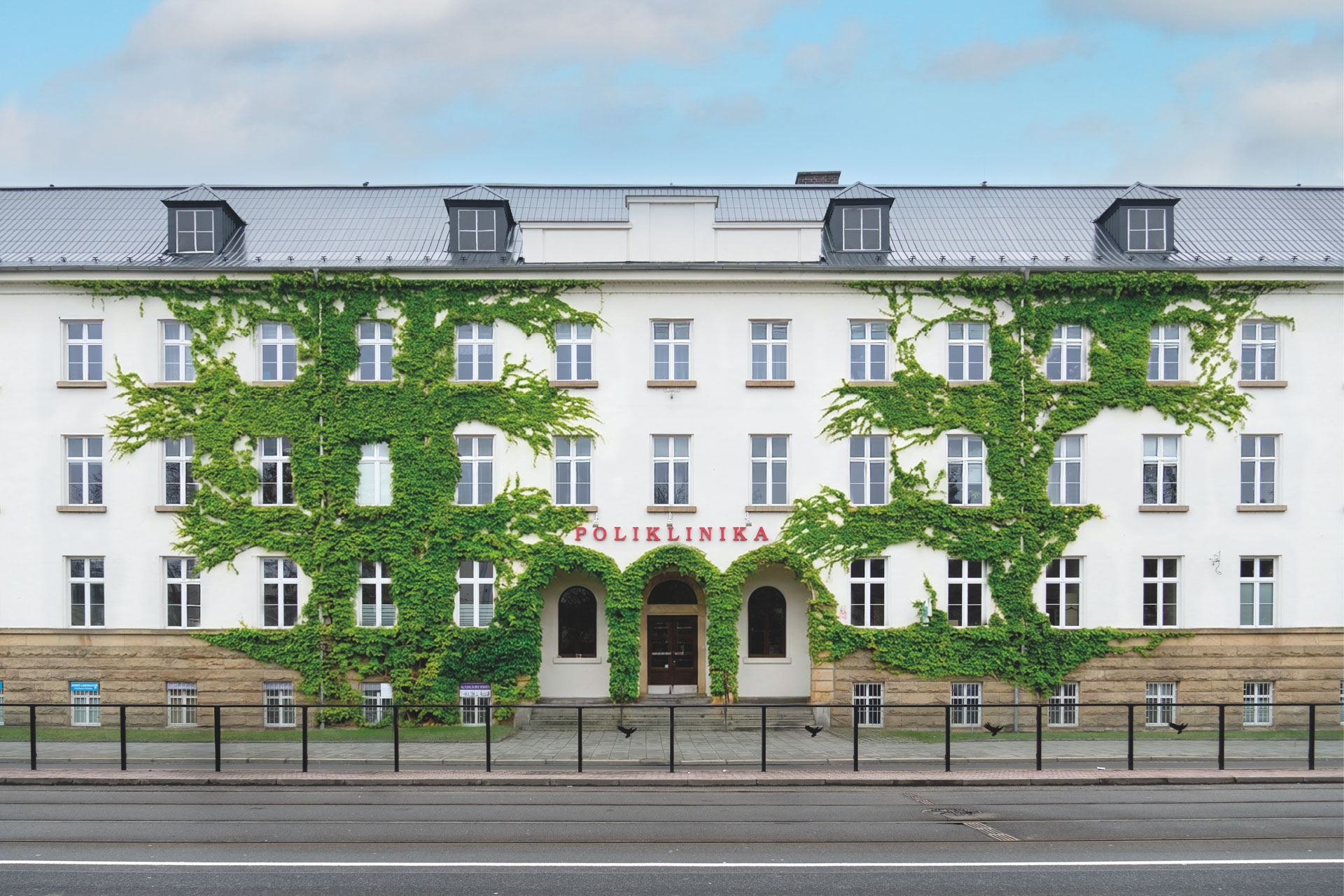
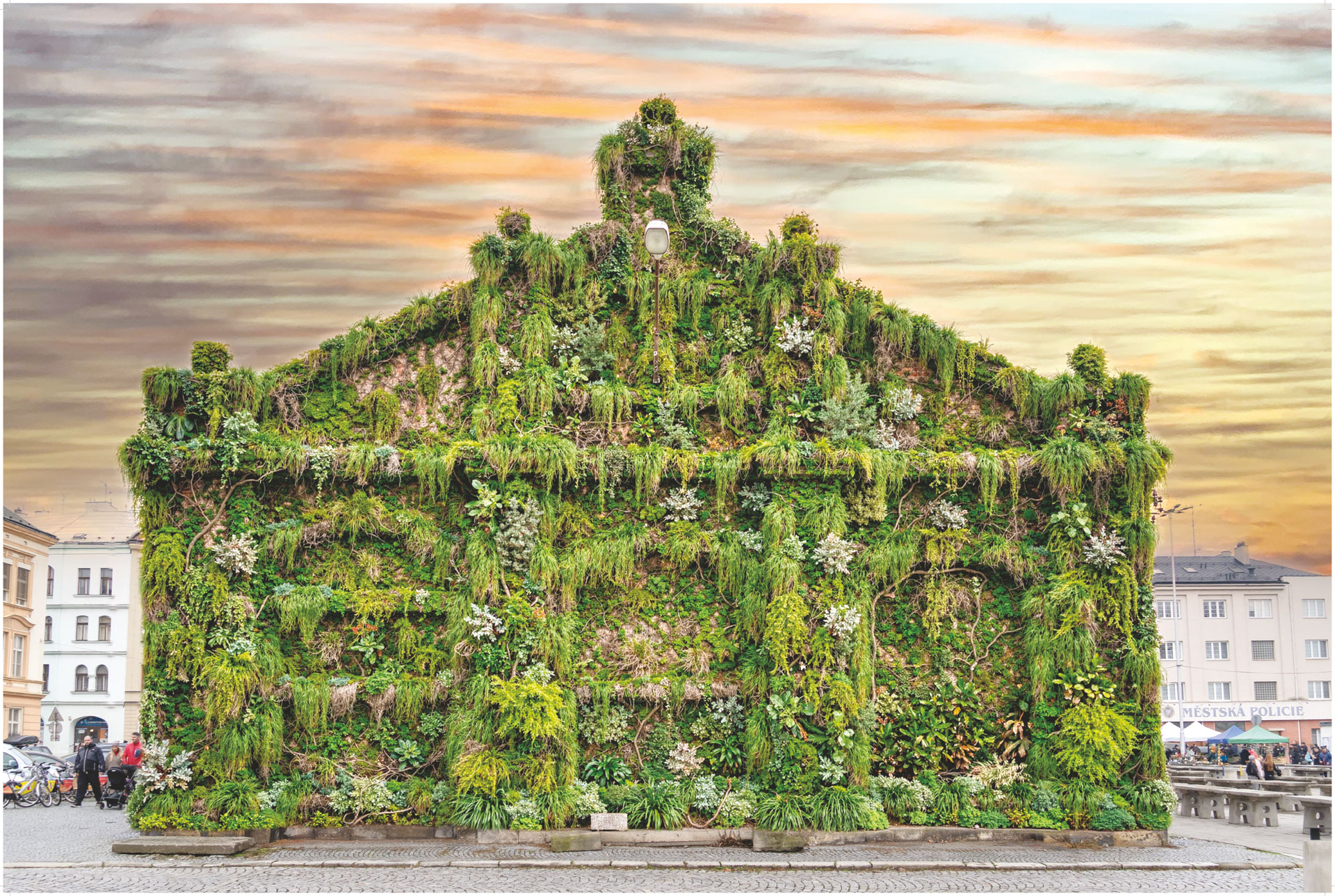
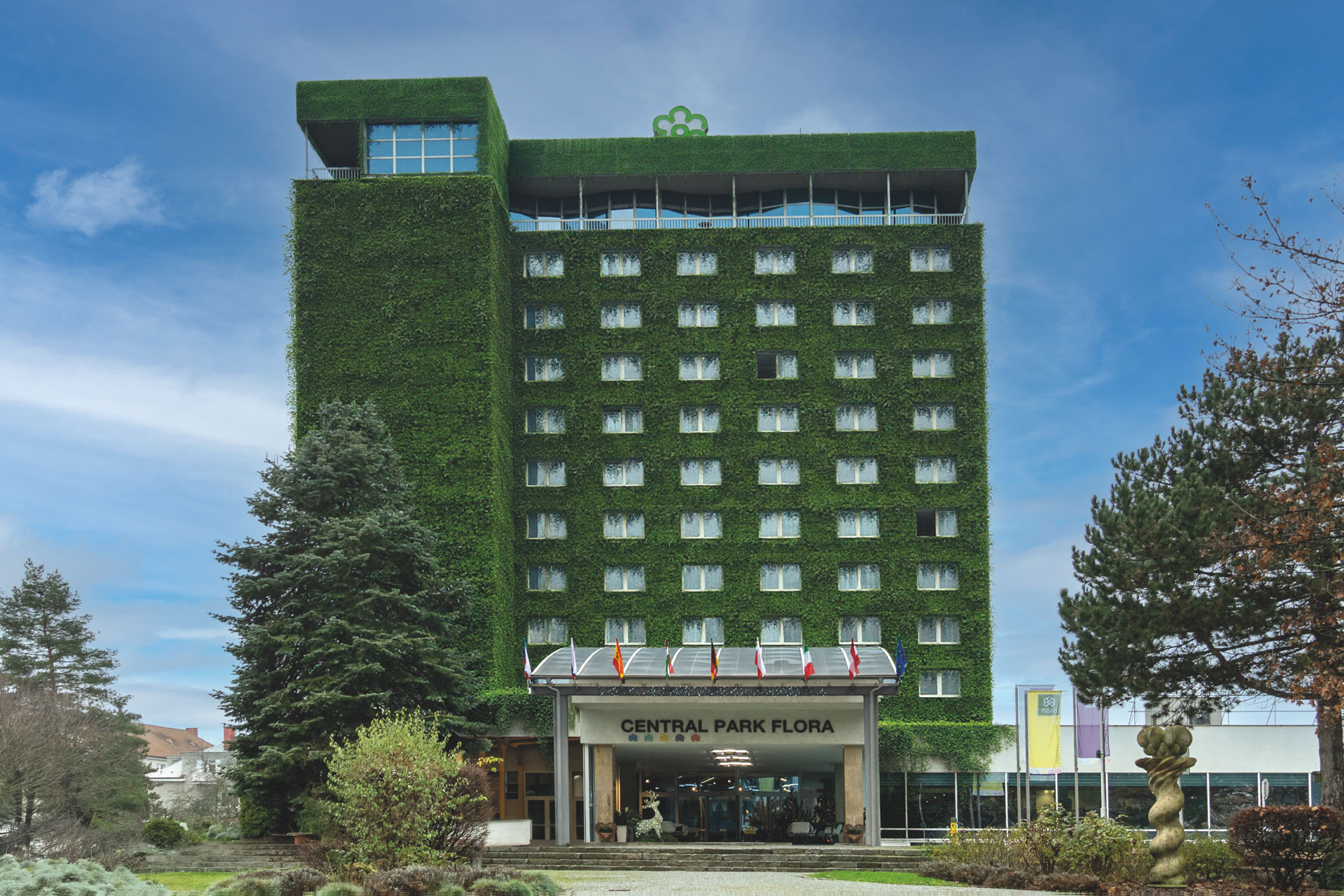
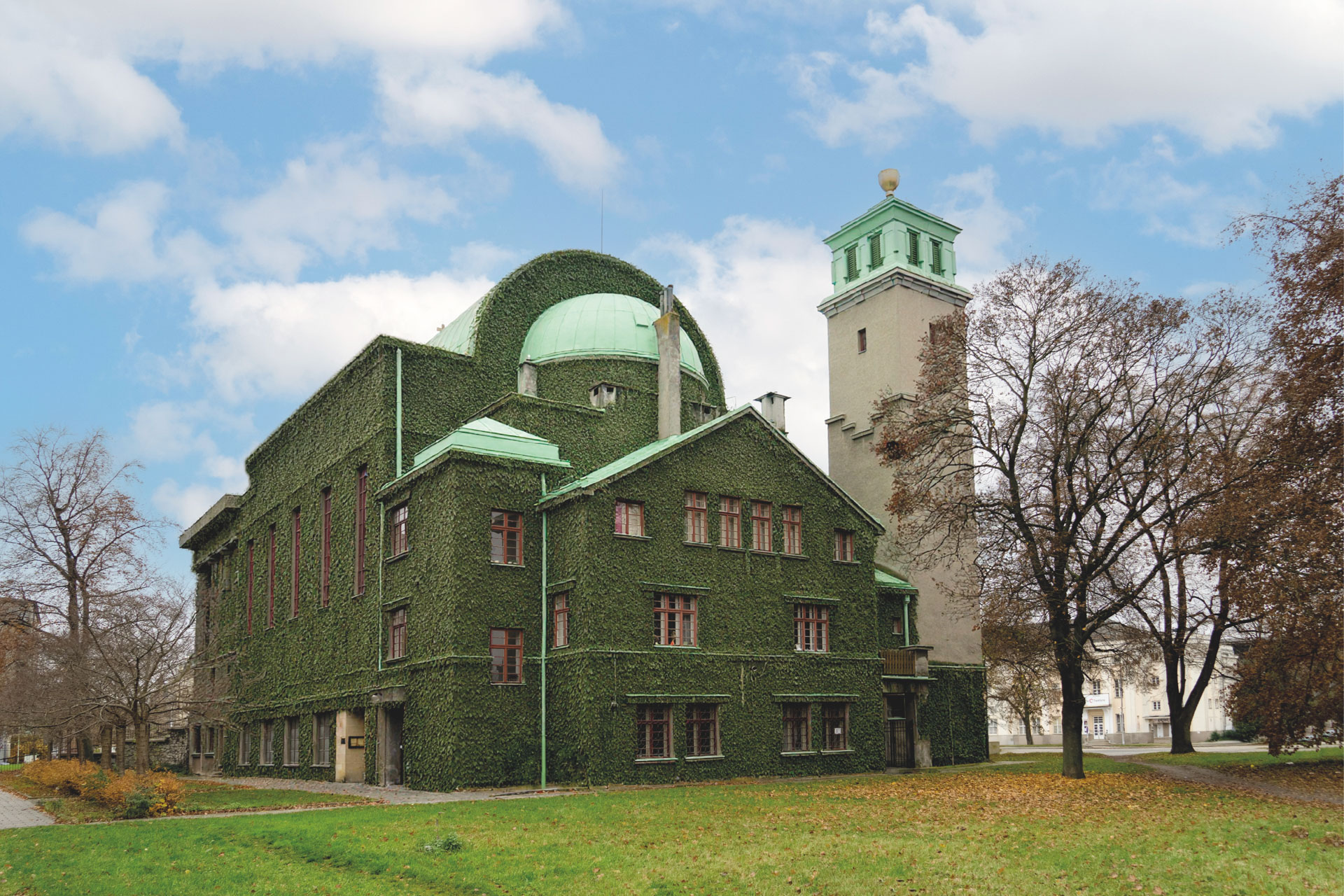
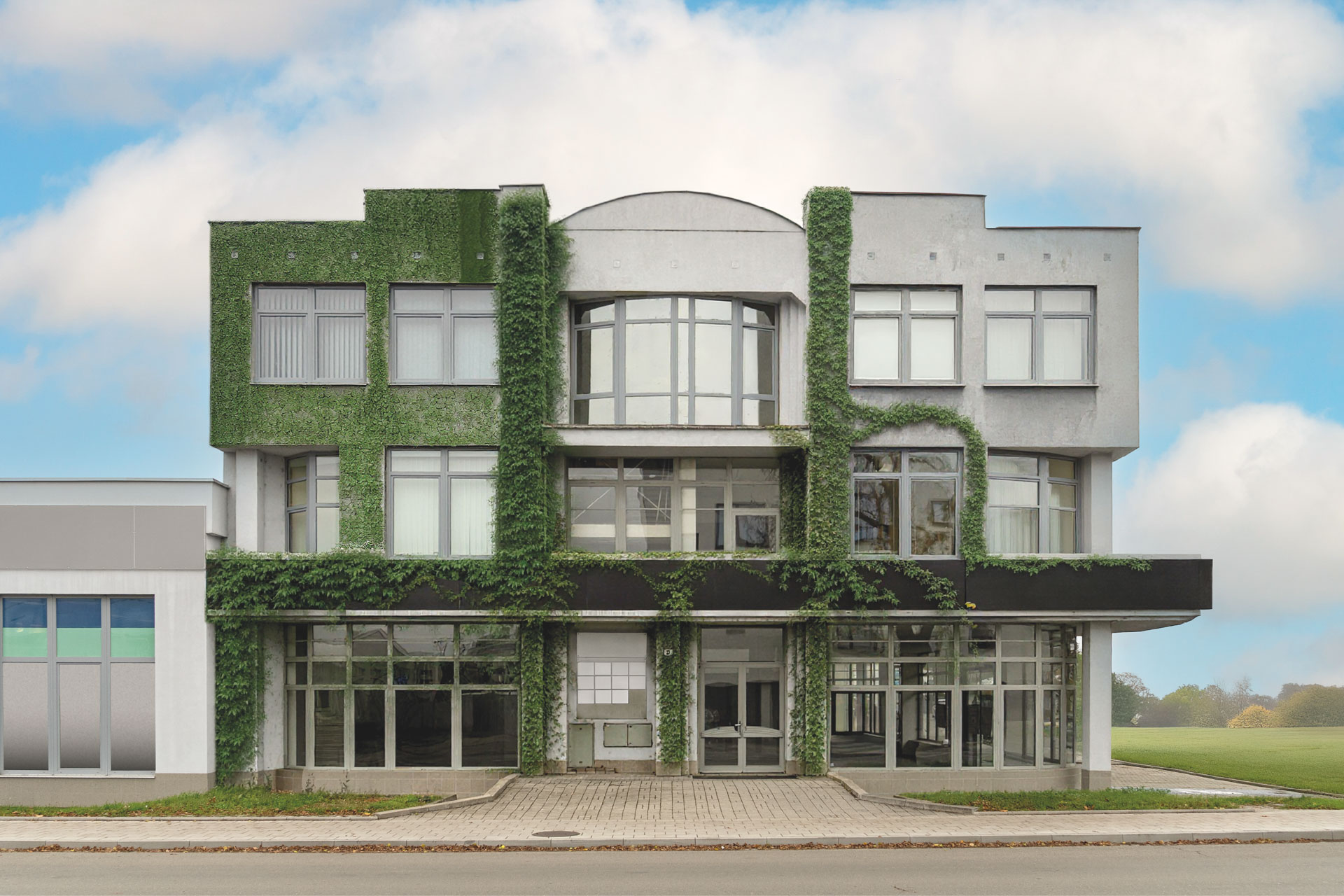
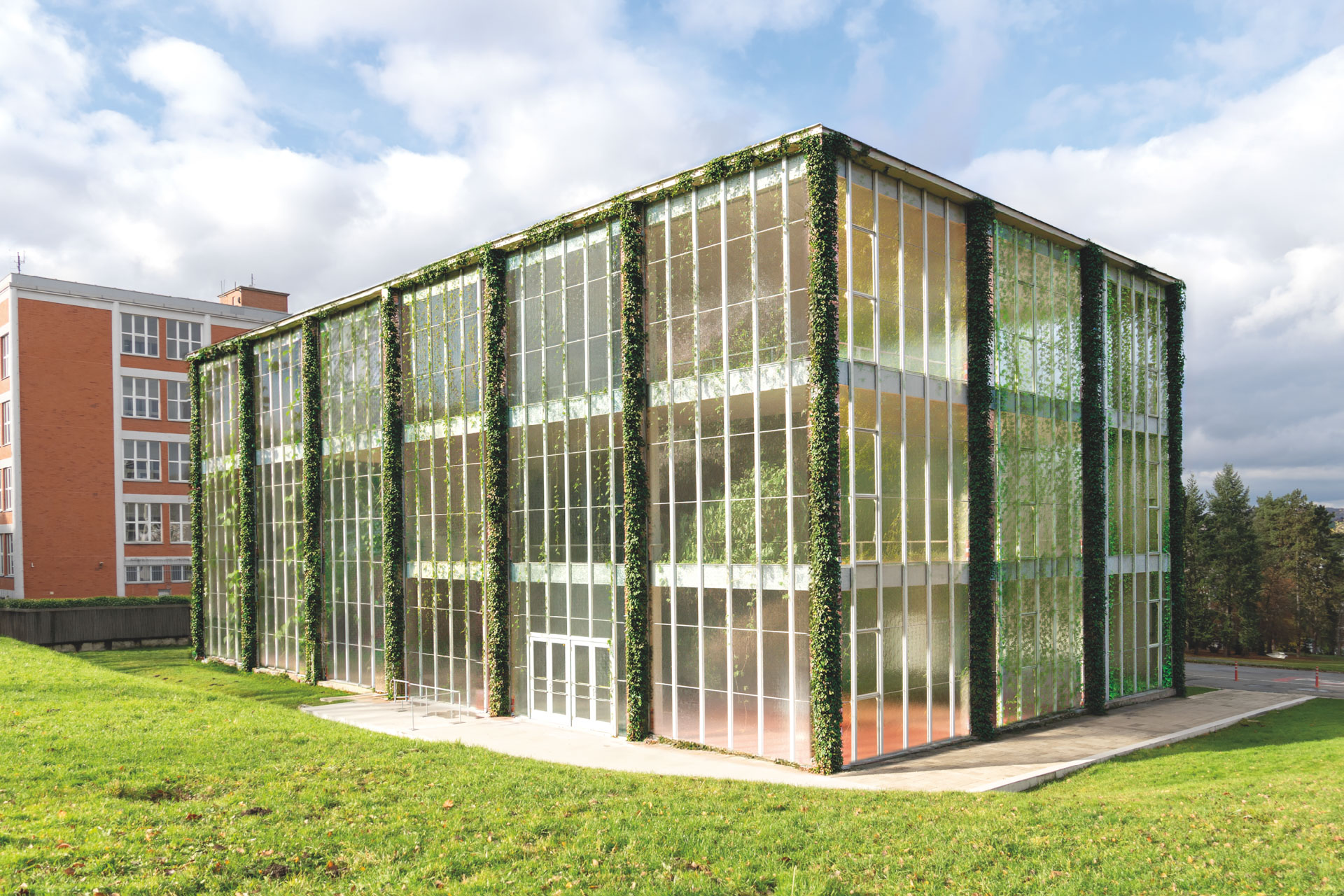
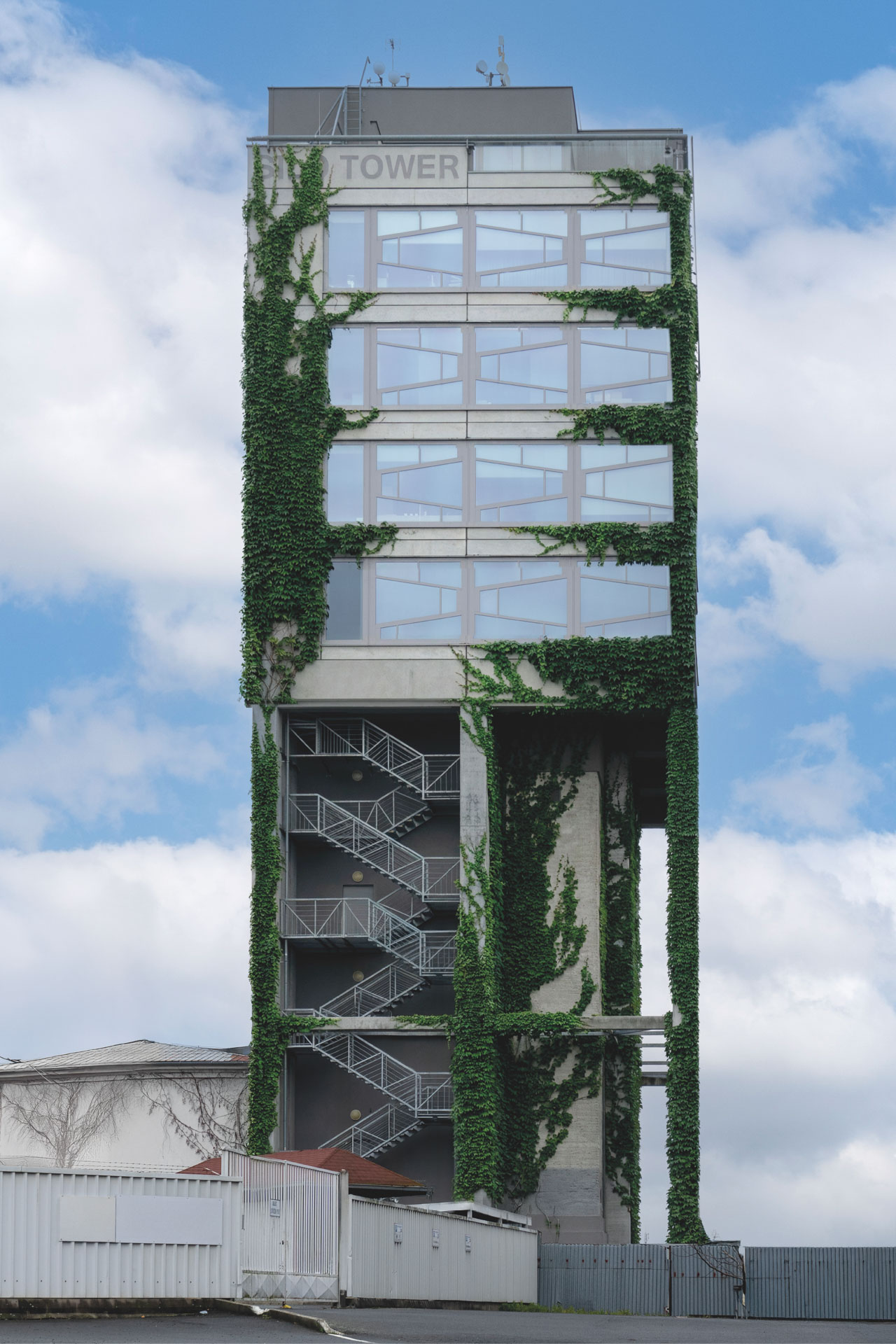
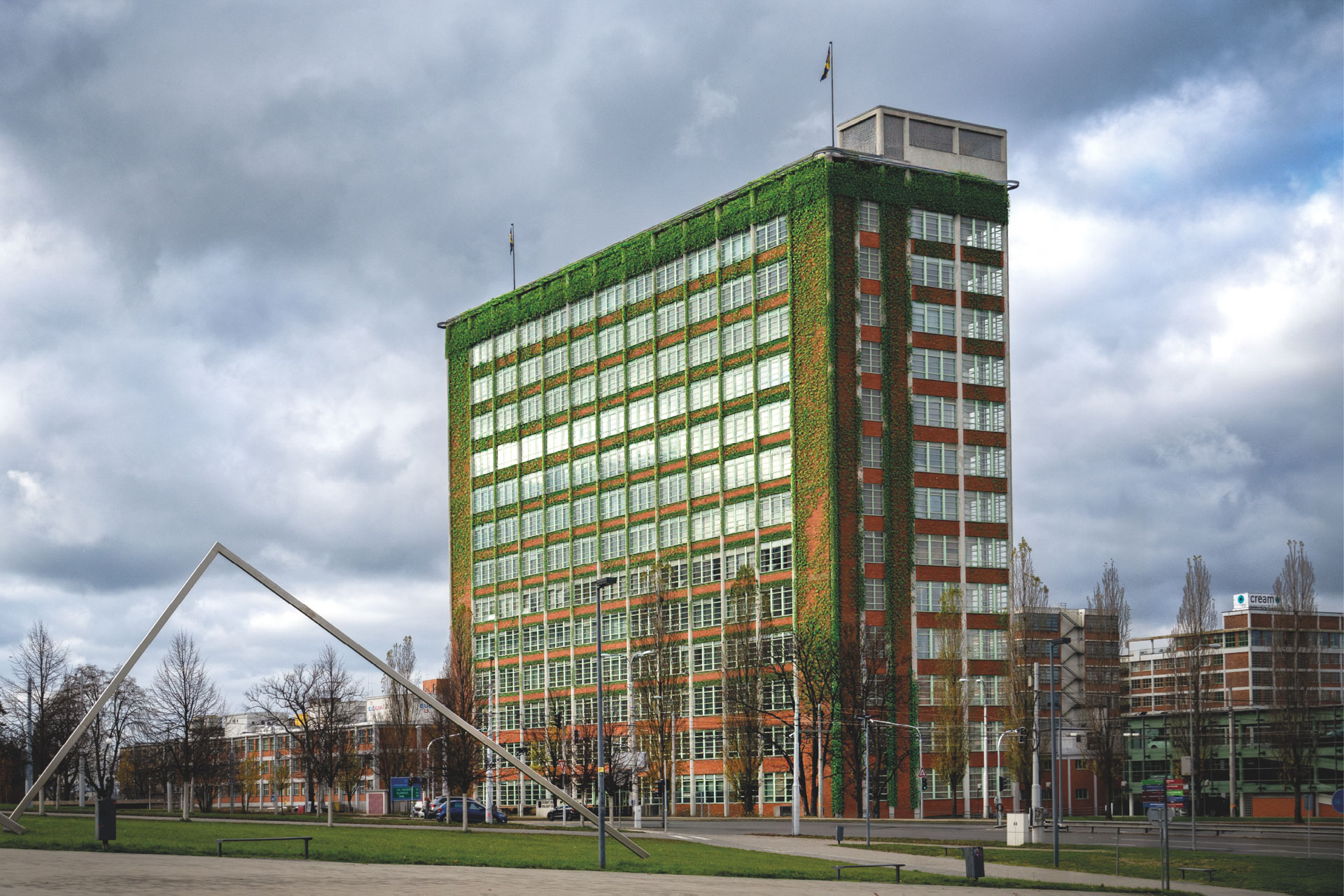
The advertising campaign does not seek to portray urban buildings as a fixed and immutable reality, but rather as a possible alternative to it. The photographed structures are not presented as they truly appear today, but as they could appear—if society chose to consciously and systematically reintroduce greenery into the urban environment. The campaign is based on the belief that change does not necessarily require large-scale urban interventions or the creation of new parks. Even small interventions, such as green facades, can have a significant impact on the quality of the environment in which we live.
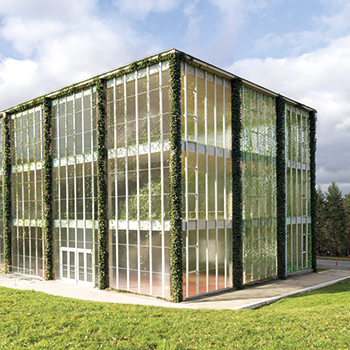
The photographic series reflects selected buildings in the cities of Olomouc and Zlín. These structures are digitally transformed using artificial intelligence tools that “add” vegetation to their facades—climbing plants, greenery growing through architecture, and organic elements that contrast with the rigid structure of the buildings. Greenery here does not function merely as a visual element, but as an integral and functional part of the urban environment. Vegetation in cities contributes to cooling the microclimate, retaining moisture, purifying the air, and reducing dust levels, while also positively affecting the psychological well-being of inhabitants. The result is not a proposal for concrete architectural solutions, but visual simulations that open space for imagination and reflection on the future form of cities.
The use of artificial intelligence in the campaign is not only a technical tool, but also a conceptual layer of the project. The images intentionally balance on the boundary between reality and fiction. The viewer is left uncertain whether they are observing a documentary photograph, a digital manipulation, or a realistic vision of the future. This uncertainty is crucial—the work raises questions about the extent to which we still trust visual images today, and how easily we accept simulated reality as truth.
In recent years, artificial intelligence has become a common part of everyday life. We encounter it through generated images, social media videos, smart homes, or industrial automation. A technology capable of creating realistic images of non-existent worlds is here used for a paradoxical purpose—not to escape reality, but to challenge it. It poses the question of whether a world that currently exists only as a simulation might, in fact, be desirable.
The campaign therefore does not address only ecological or urbanistic themes, but also the critical perception of images in an era of digital overproduction. It asks: Can we trust what we see? And if not, why does the vision of a greener city still resonate with us? Is this very visual fiction not evidence that such a change is not only possible, but necessary? The project uses the power of advertising imagery not to sell a product, but to offer an idea—an idea of a city that is not in opposition to nature, but allows it to once again grow through its structures. Greenery here does not become decoration, but a symbol of the return of balance between people, architecture, and the environment we inhabit.