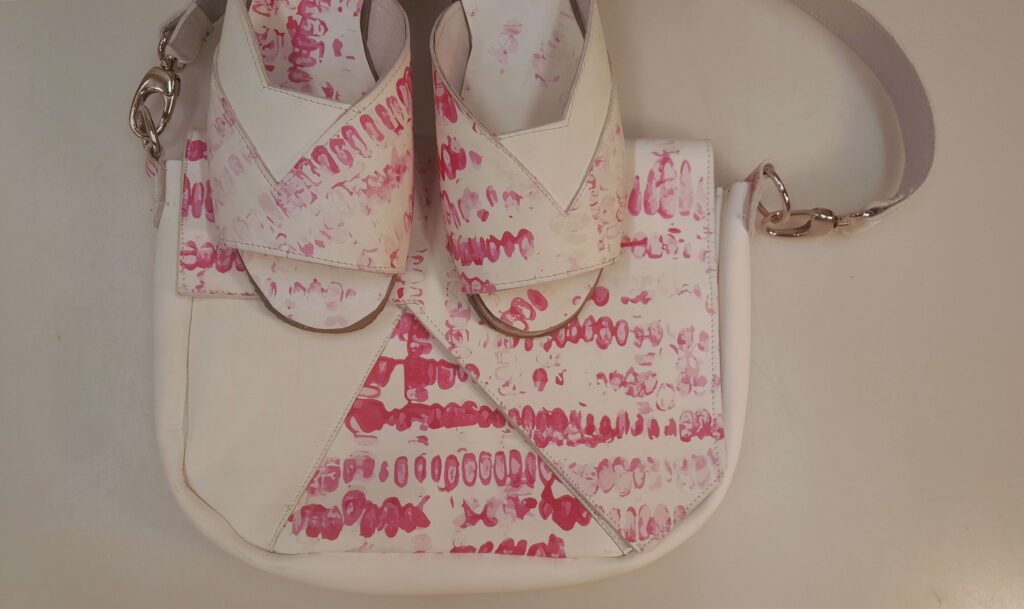
Sometimes inspiration comes from what we dislike — from things that have lost their meaning and need to change. This idea resonates with the origins of Dr. Martens itself. In 1940, Klaus Märtens designed the first Dr. Martens shoe as a response to uncomfortable, conventional footwear. Over time, the brand became a symbol of rebellion and subcultures. Today, however, it has turned into a uniform — just another black shoe worn by everyone.
This project asks a simple question:
How can rebellion be brought back to Martens?
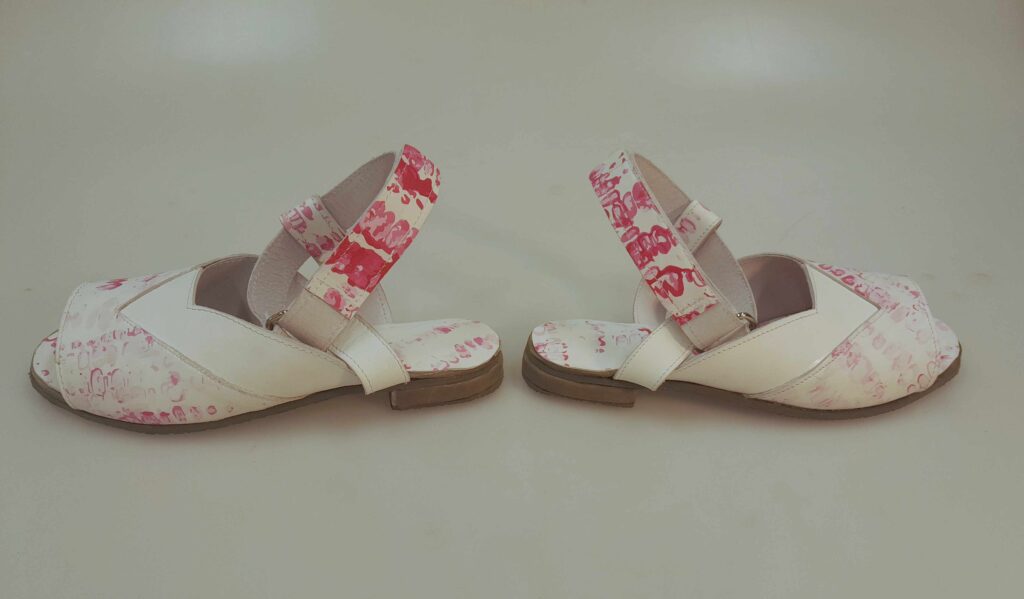
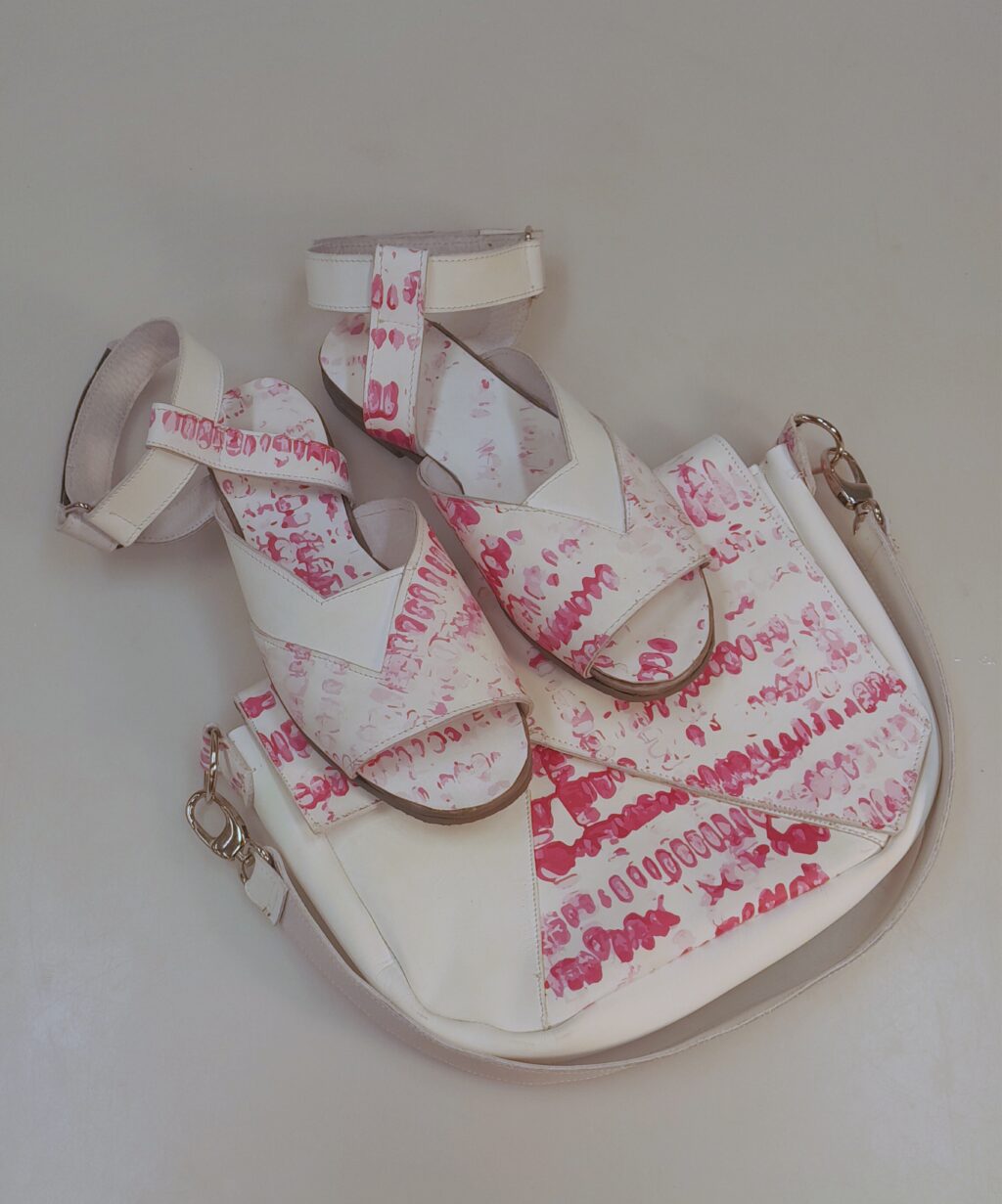
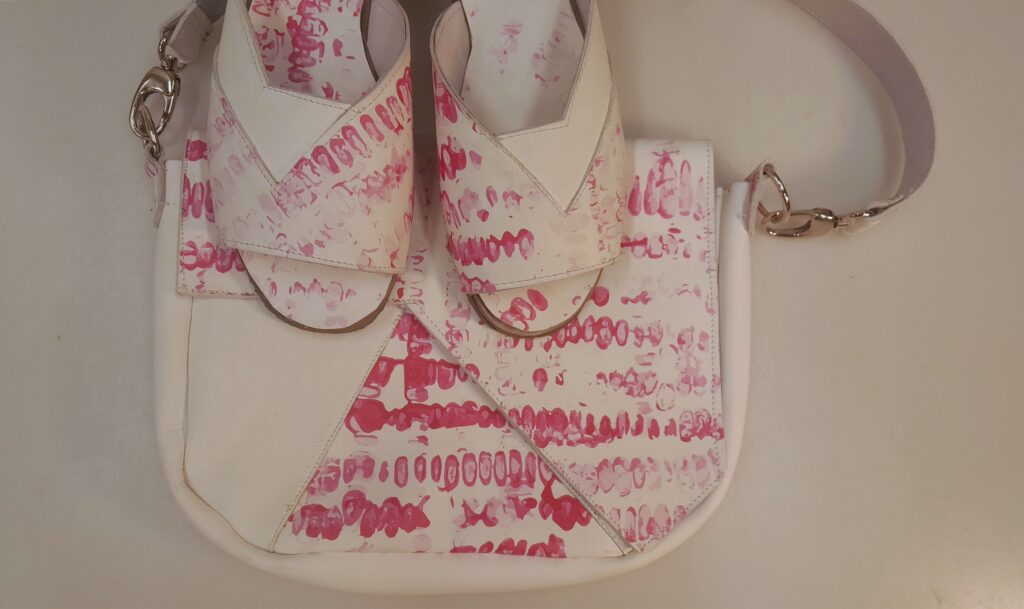
I approached the brand through its opposite. I kept only its most essential elements — monumental straps and a robust sandal construction — and stripped everything else away. For the surface design, I chose a technique deeply rooted in childhood memory: printing through textures. Using everyday organic materials such as potatoes, peppers, corn, cranberries, and lemons, I explored imperfect, tactile patterns.
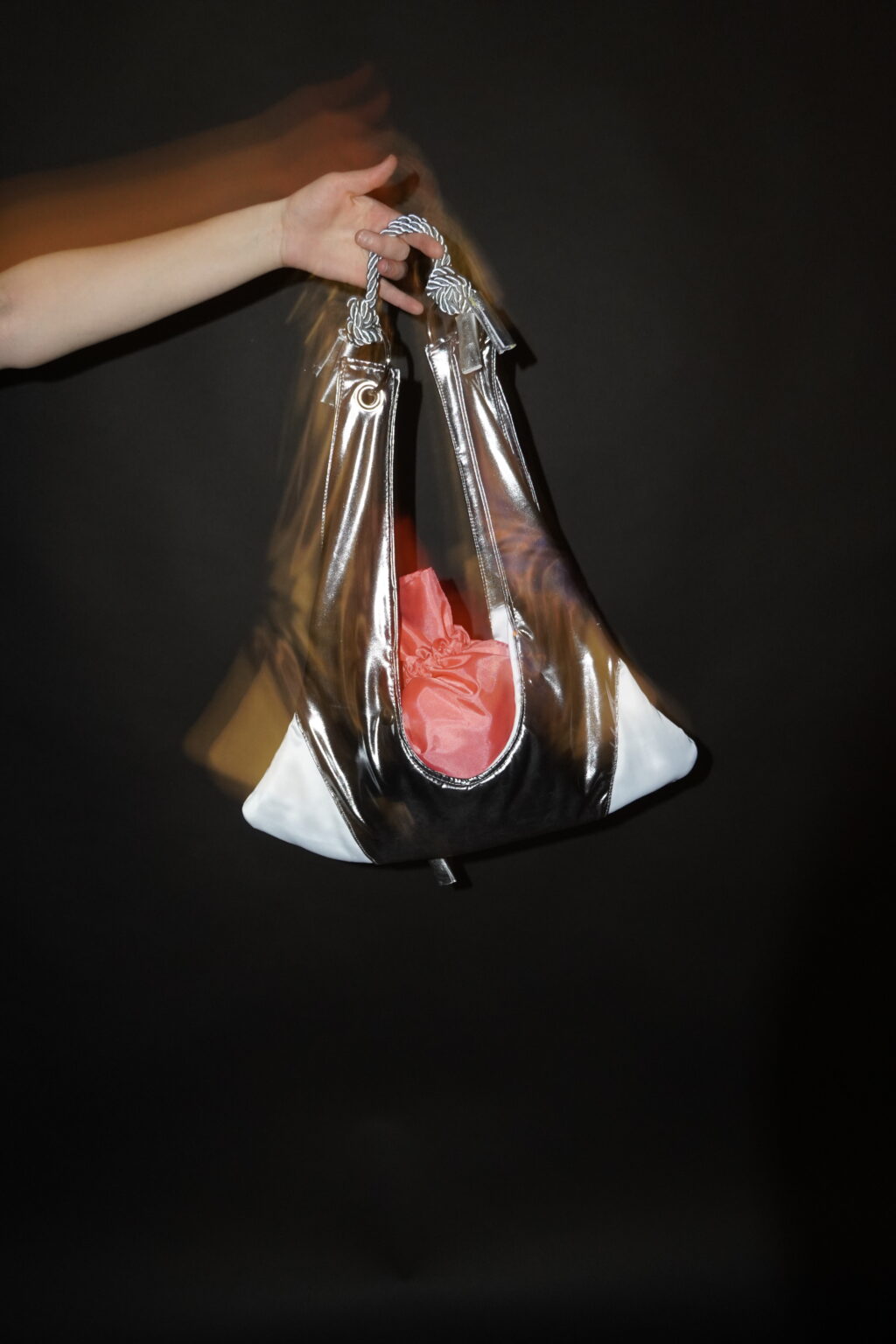
These textures were printed onto white leather used for both a sandal and a bag. The forms and functions intentionally avoid conventional solutions, balancing between usability and visual provocation. The project reintroduces experimentation, imperfection, and play as acts of resistance against standardization.