The collection “What If I Were to, My Dear…” is inspired by one of the most important works of 20th-century Czech literature, the novella The Cremator by Ladislav Fuks. The protagonist, Karel Kopfrkingl, undergoes a profound transformation of the soul: he turns away from goodness and gradually begins to commit evil.
At the beginning, Kopfrkingl is a gentle, kind and sensitive man. He often emphasizes that he is a abstainer and a non-smoker, enjoys classical music, despises violence and considers himself a romantic. He has a wife, Marie (Lakmé), and two children, Mili and Zina, whom he loves deeply. He is thoughtful and frequently reflects on death. A large part of his life philosophy is based on a yellow book about Tibet, according to which his work in the crematorium helps to release the souls of the deceased quickly into the ether, and is therefore a noble act.
His transformation begins after he reunites with his former friend Willi Reinke, who gradually influences his views. KKopfrkingl begins to believe in the idea of a Higher Order that Hitler is meant to establish, and becomes convinced that together they can save Europe by ending pain, suffering, and unnecessary death. His actions escalate until he murders his wife and son and attempts to kill his daughter as well. At the end of the story, we witness how Nazism completely corrupts the character of a once good man.
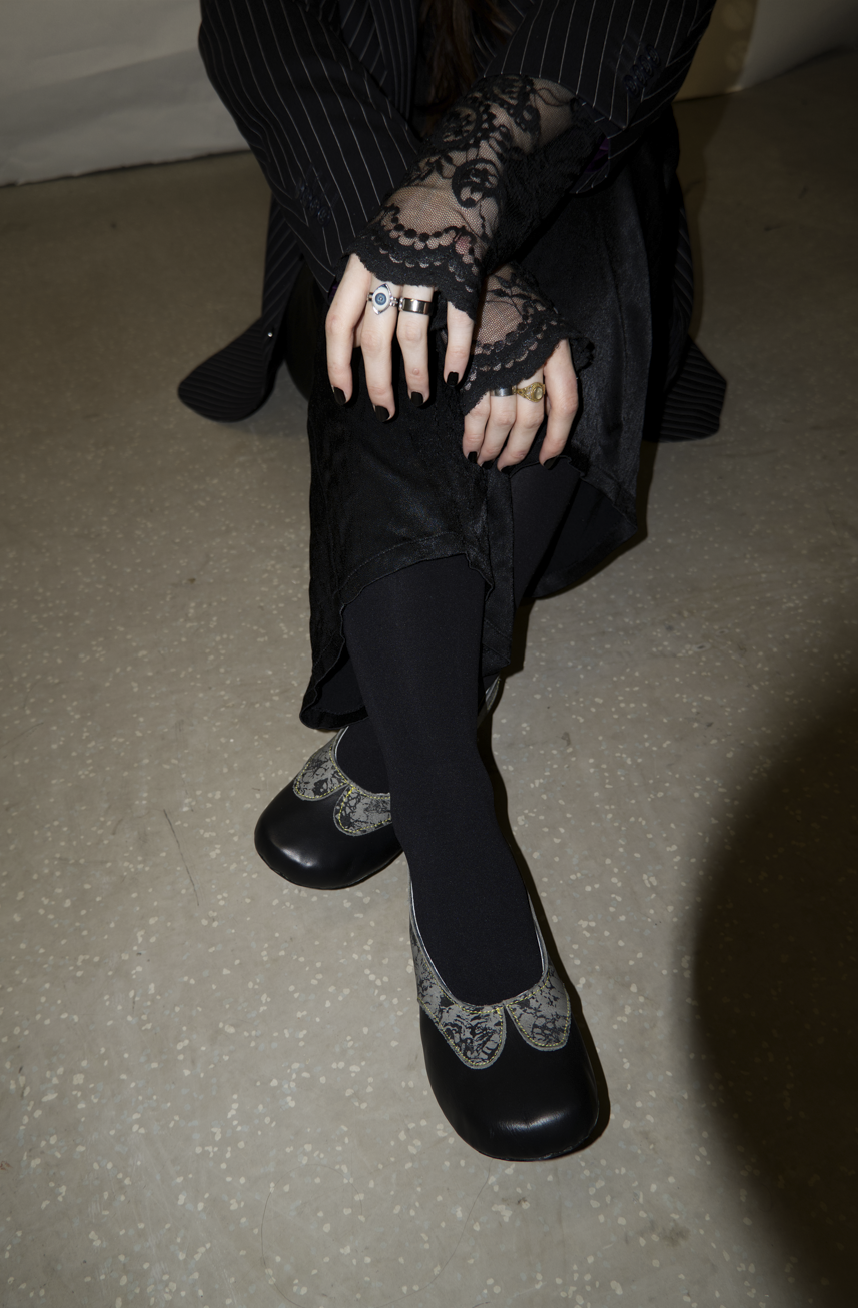
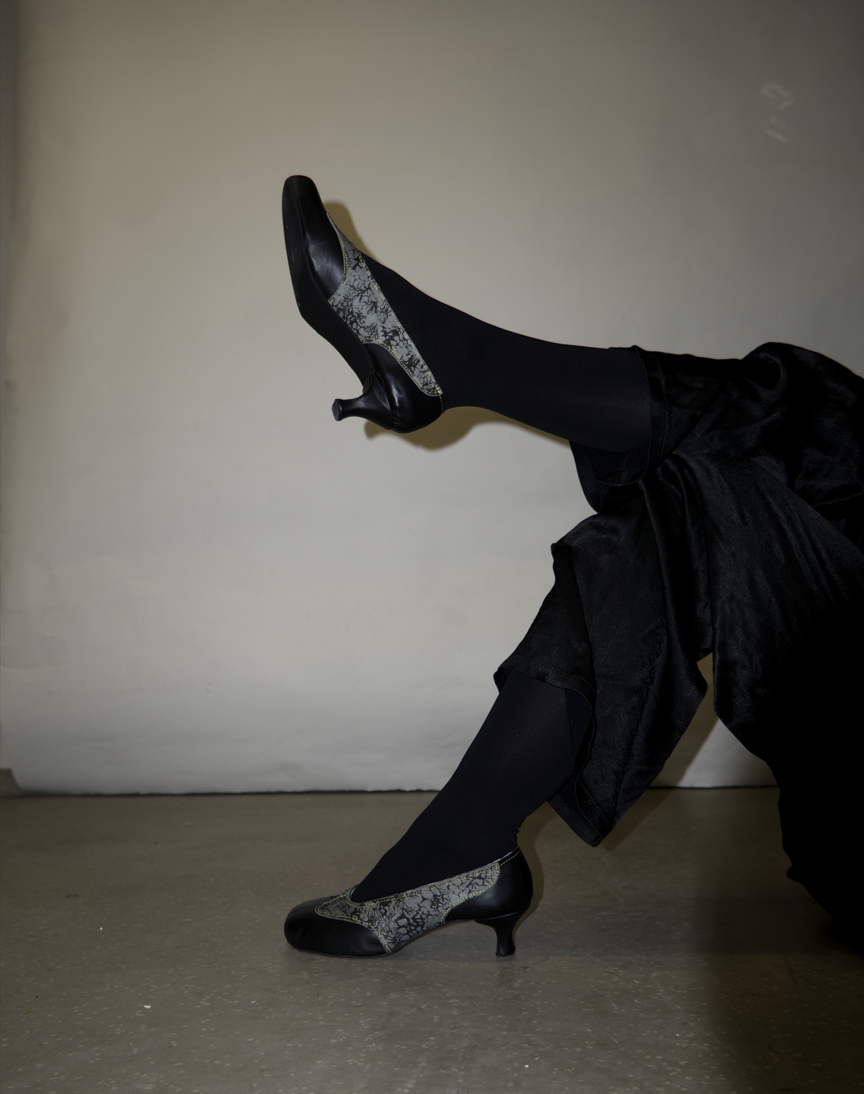
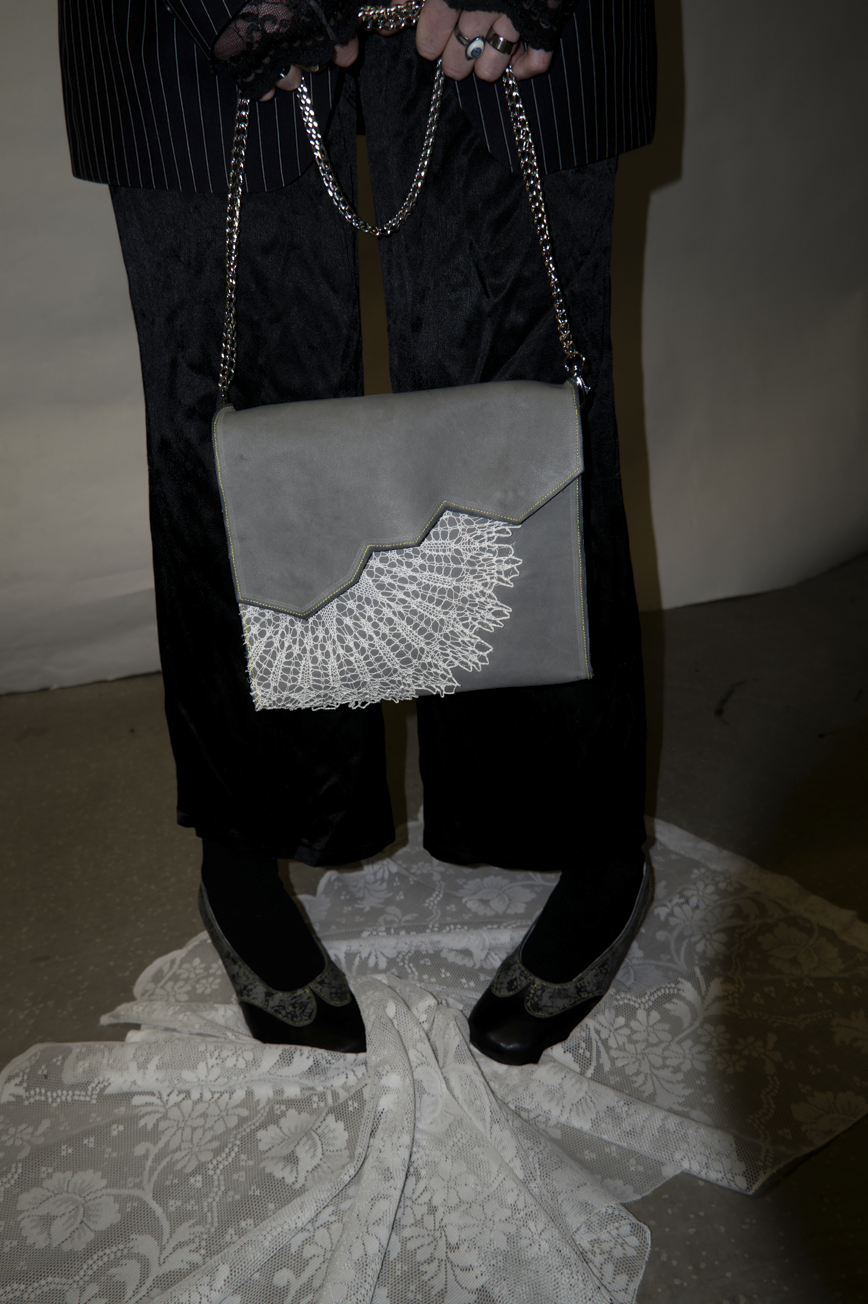
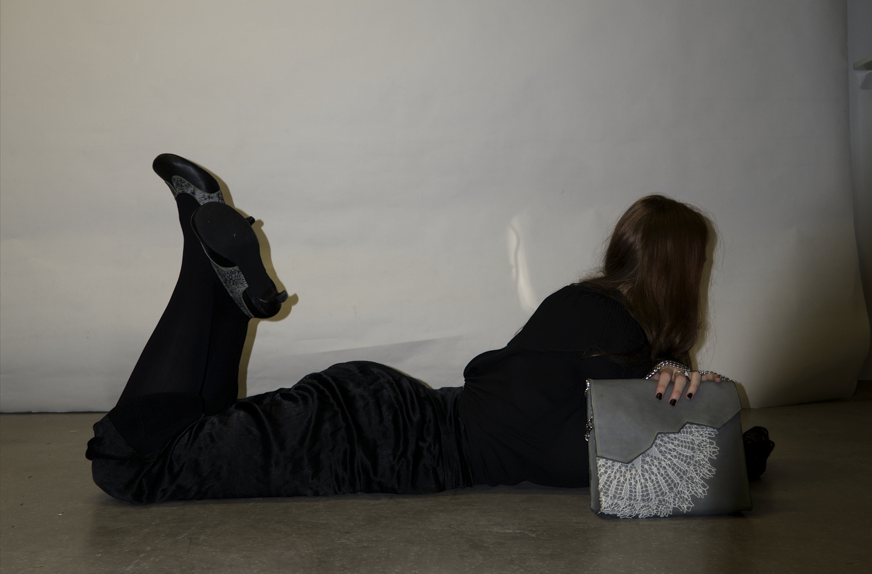
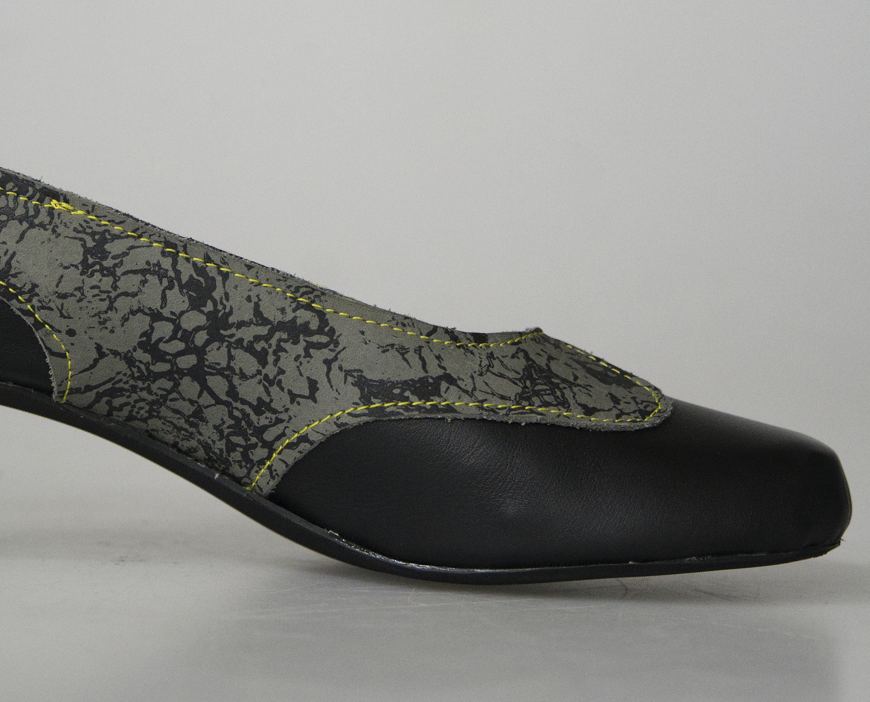
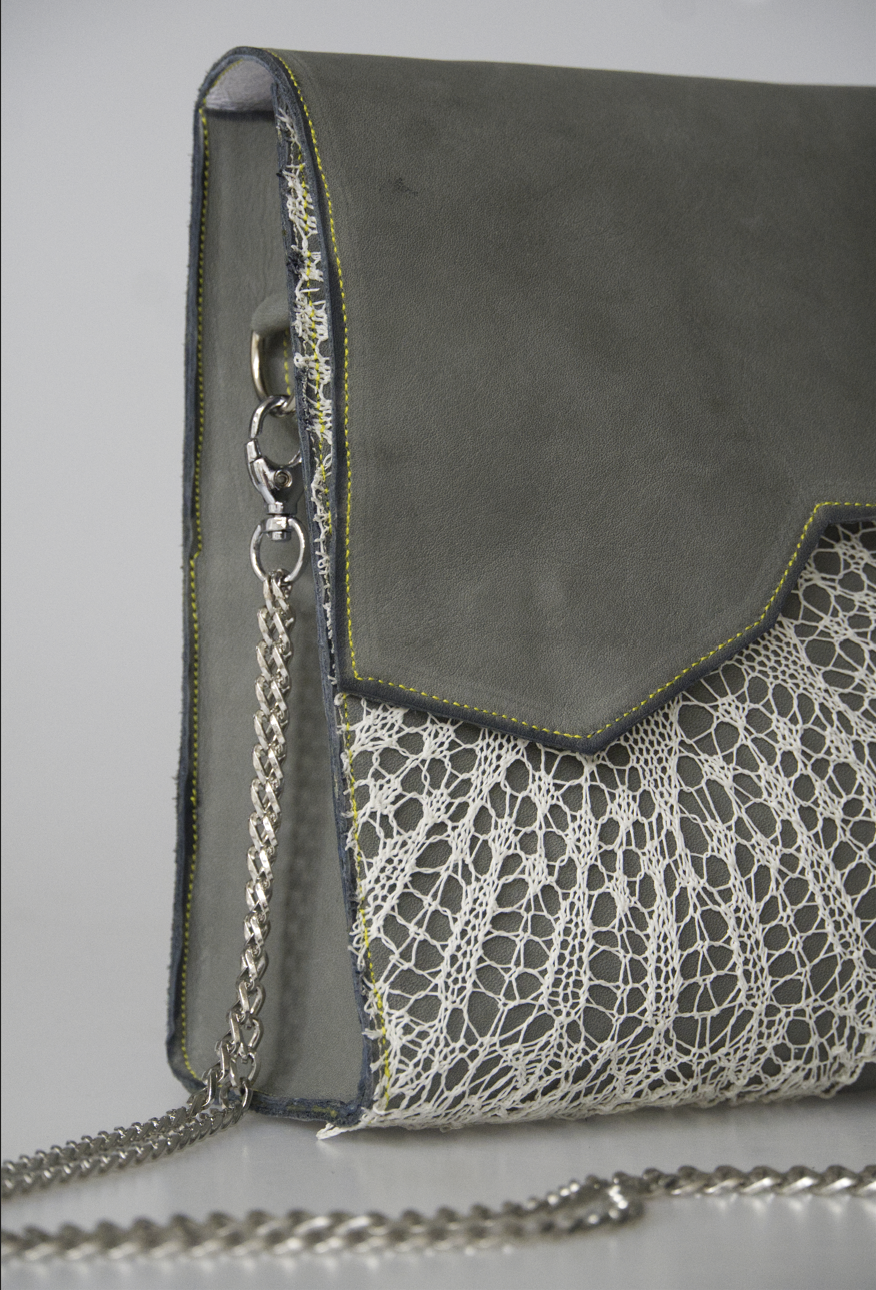
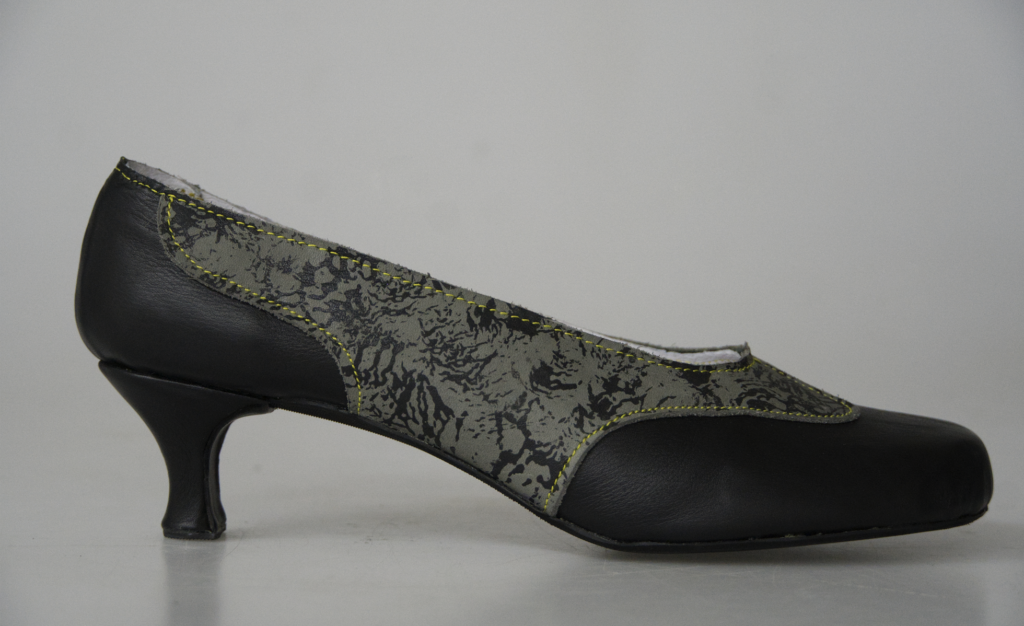
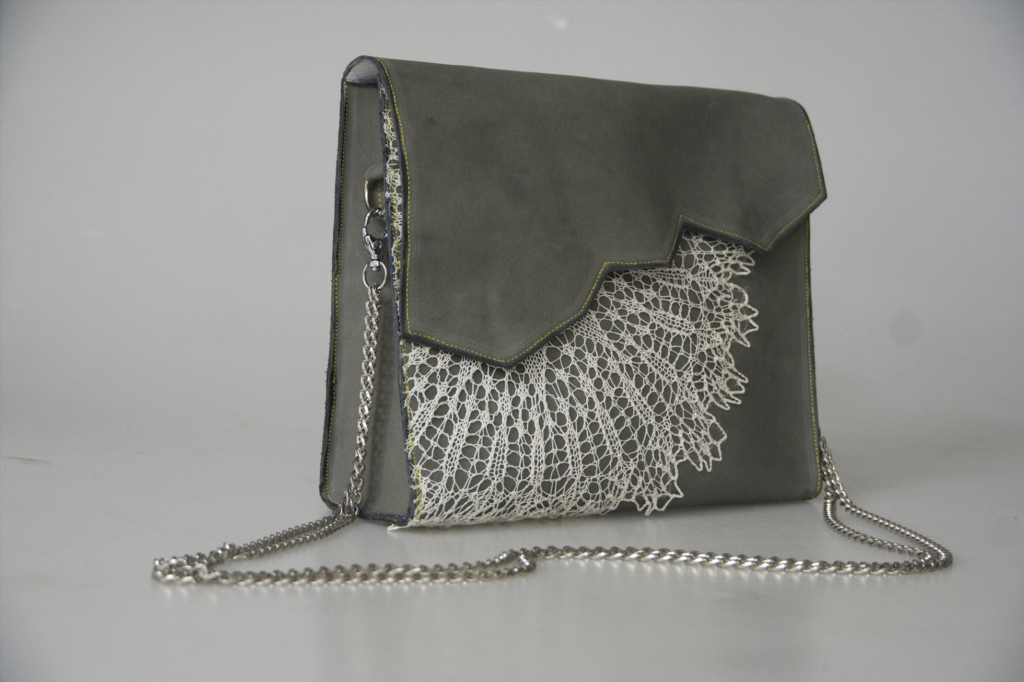
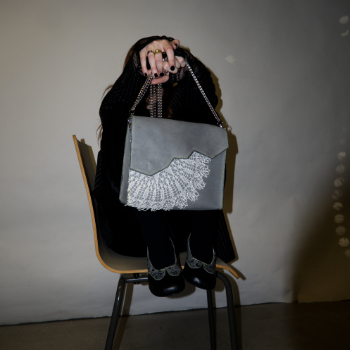
My main sources of inspiration were the black-and-white visual style of Juraj Herz’s film adaptation, the repeatedly appearing motif of a lace collar, the yellow book about Tibet, and the shoe silhouettes of the 1930s. A First Republic lace doily is sewn onto the handbag, and also used to create a print on the pumps. I chose this concept because I have always been fascinated by the metamorphosis of literary characters, and The Cremator is, in my opinion, one of the works with the most powerful character development. At the same time, the themes explored in the book are once again relevant in today’s political climate. Even now, we can see how easily a good person can turn toward extreme regimes and how few people are willing to stand up for freedom and human rights.