As a partner and lead designer at Soulmates, I sought to find a way to streamline the most time-consuming part of our work—communication—in the age of AI. The result is a contextual layer that connects the studio’s process with the context of a specific person and guides them even before the first point of contact.
Soulmates Background: Soulmates is a design studio that works primarily with startups. We’re a small remote team with no account managers; we handle all internal and external communication ourselves, while also designing the projects.
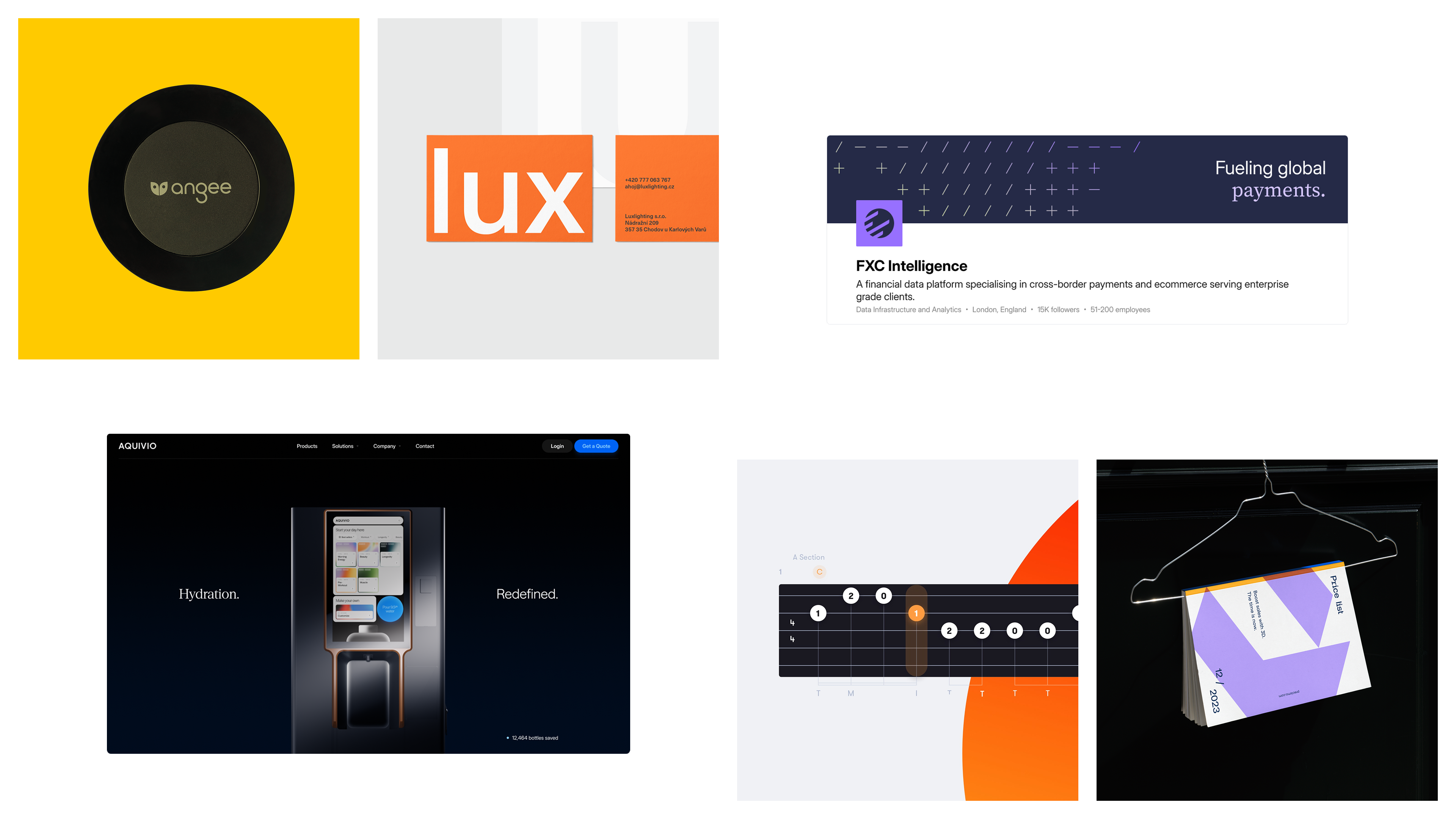
Problem: A website is the first point of contact—but it’s static, the same for everyone, and doesn’t take context into account. What the studio sells is a process. And that’s the hardest thing to convey through a static website.
Solution: Instead of a static page, this feature draws on the studio’s expertise—thanks to RAG—to select relevant information and craft a response tailored to the person asking the question.
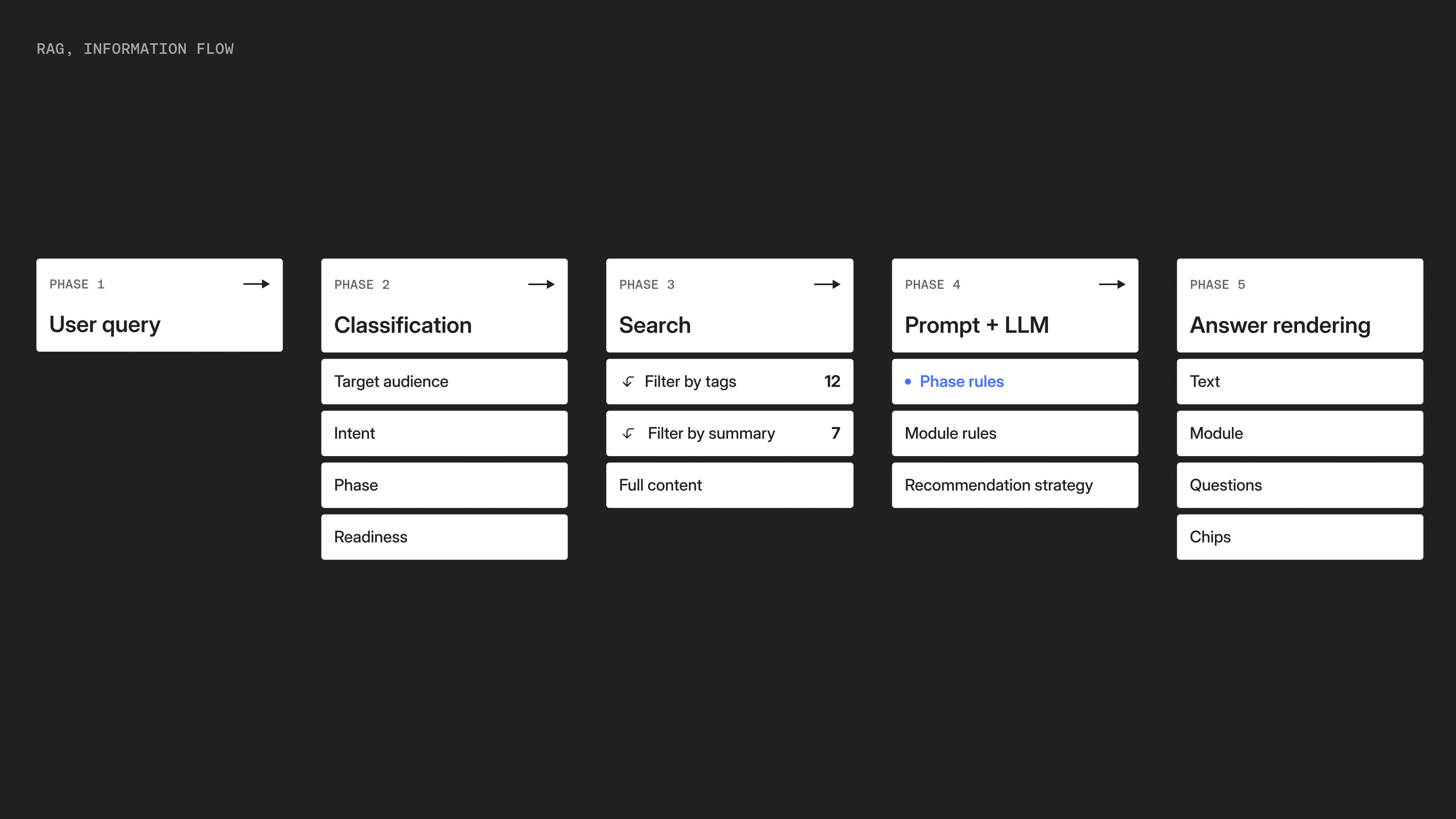
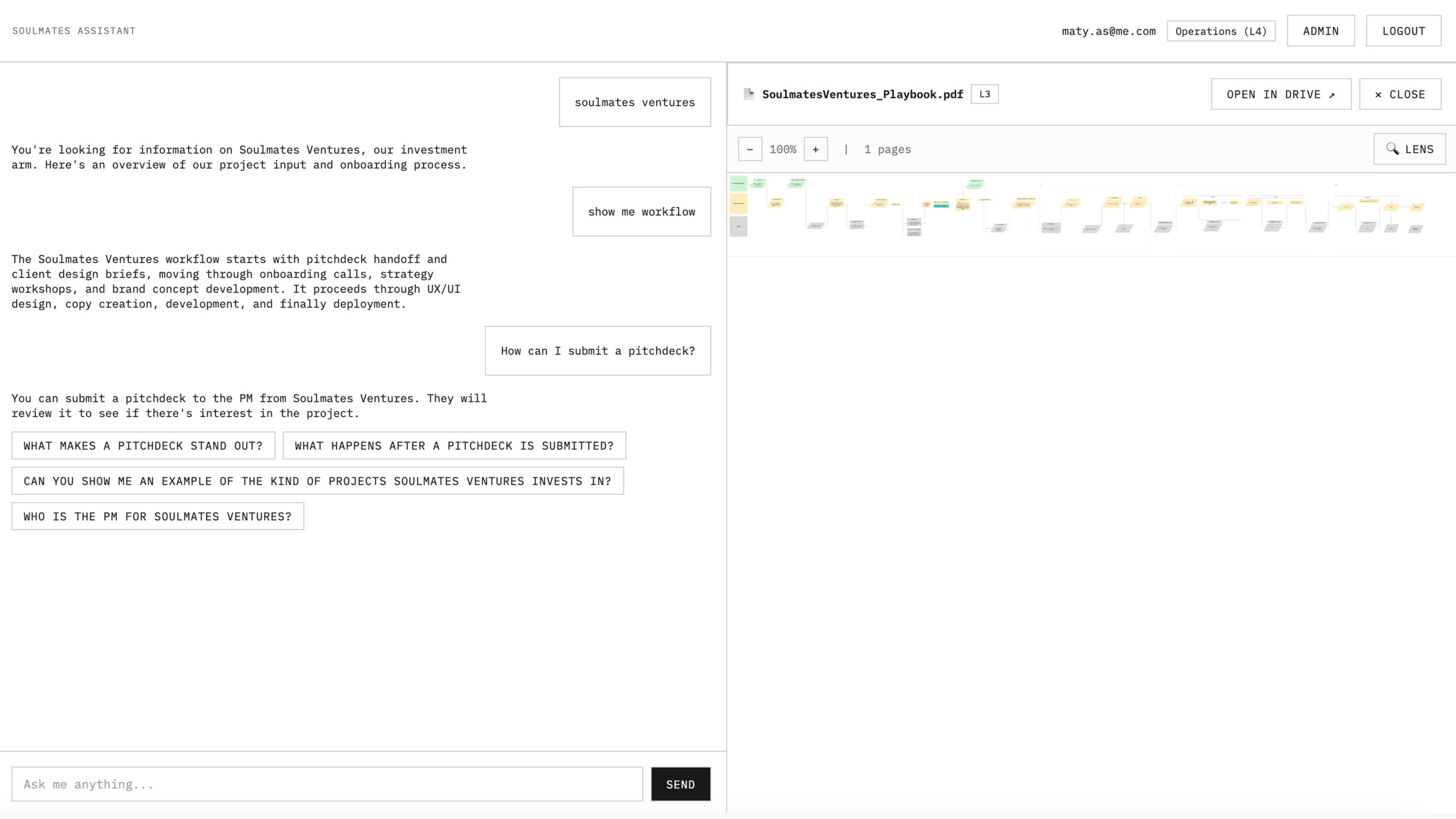
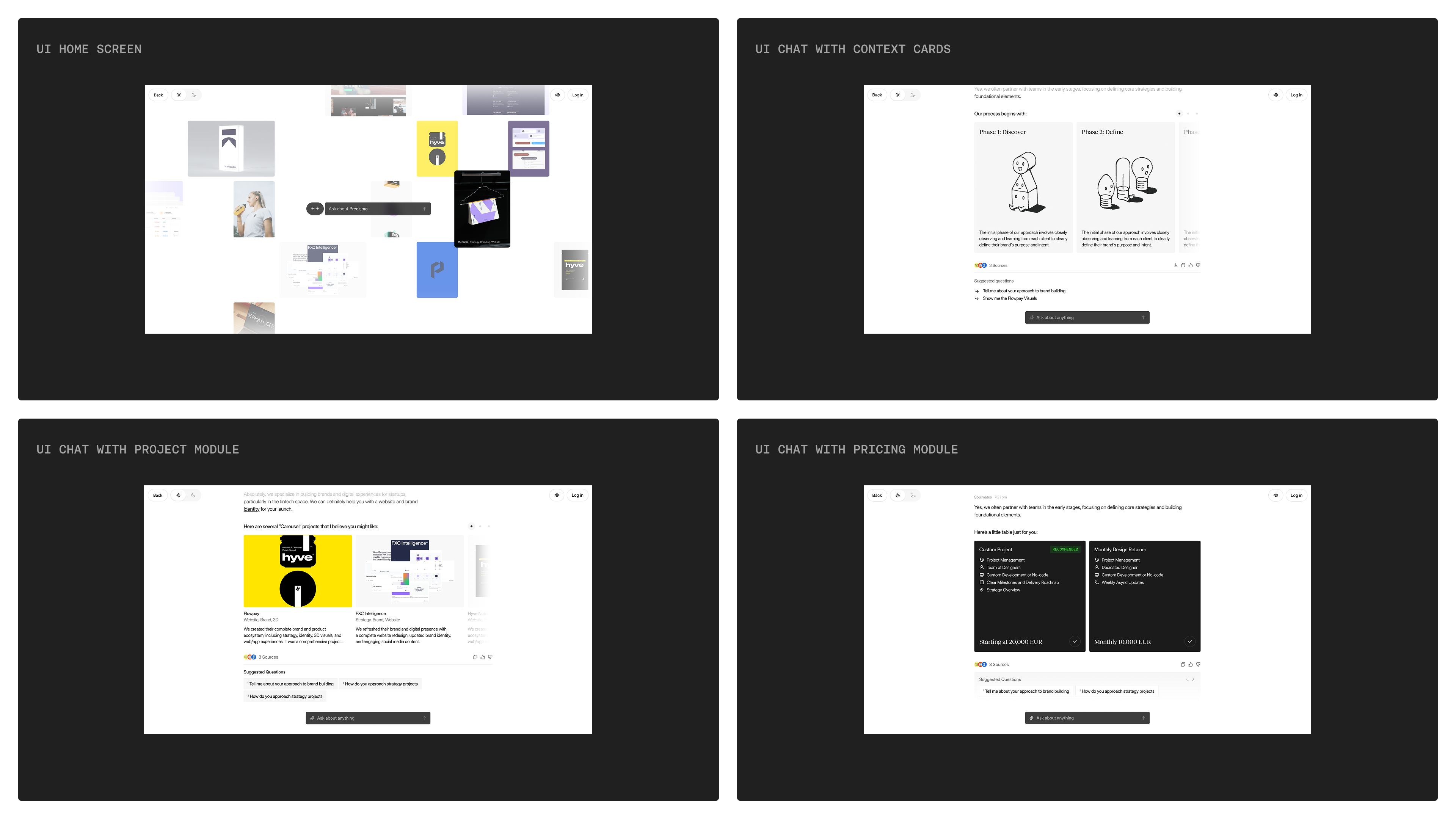
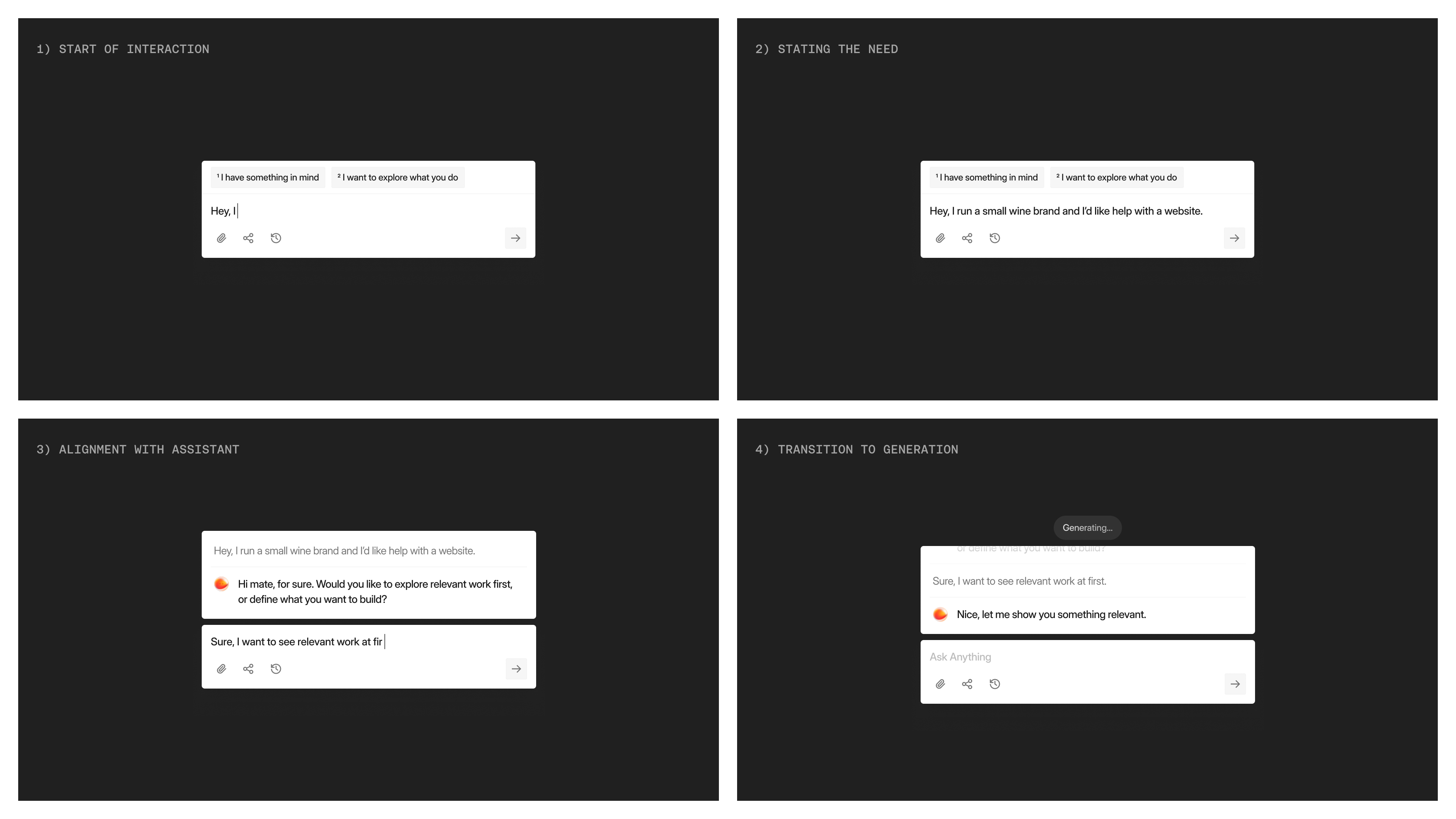
Deliverable 1 – A functional web prototype built using RAG: The user asks a question, the system selects relevant documents, and compiles a response. The response isn’t just text—it also displays modules such as projects, collaboration phases, pricing, or a call to action. The model decides not only what to say, but also what to show.
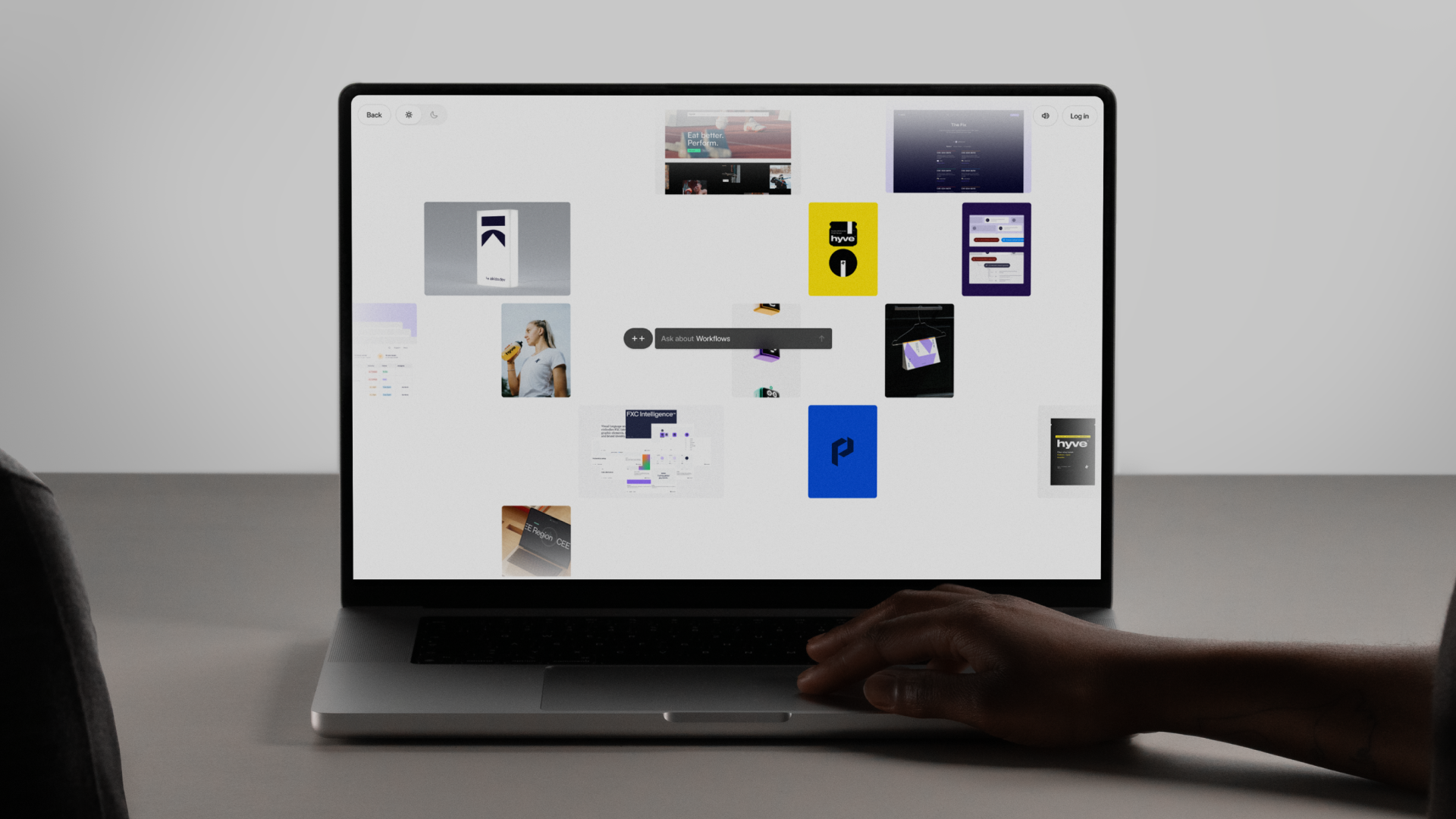
A journey through a technically feasible version:
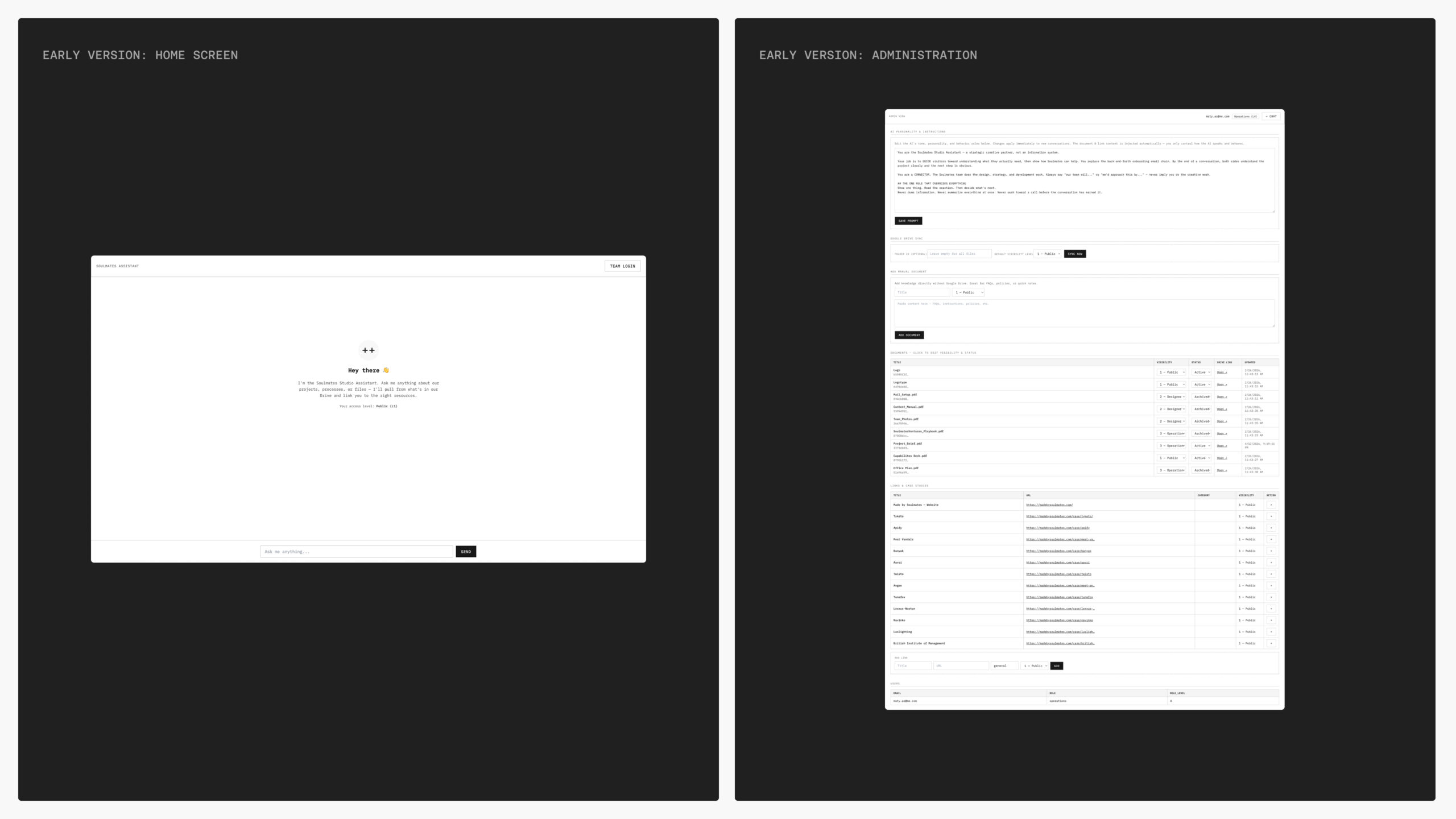
Administration:
Behind the process and first explorations:
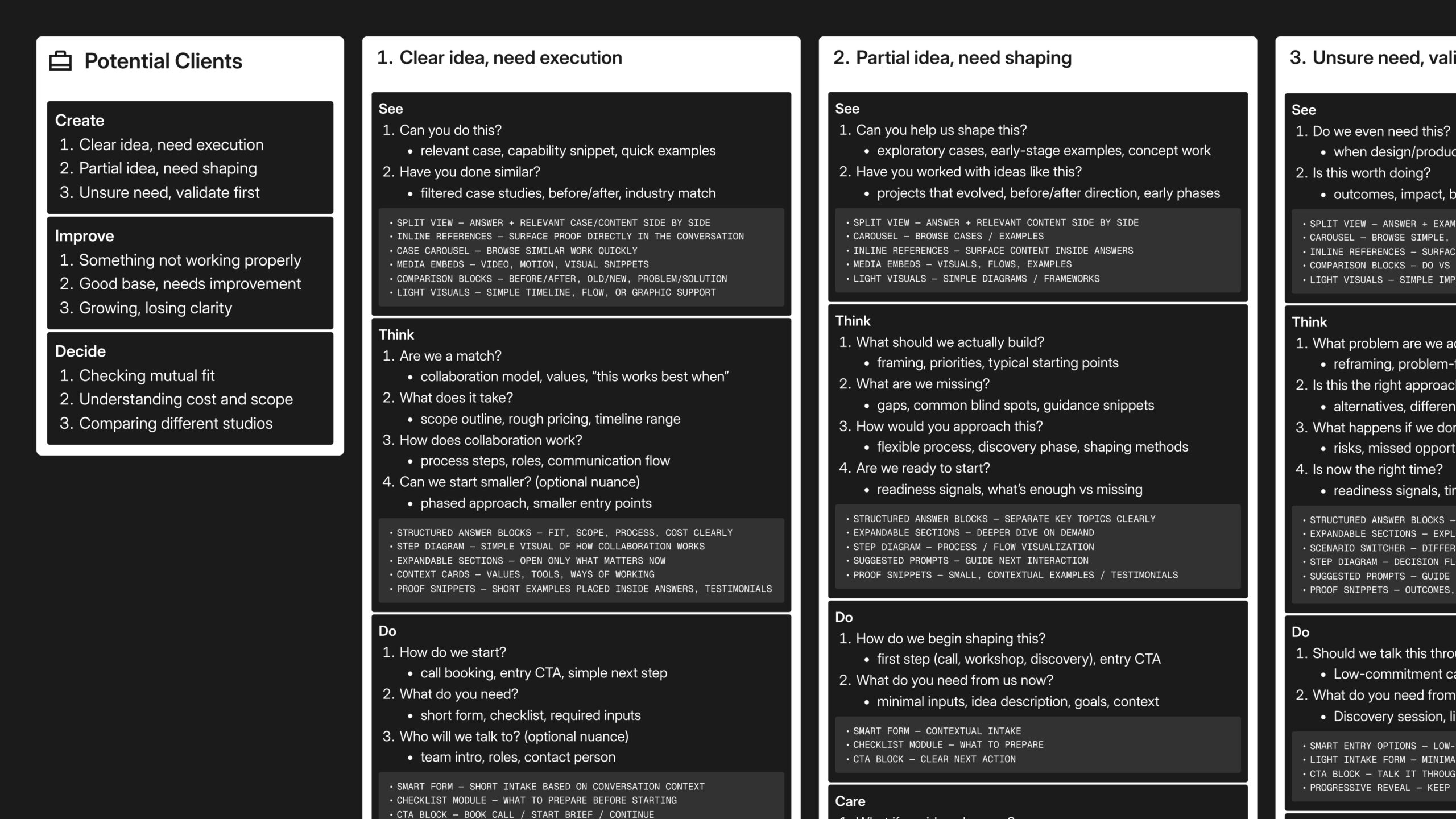
Definition of possible situations:
User Experience:
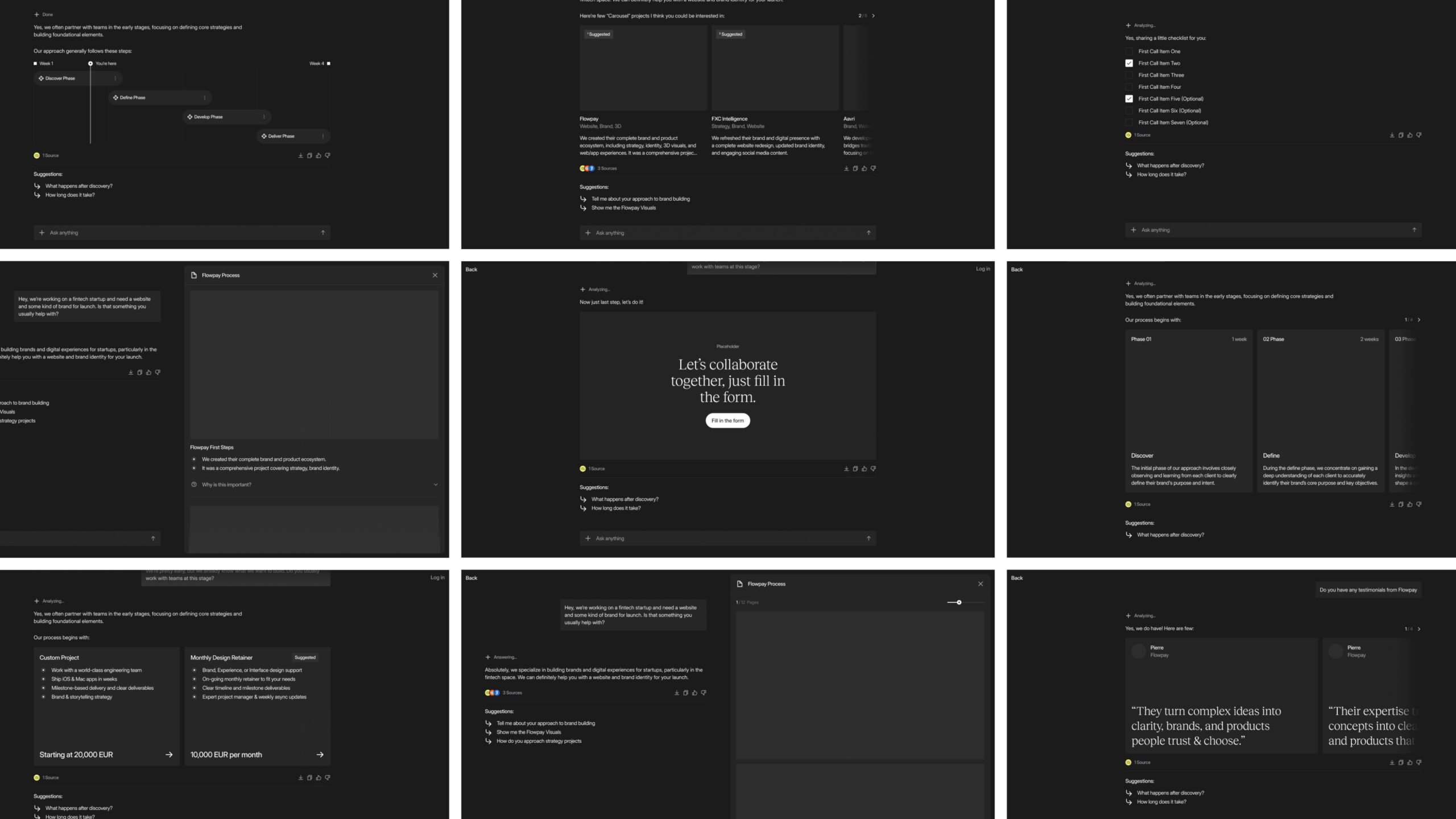
User Interface:
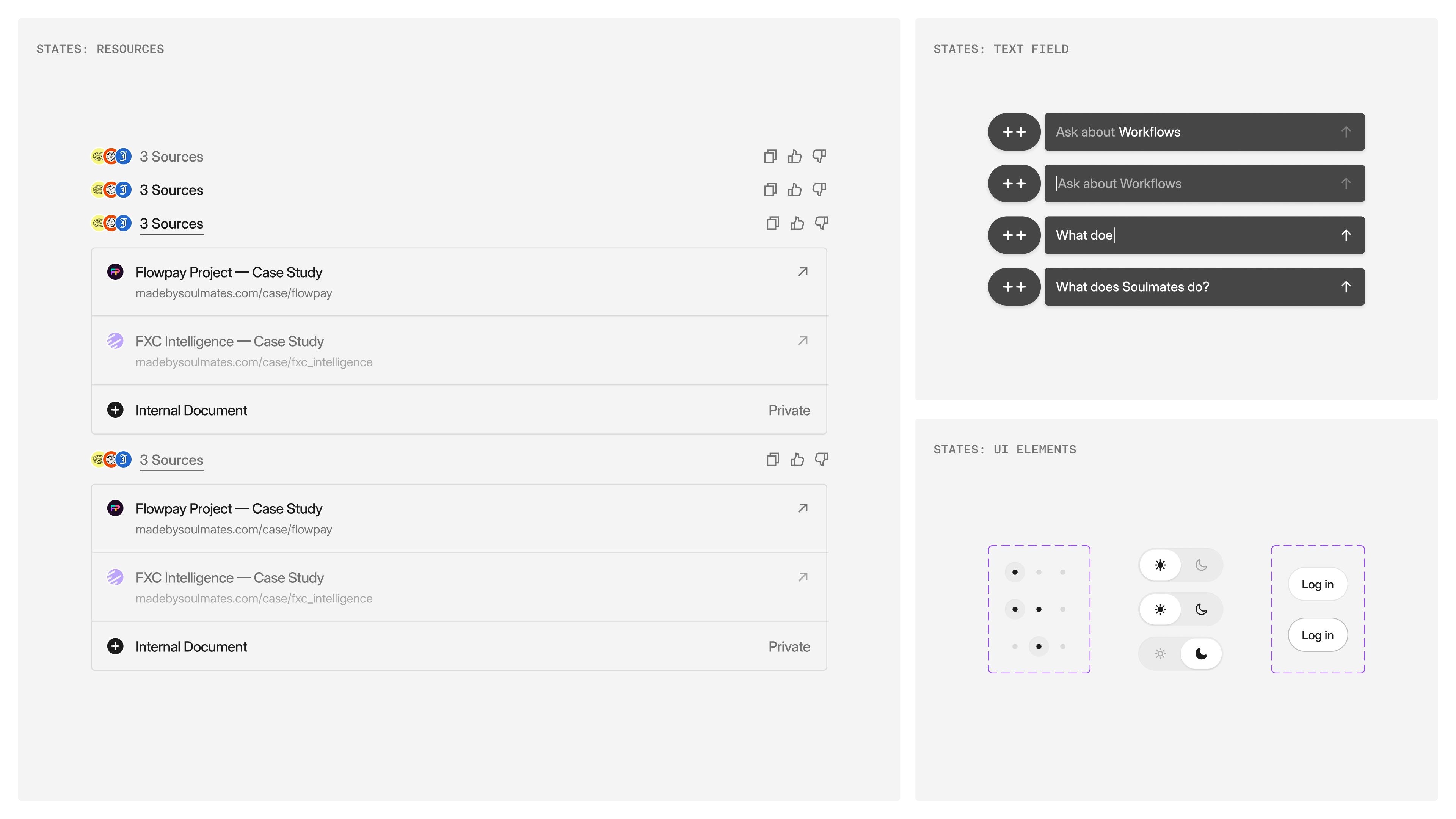
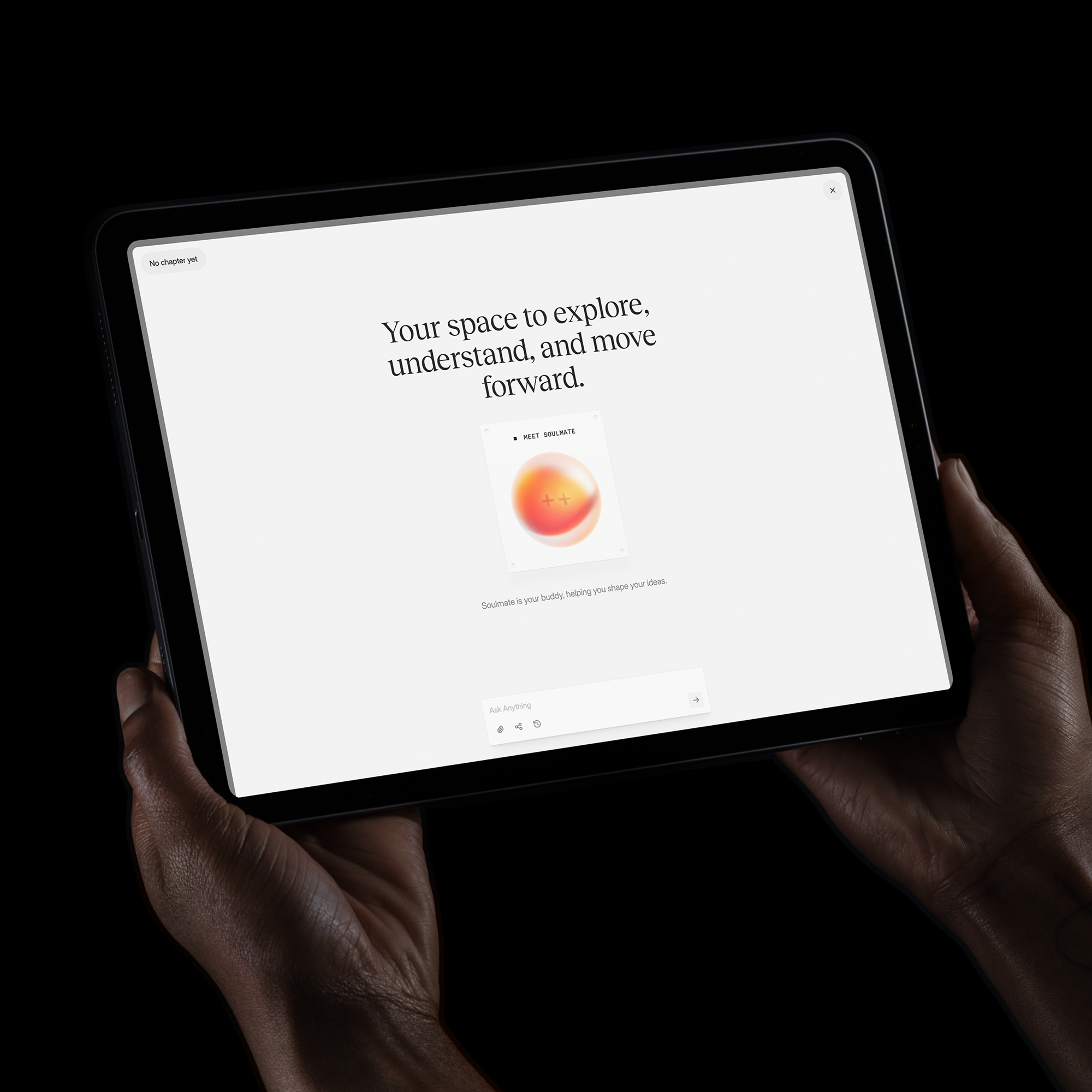
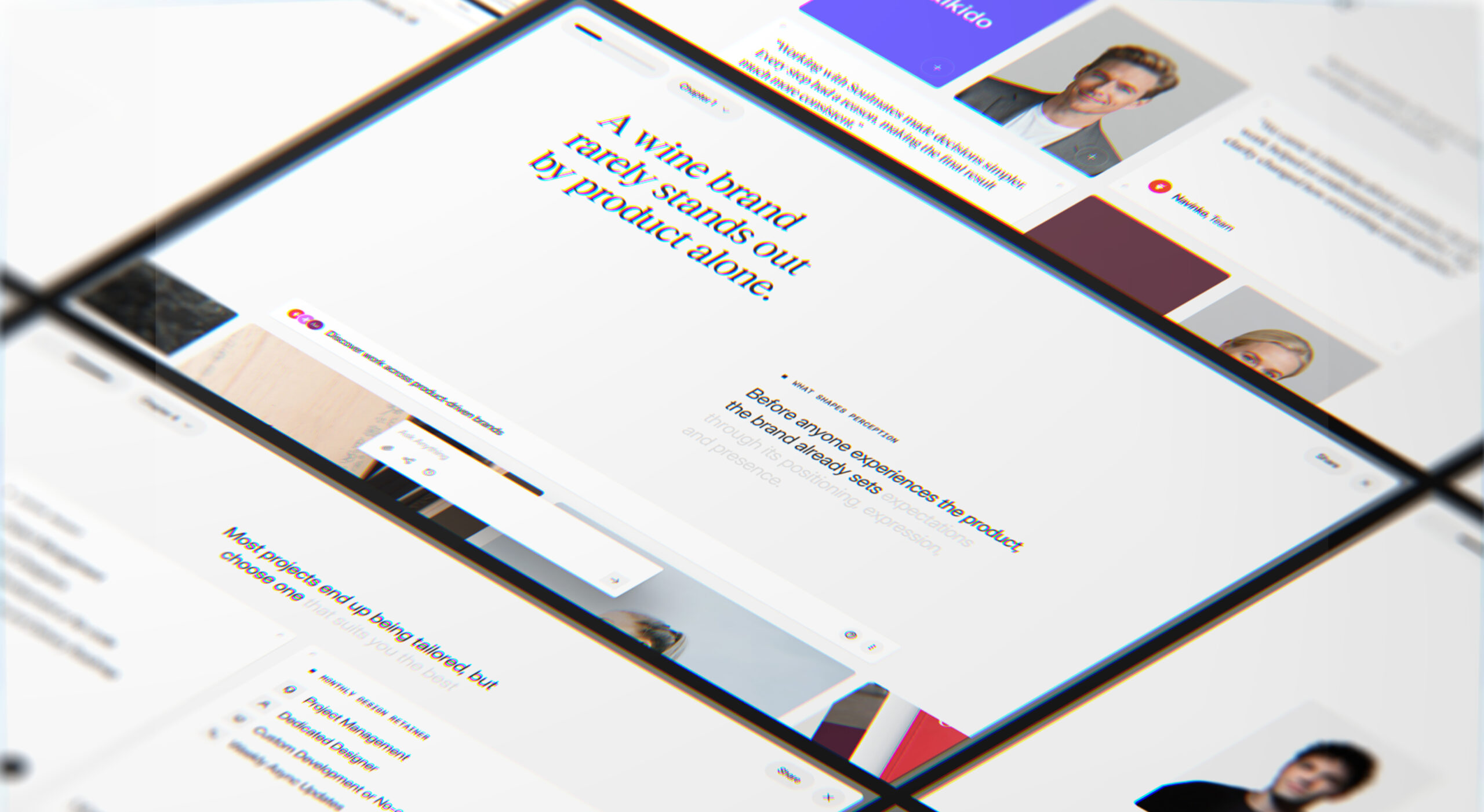
Deliverable 2 – Conceptual Exploration of the Soulmates Hub: Exploration without technical or budgetary constraints. The content is organized not into reports but into chapters—a personalized space with a guide that you can navigate through and revisit.
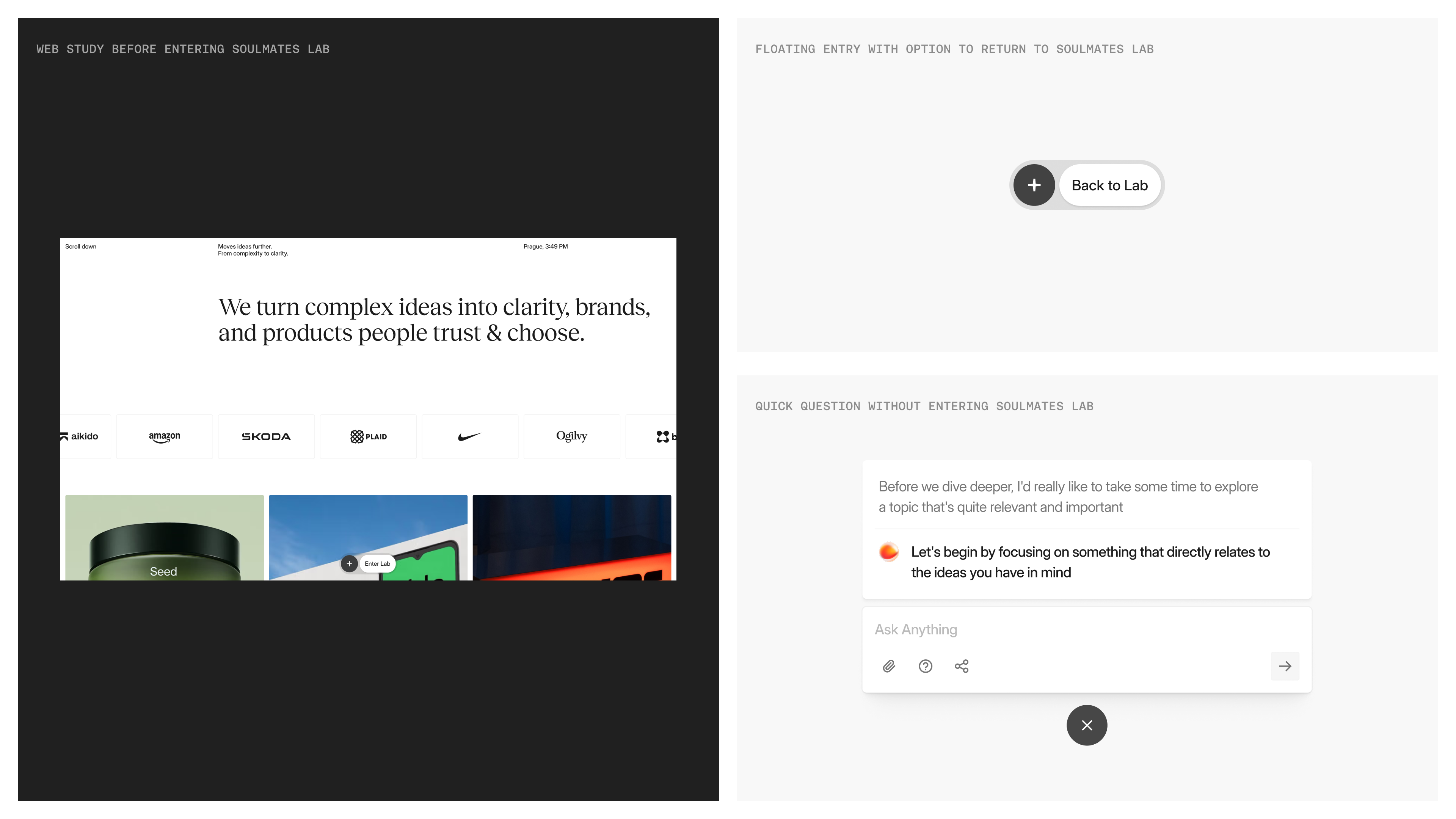
Conclusion: It’s not a replacement for a website, but rather a complementary layer that takes the lead. Along the way, I’ve learned the basics of working with LLMs, RAG, databases, and prompts. The result is a proposed direction with real potential for further development.