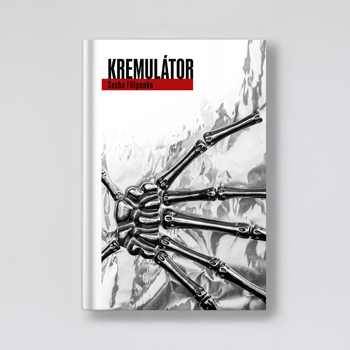
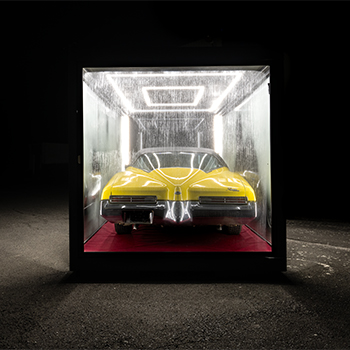
A publication on the architectural work of Dušan Jurkovič.
Dušan Samo Jurkovič (1868–1947) was a prominent figure of Central European architecture at the turn of the 19th and 20th centuries. His work was rooted in a deep relationship with folk culture—especially the Wallachian, Slovak, and Moravian wooden building traditions—which he was able to transform into a modern architectural language that reflected the spirit of his time. Drawing inspiration from the English Arts & Crafts movement, Art Nouveau, and ethnographic studies, he developed a distinctive style that is today regarded as one of the peaks of Central European Art Nouveau and folk-ornamental expression.
Jurkovič was not only an architect, but also a designer of interiors, furniture, landscape layouts, and memorials. A significant part of his work was created during his time in Moravia and Silesia, where he realized buildings that harmoniously connect architecture with the surrounding landscape. His sensitivity to material, detail, and human scale remains an enduring source of inspiration across disciplines, and his buildings today stand among the most distinctive symbols of the region’s cultural identity.
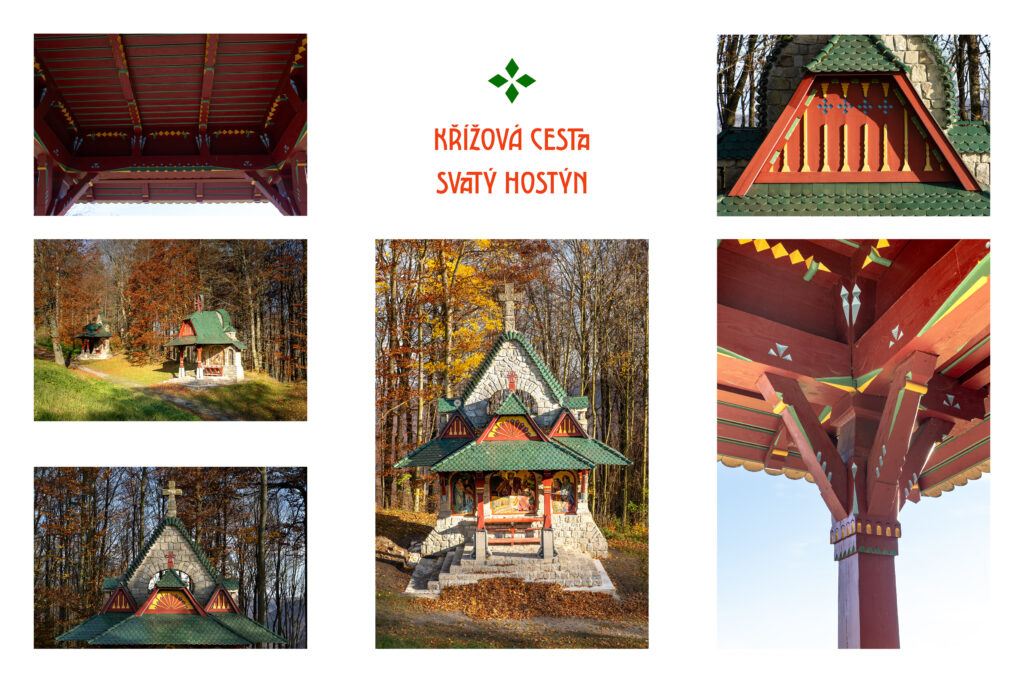
The Stations of the Cross at Svatý Hostýn were created at the beginning of the 20th century as part of a broader restoration of the pilgrimage complex. Dušan Jurkovič conceived them as a sensitive integration of architecture and landscape: the individual stations are not arranged mechanically, but respond to the rhythm of the terrain and the atmosphere of the forest into which they are naturally embedded. Wood, stone, ornament, and fine detail together form an environment in which the spiritual dimension intertwines with the natural scenery of Hostýn.
Today, Jurkovič’s Stations of the Cross are regarded as one of the defining elements of the entire site. Ongoing restoration work is renewing the original surfaces, colour schemes, and ornamentation, allowing visitors to experience the stations in a form that corresponds to the author’s original vision.
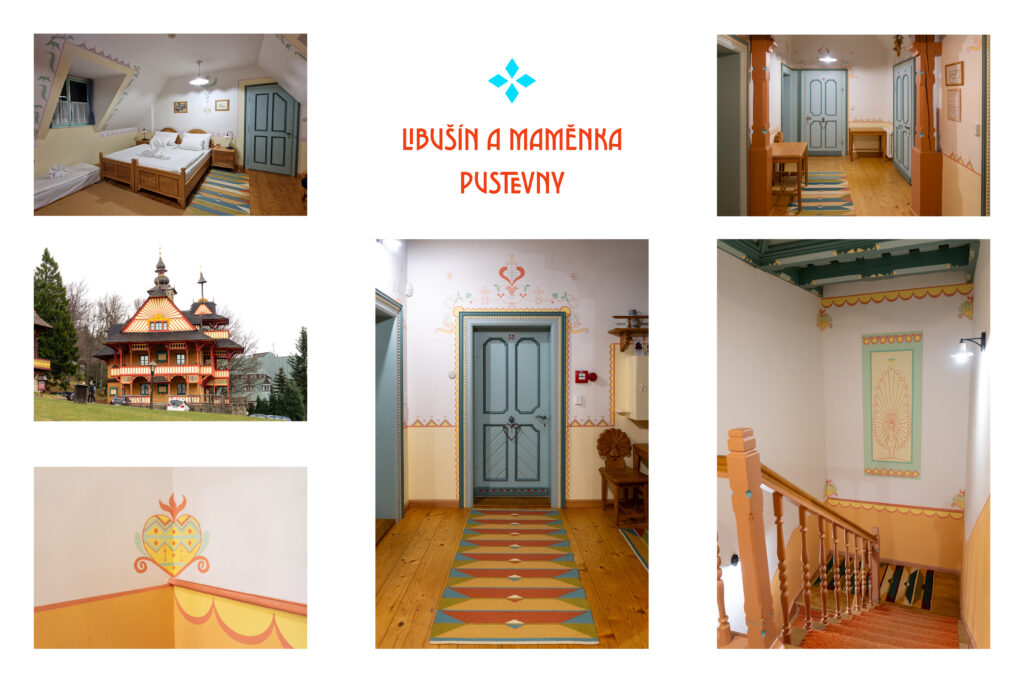
Maměnka, built in 1899, was designed as an accommodation lodge, and its calm, balanced character reflects the building’s practical purpose. More restrained ornamentation, a regular rhythm of façades, and a functional layout are complemented by characteristic carpentry details by Dušan Jurkovič, painted elements, and a sensitive use of colour. Thanks to these qualities, the building naturally blends into the landscape of the Beskydy Mountains. Throughout its history, Maměnka has primarily served tourists—during the First Czechoslovak Republic as a lively centre of tourism, and later as a recreational facility—while retaining the intimate scale and atmosphere of a mountain refuge.
After a fire at the neighbouring Libušín, Maměnka underwent an extensive reconstruction focused on structural stabilization, the repair of infill elements, the restoration of its colour scheme, and the conservation of wooden features. Today, it once again functions as an accommodation facility, allowing visitors to experience a more pragmatic yet still artistically distinctive aspect of Jurkovič’s architecture. The building remains an authentic part of Pustevny and forms a natural counterpoint to the more expressively rich Libušín.
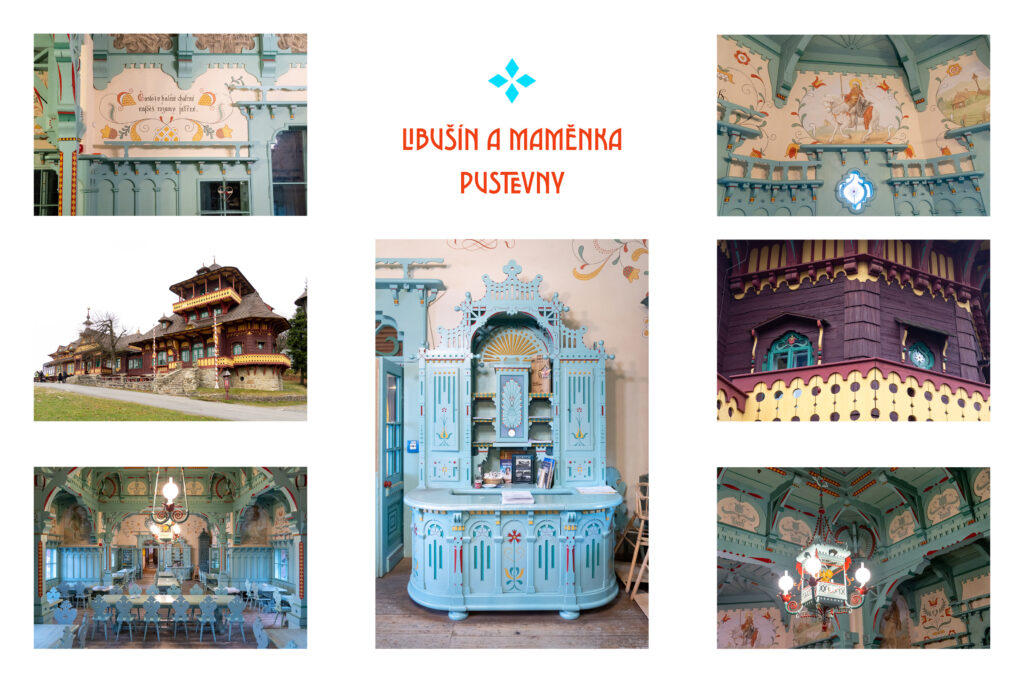
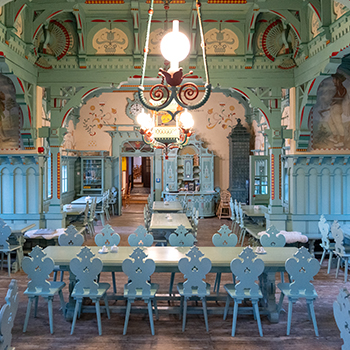
Libušín, also built in 1899, represents the most expressively rich form of Dušan Jurkovič’s work. The building is conceived as a wooden structure distinguished by bold colour schemes, abundant ornamentation, and symbolic motifs derived from Wallachian tradition and Slavic mythology. For many decades, Libušín served as a social house and restaurant, becoming the centre of life at Pustevny and an icon of the entire region, while Maměnka primarily fulfilled an accommodation function.
The fire in 2014 severely damaged both the structure and its decoration, leading to one of the most meticulous reconstruction projects in Czech architecture. Specialists drew on archival materials, surviving fragments, and digital documentation in order to restore the building as closely as possible to its original form. The reconstruction was completed in 2020, and Libušín reopened as a restaurant and cultural venue. Today, together with Maměnka, it forms a harmonious pair of two distinct yet complementary expressions of Jurkovič’s architectural vision.
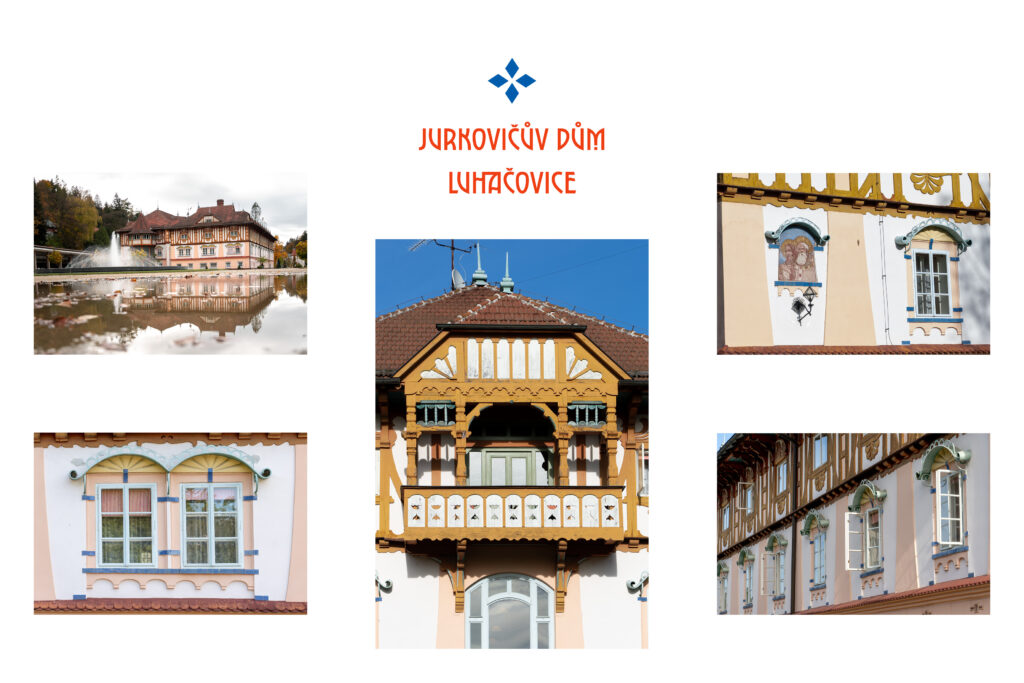
Jurkovičův dům (Jurkovič House, 1902–1903) was designed as a spa boarding house whose architecture combines traditional wooden forms with a modern conception of a spa building. Here, the architect applied characteristic elements of his style—bold colour schemes, decorative motifs, and pronounced articulation of volumes—which lend the building a sense of vitality and harmony. The structure naturally became part of the Luhačovice Colonnade and from the very beginning created an environment that feels welcoming and cultivated.
Throughout the 20th century, the building was adapted to the practical needs of spa operations, yet its appearance remained recognisable and closely connected to the atmosphere of Luhačovice. Today, it serves as a hotel and stands as a prominent landmark of the spa promenade.
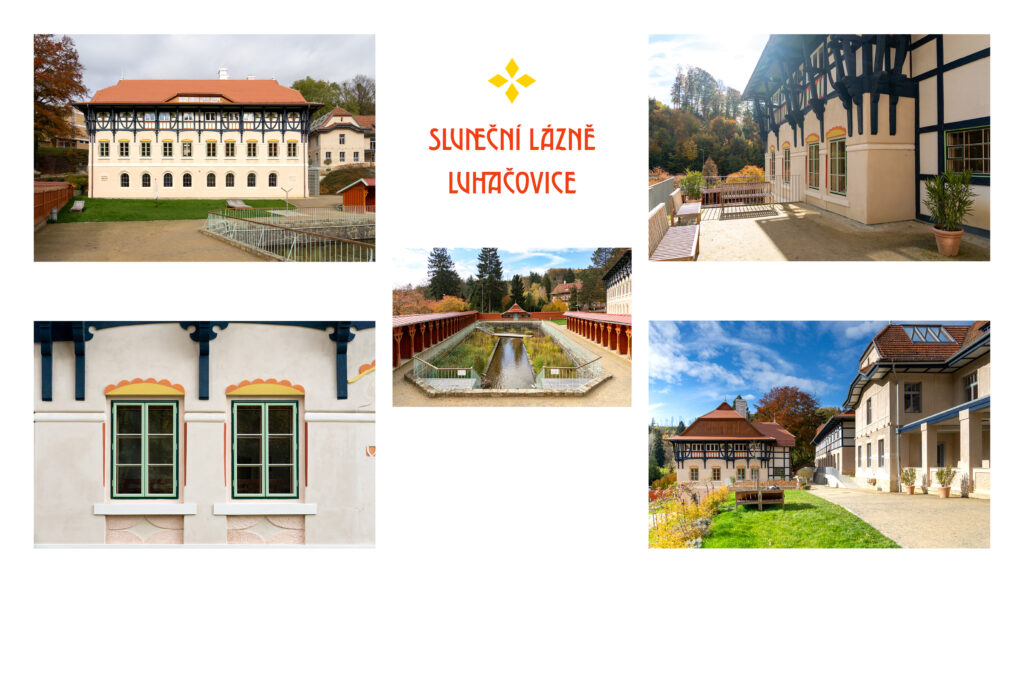
Sluneční lázně, designed in 1902–1903, represent an original spa concept based on exposure to sunlight and fresh air. The overall architectural solution feels light and open, while ornamental elements create a subtle aesthetic that harmonises with the surrounding landscape and the spa character of Luhačovice.
Throughout the transformations of the 20th century, the baths served various therapeutic purposes while consistently maintaining their connection to the natural environment on which their function is founded. Today, they form part of the relaxation and treatment facilities of the spa complex. A recent restoration focused on reinstating the original appearance of the wooden structures and colour scheme, allowing the baths to once again convey the fresh and light impression that lay at the core of Dušan Jurkovič’s original concept.