This master’s thesis focuses on the interior reconstruction of the historical building No. 44 in Jedovnice and its conversion into a multifunctional facility. The aim of the design is to create a café, a library with an information center, and clubrooms for local associations, complemented by a multifunctional hall for small-scale cultural events and exhibitions. The architectural solution seeks a sensitive dialogue between a new interior, attractive to both residents and tourists, and respect for the building’s historical essence. The project aims to support social life in the municipality and establish a foundation for the development of the local community.
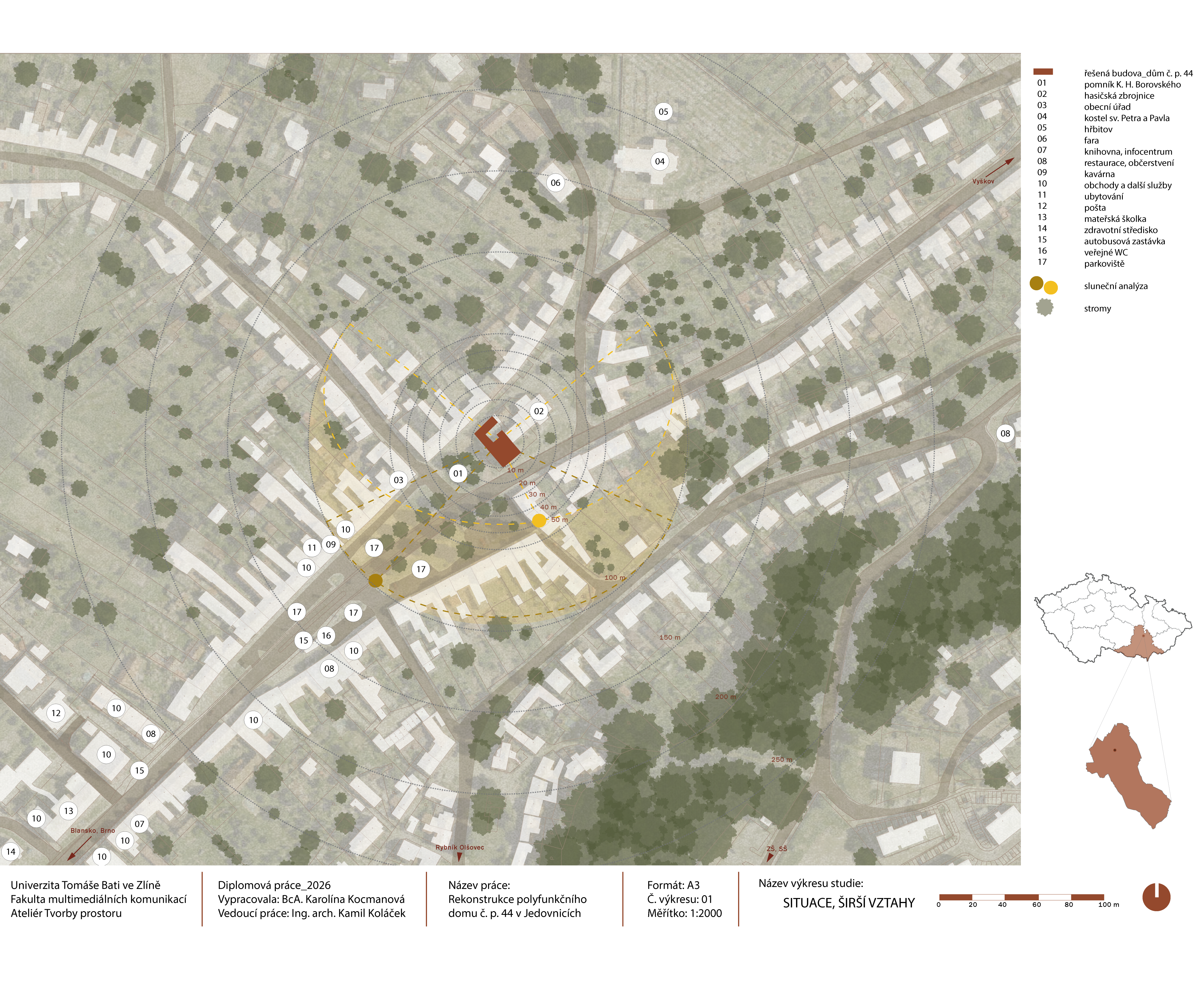
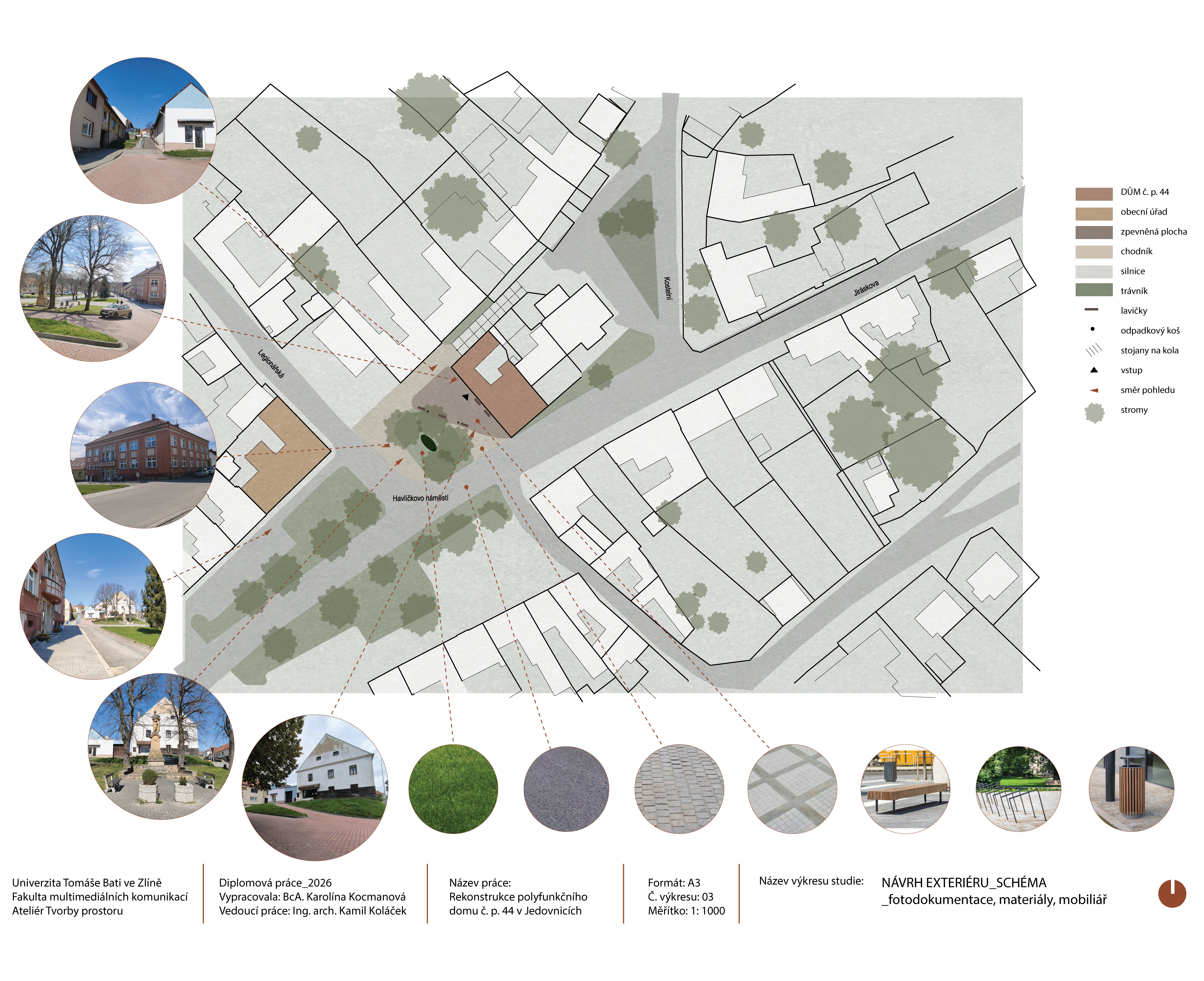
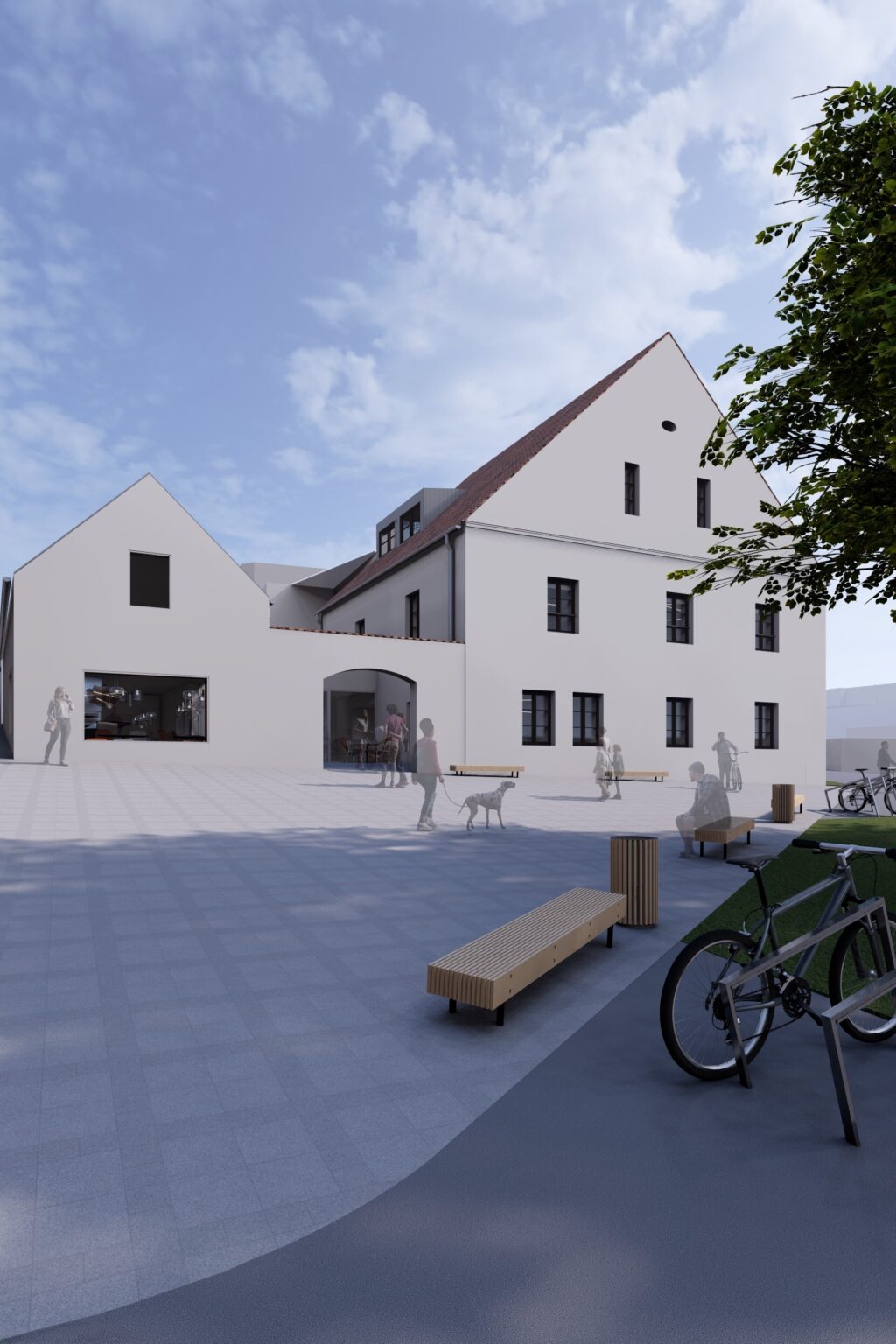
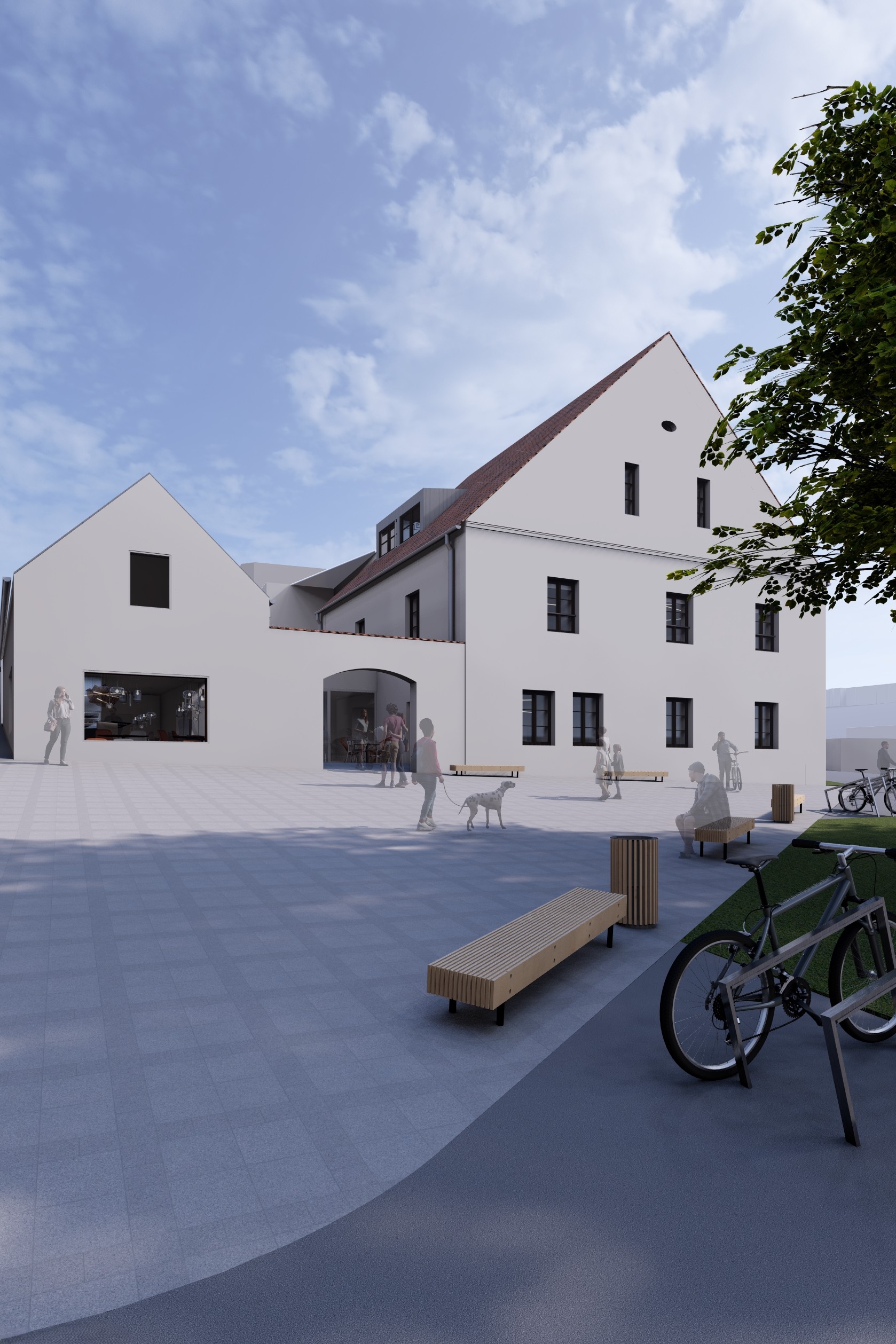
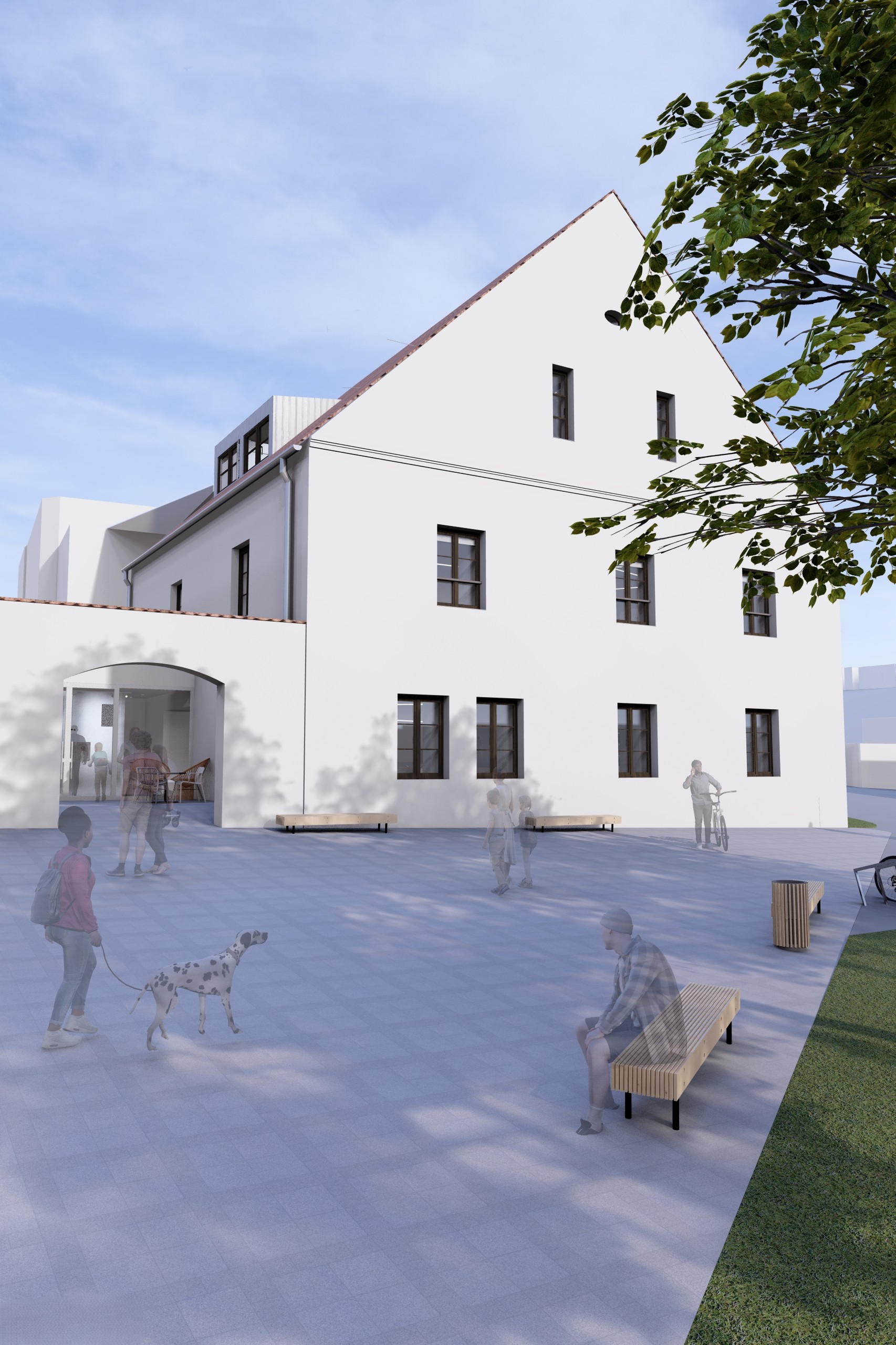
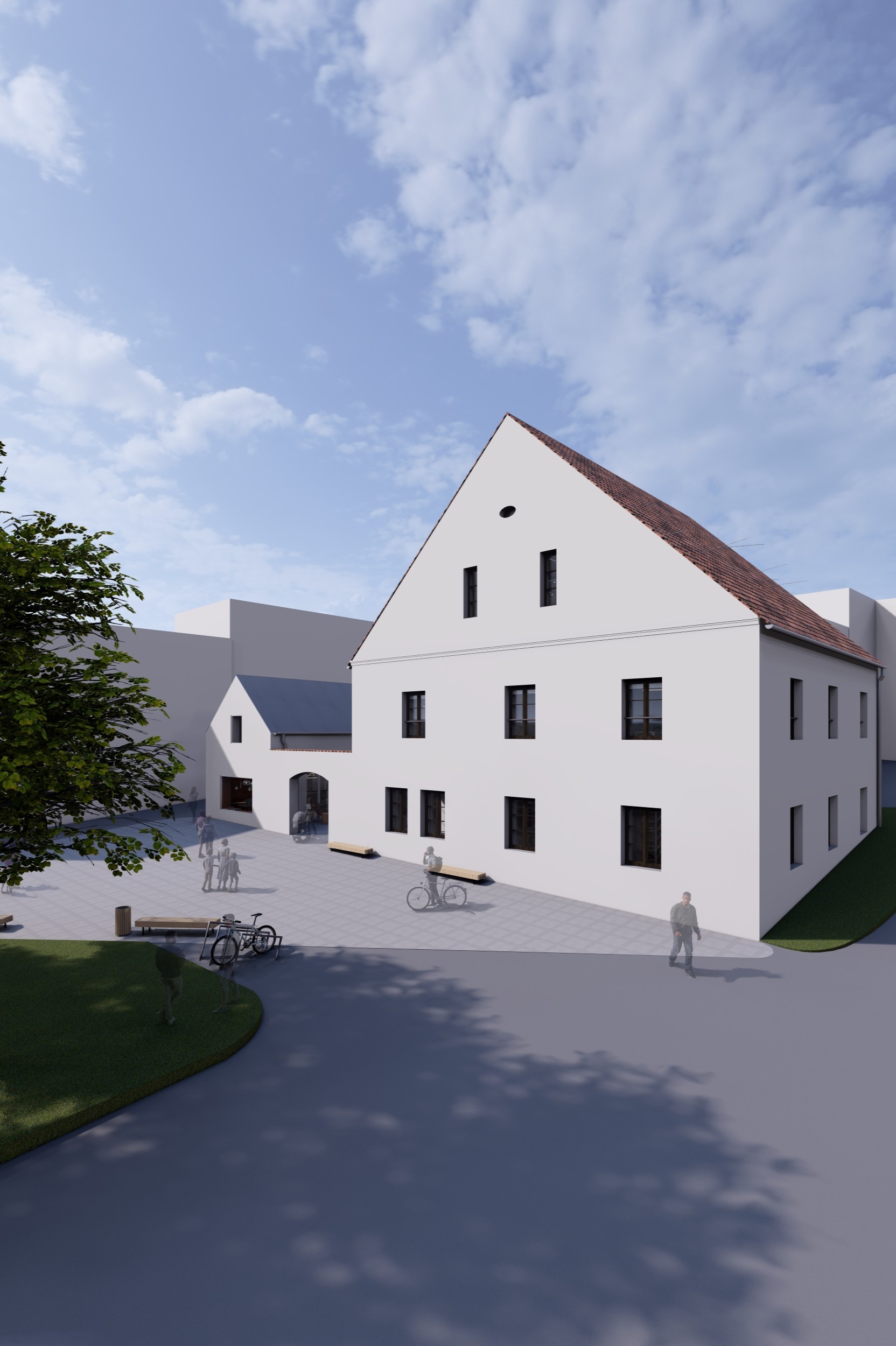
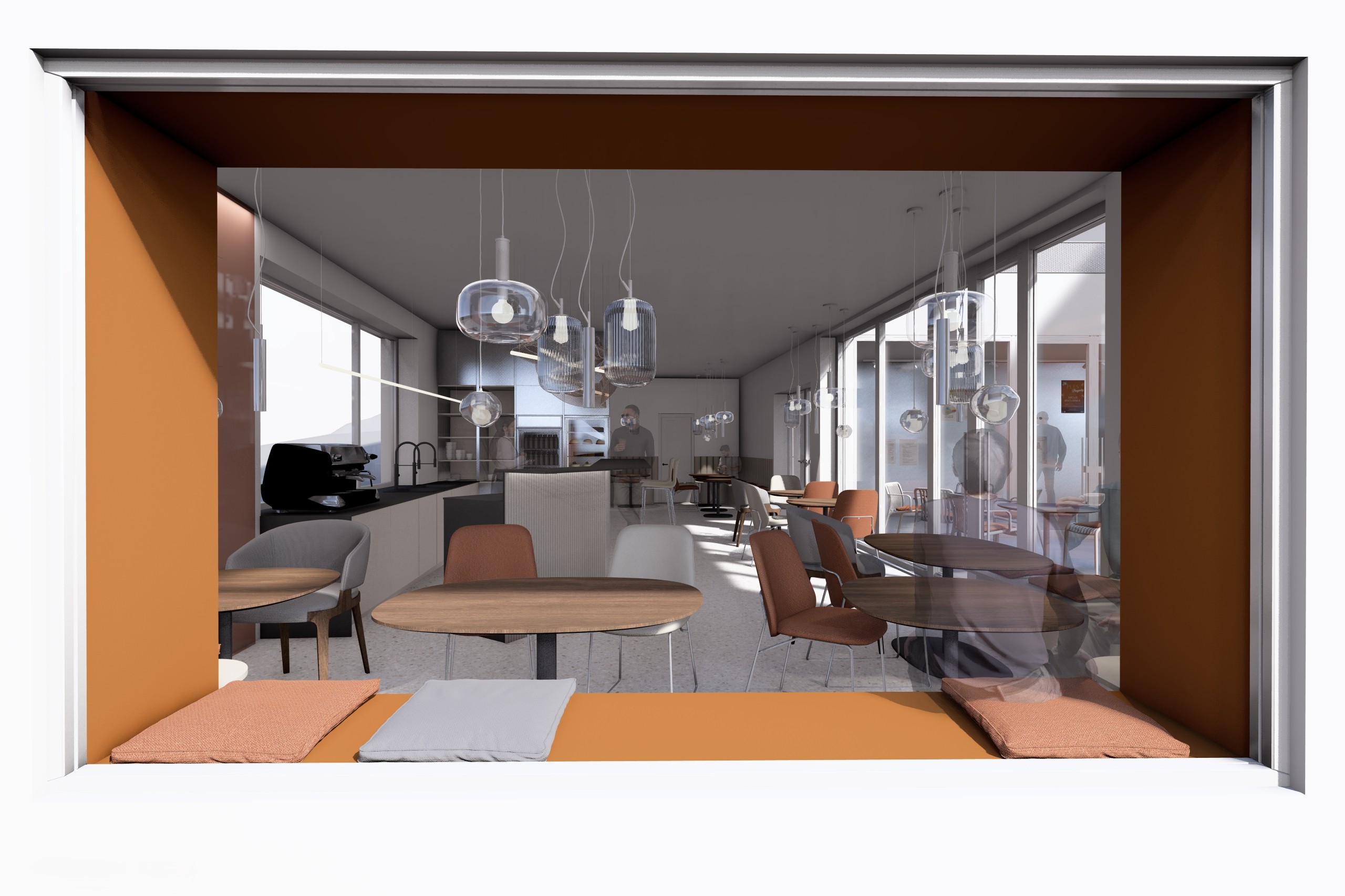
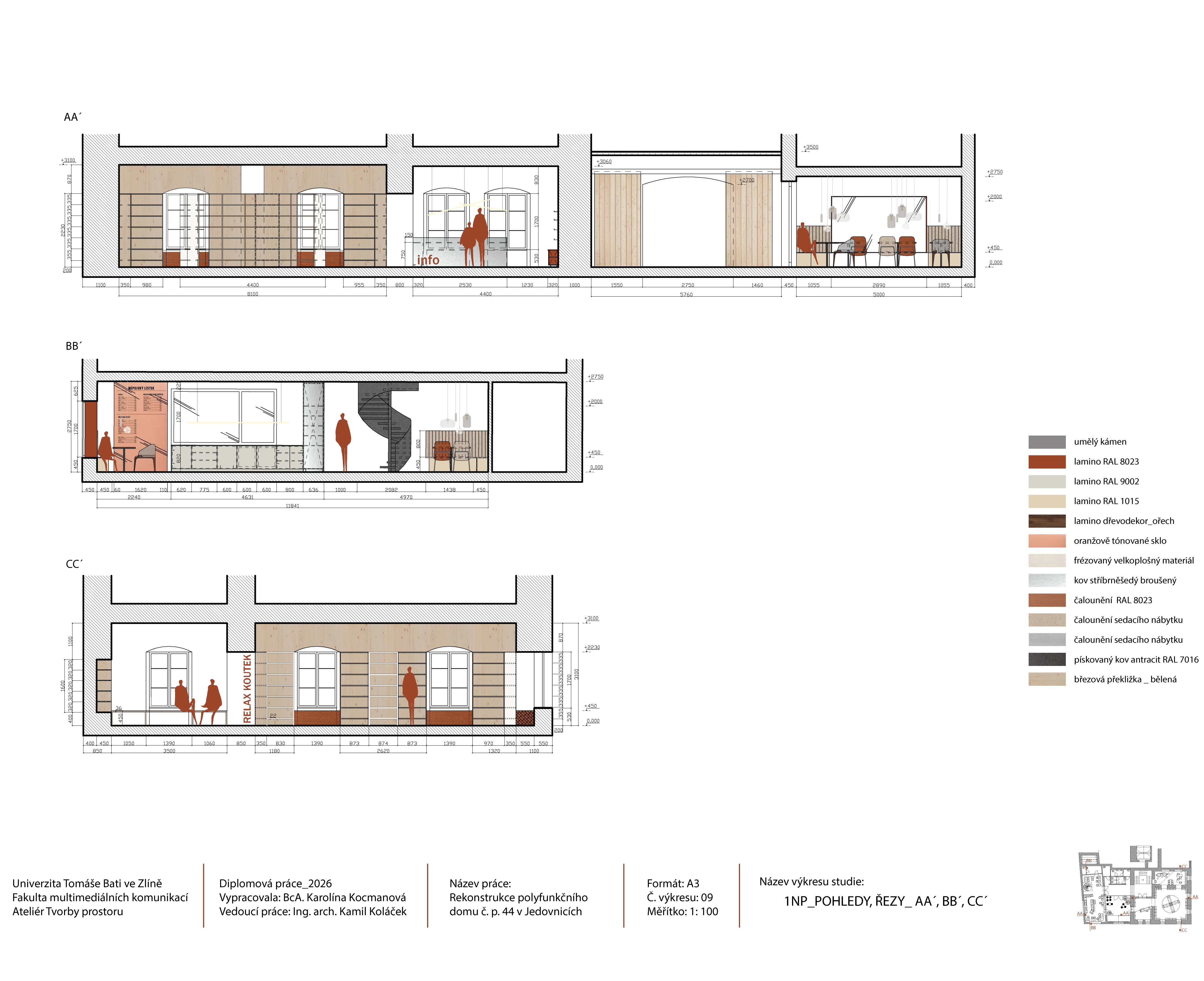
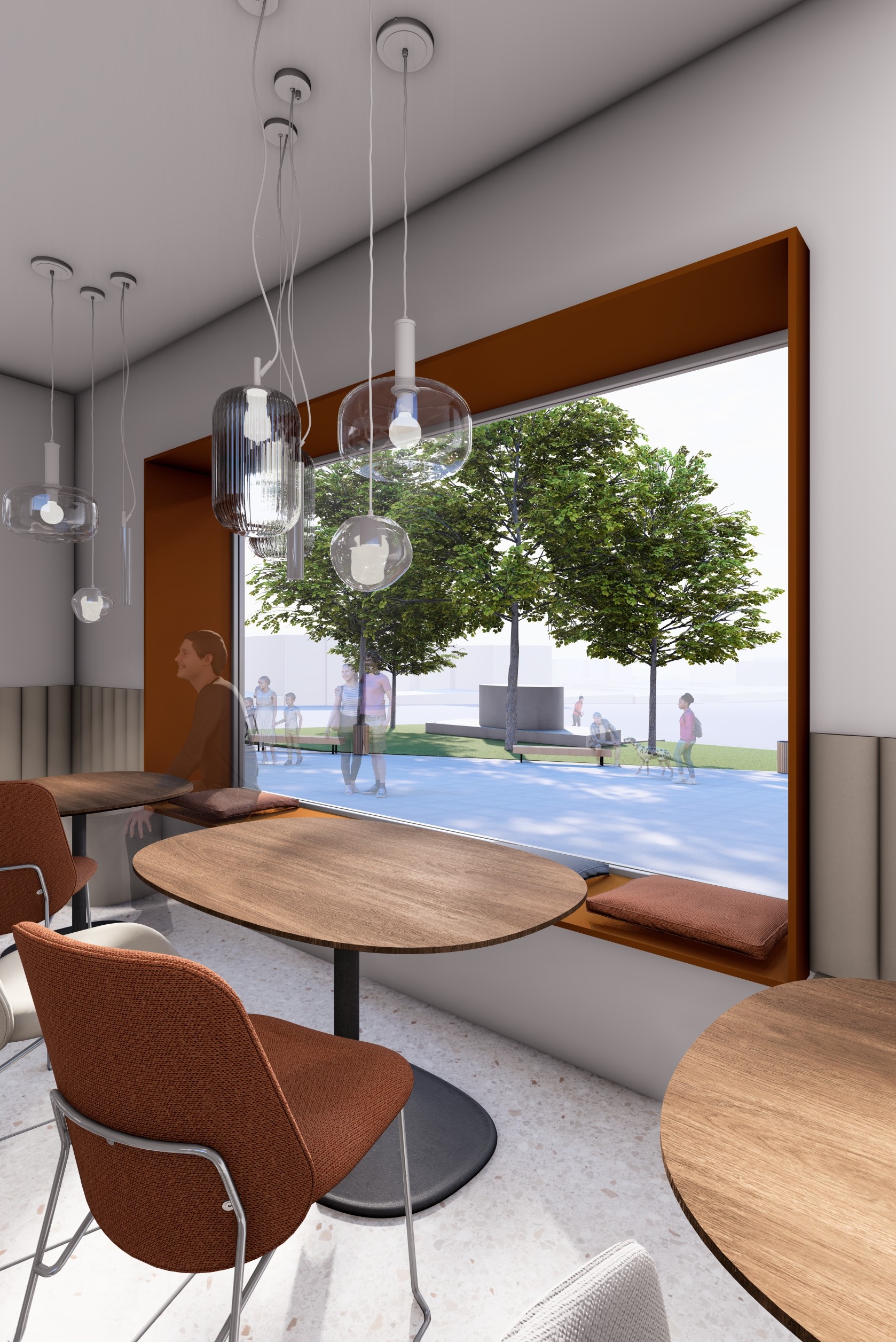
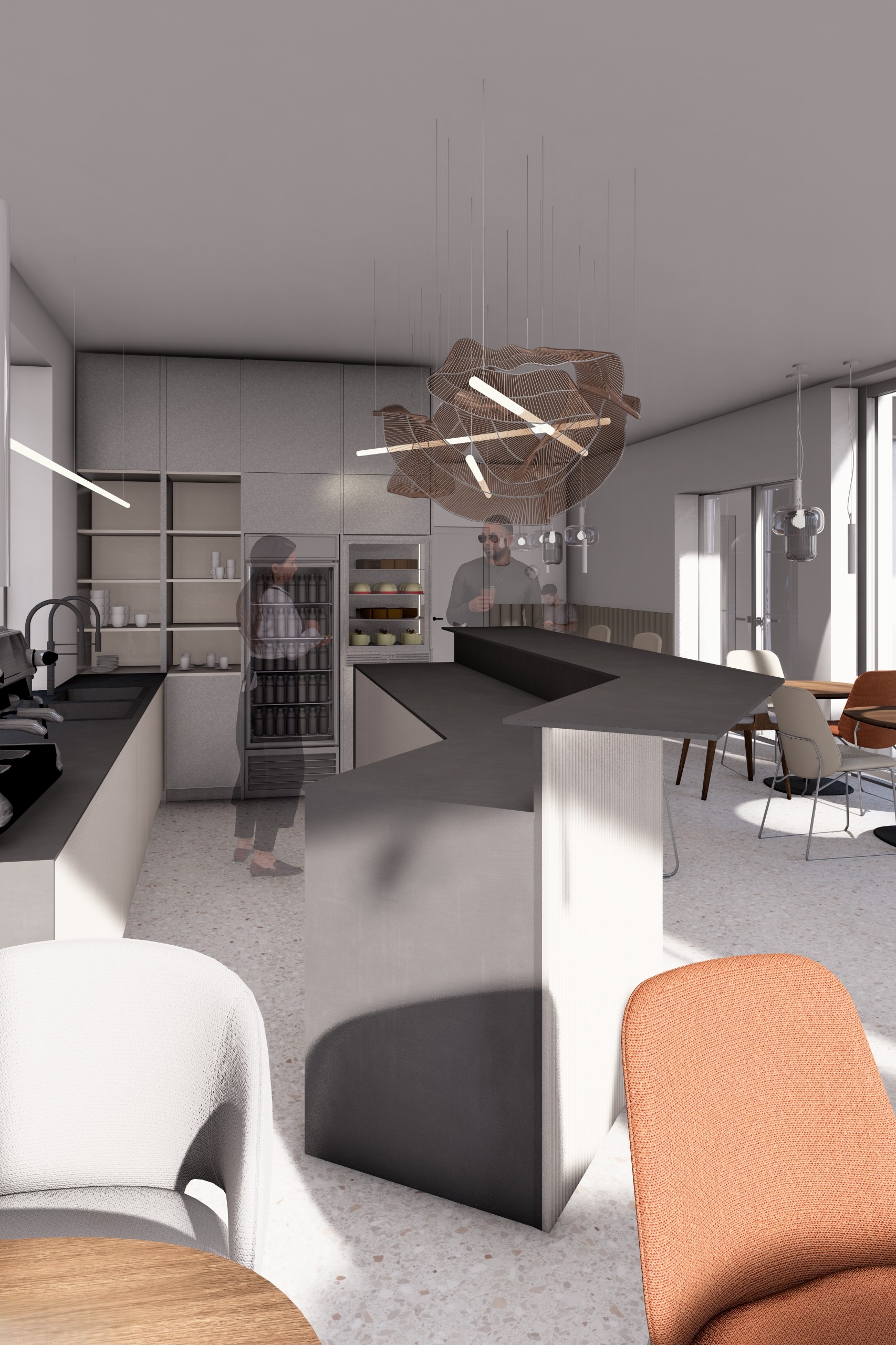
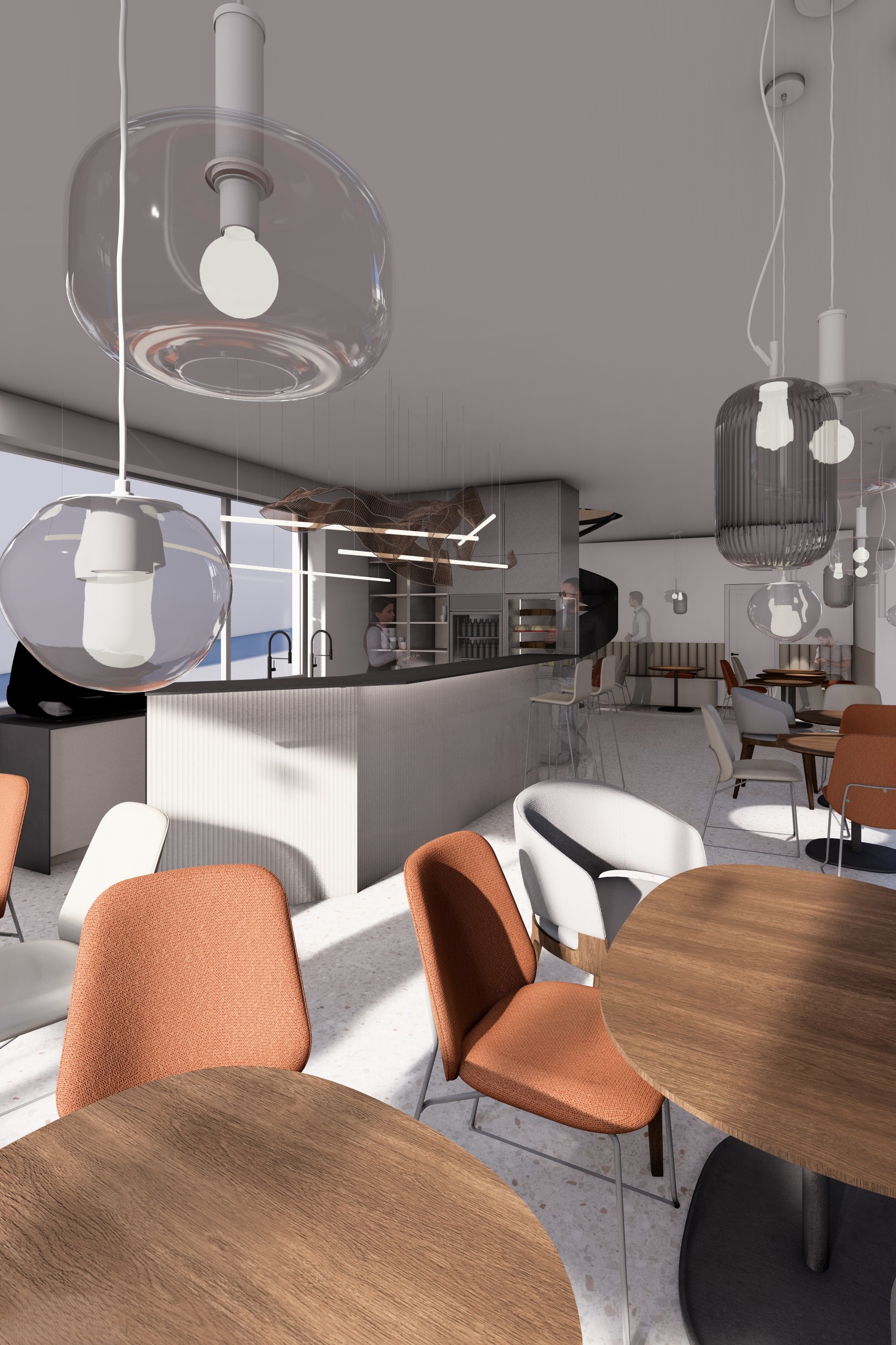
This is a three-story building with a single-story addition. All floors are utilized to their full potential. The historic facade of the house, featuring a decorative cornice, the original window layout, and the main entrance between the old and new buildings, has been preserved. The newly constructed extension, built on the same floor plan as the original farm building, will offer the public a café space. Its most prominent feature is a large bay window set on the southwest facade of the house. This architectural feature is intended to attract passersby to visit. Not only the large window, but the entire house, thanks to its location and appearance, is designed to invite visitors. The contrast between the old historic house and the modern extension, with its striking features, should also be eye-catching.
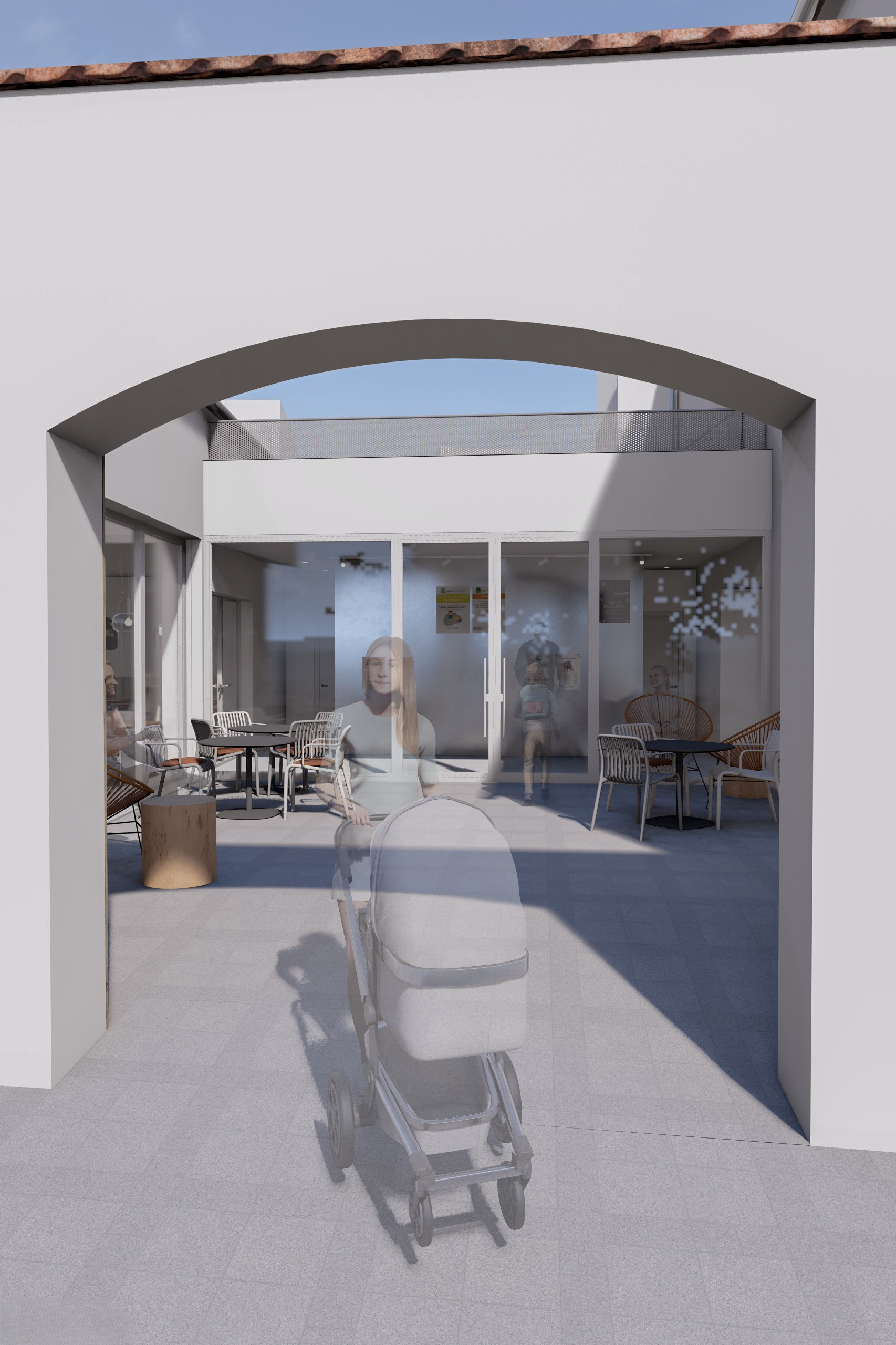
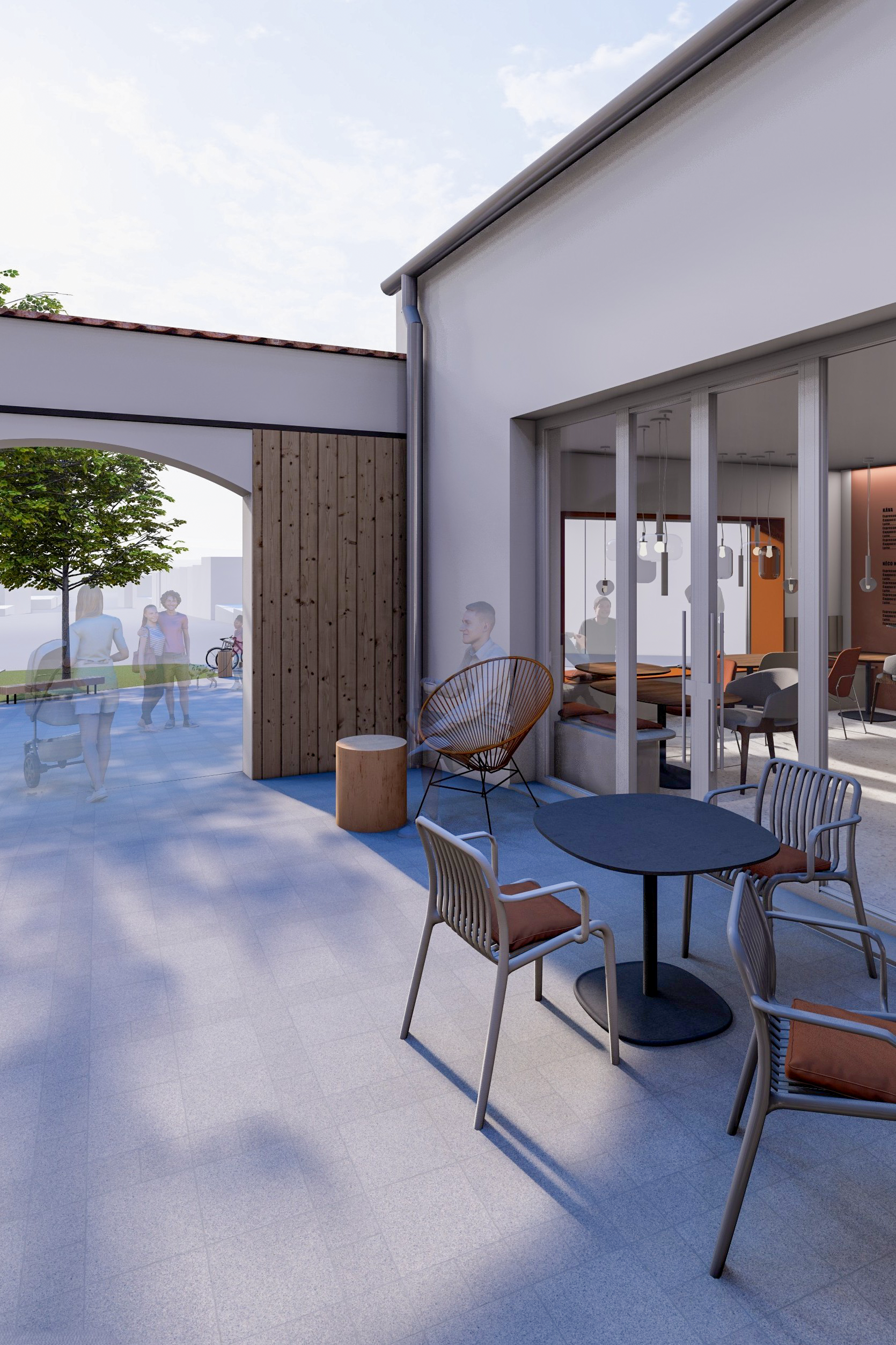
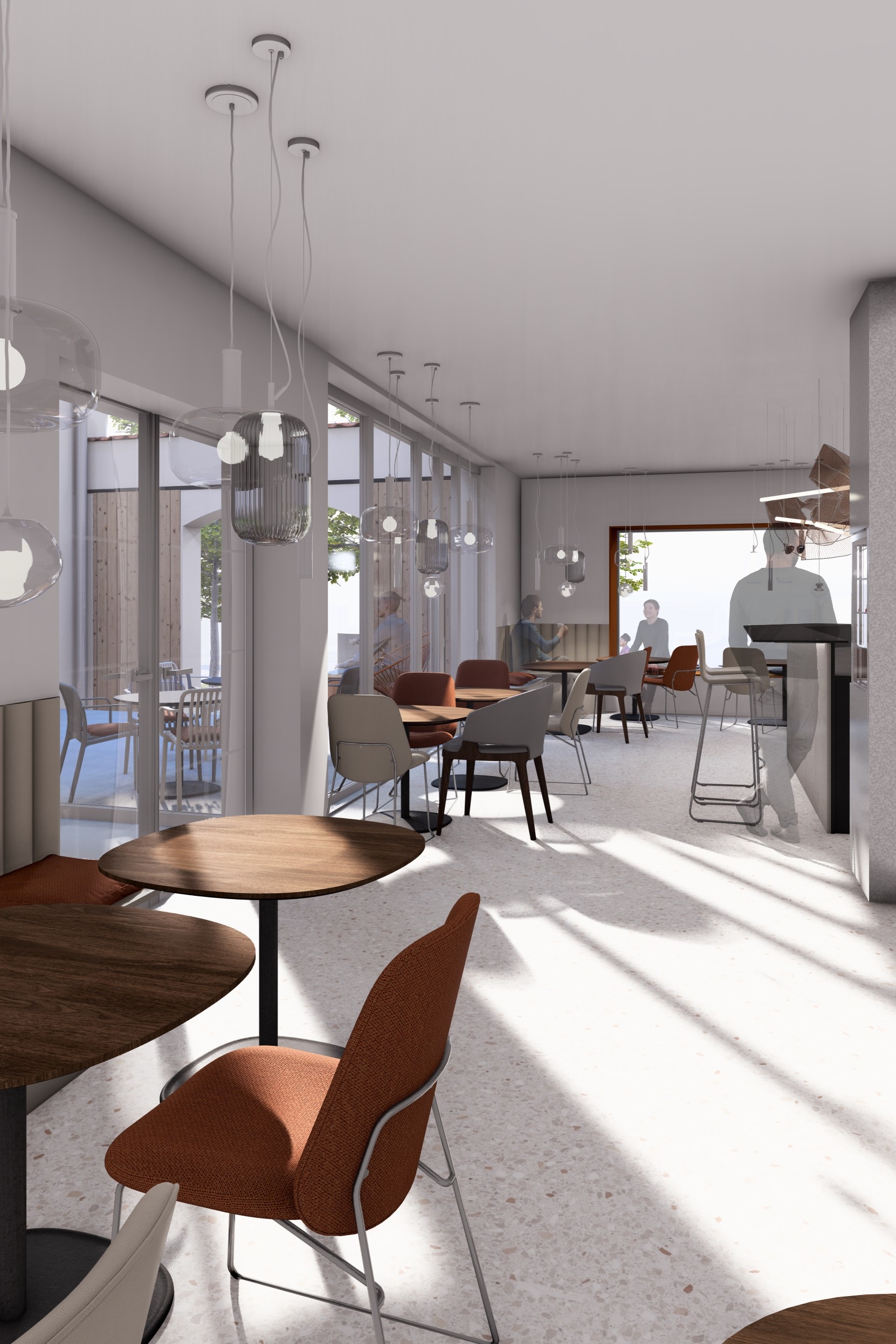
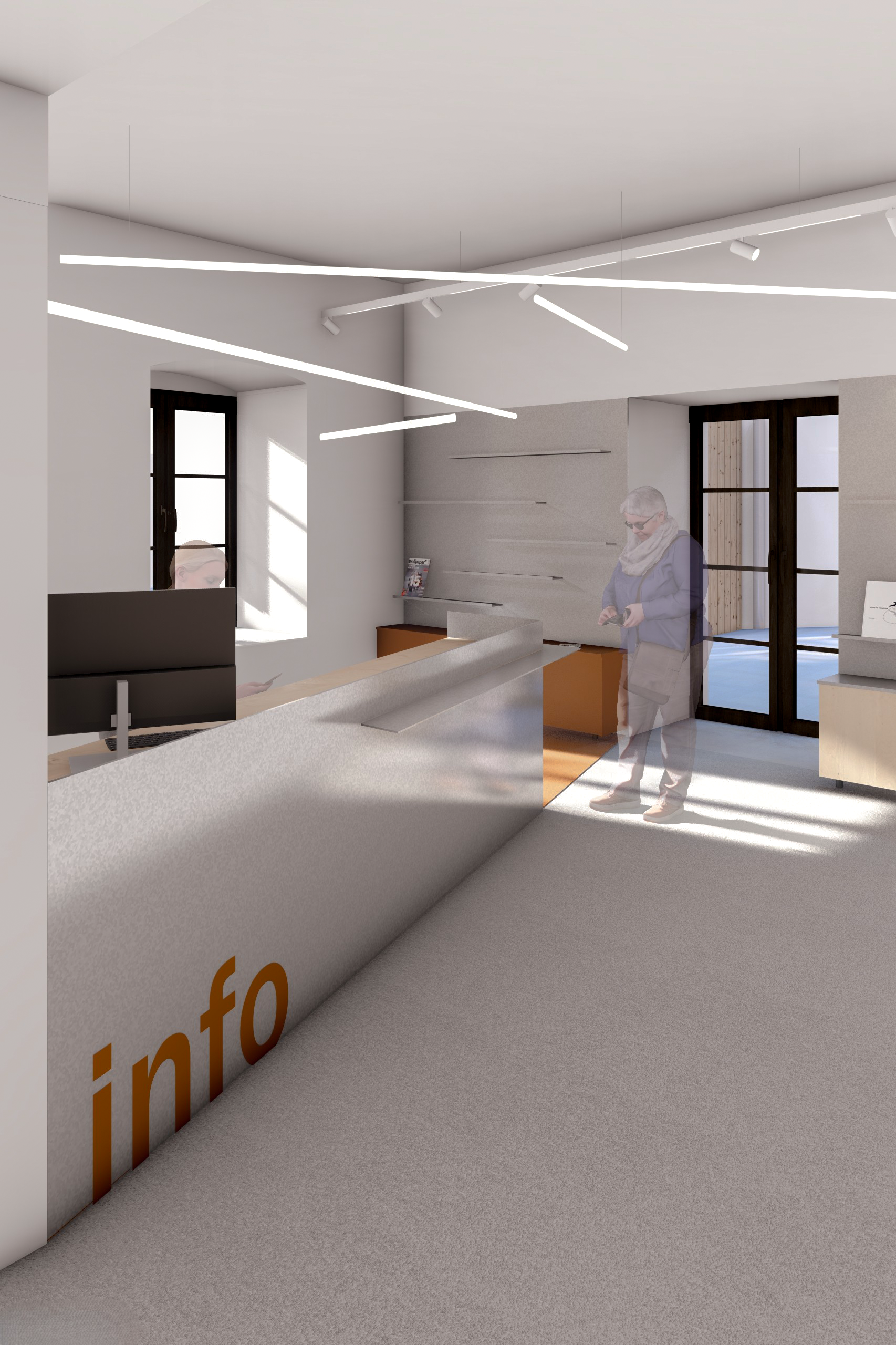
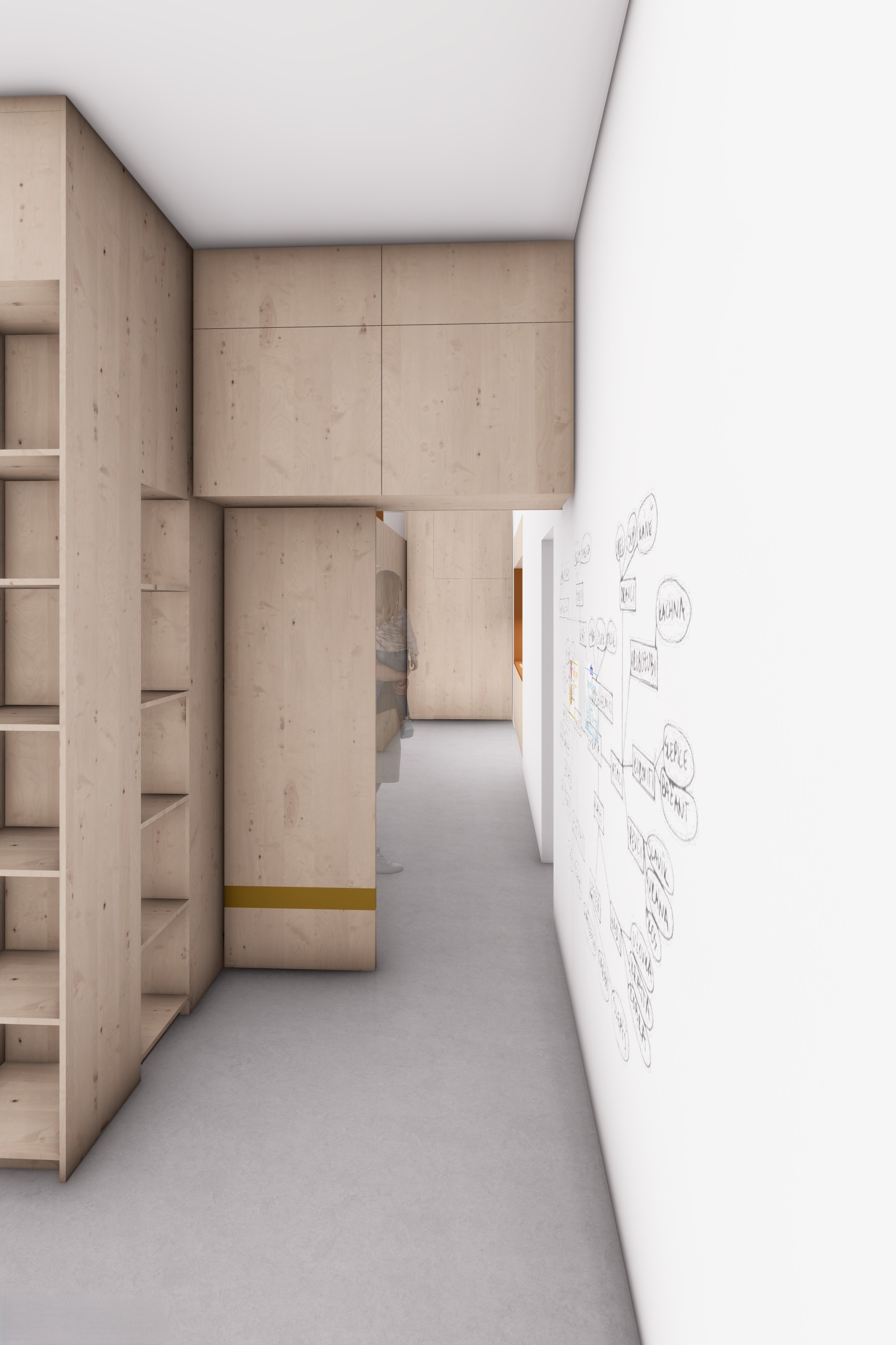
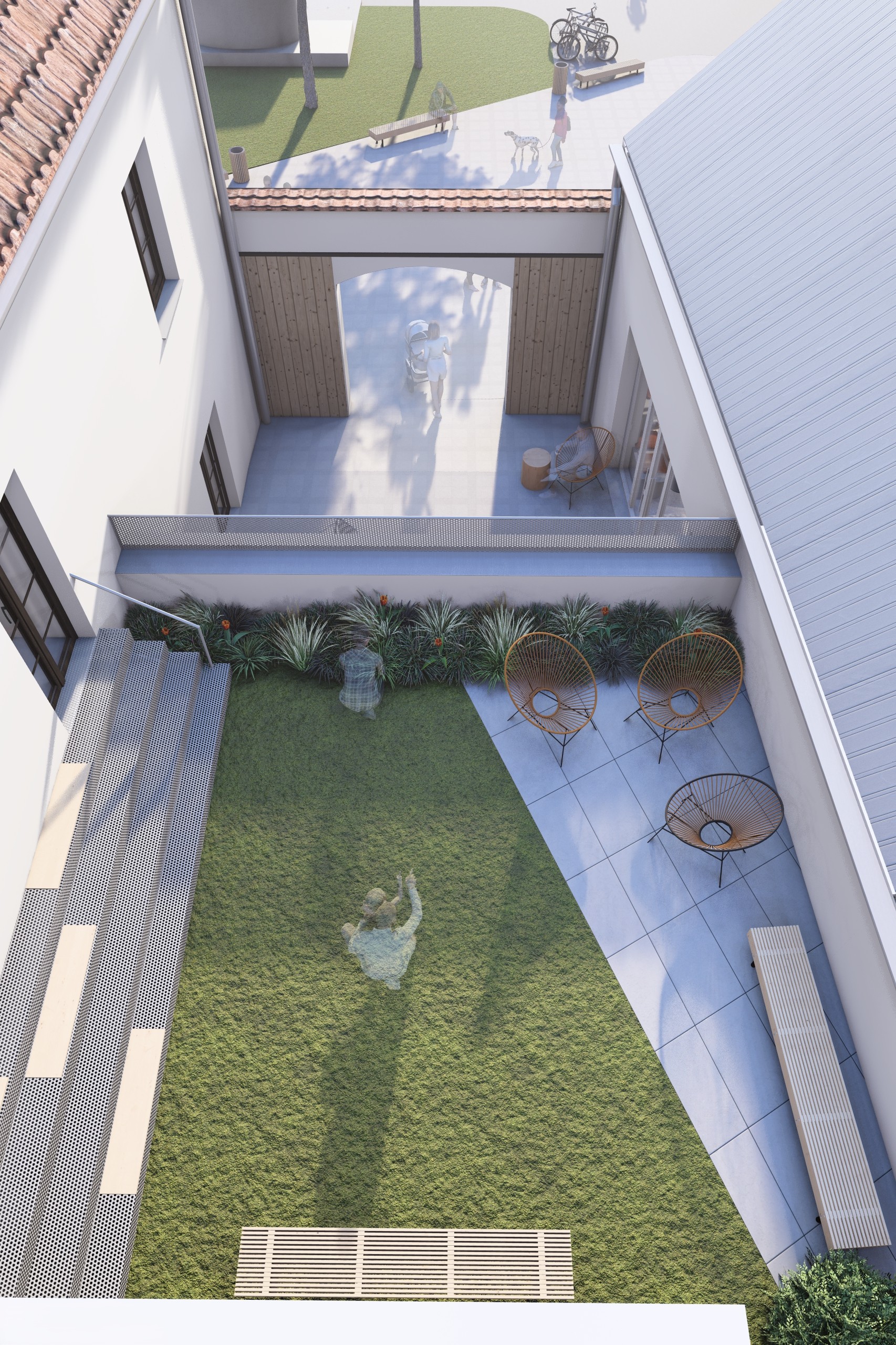
The large entrance gate invites visitors to take a peek inside the multi-purpose building and opens onto a small courtyard, from which three entrances lead into the building. The main entrance is aligned with the axis of the entrance gate and is part of a glass partition, through which an information wall displaying local news and events is visible. Further along, an entrance door leads to the library with an information center, and a glass partition marks the entrance to the café.
First floor
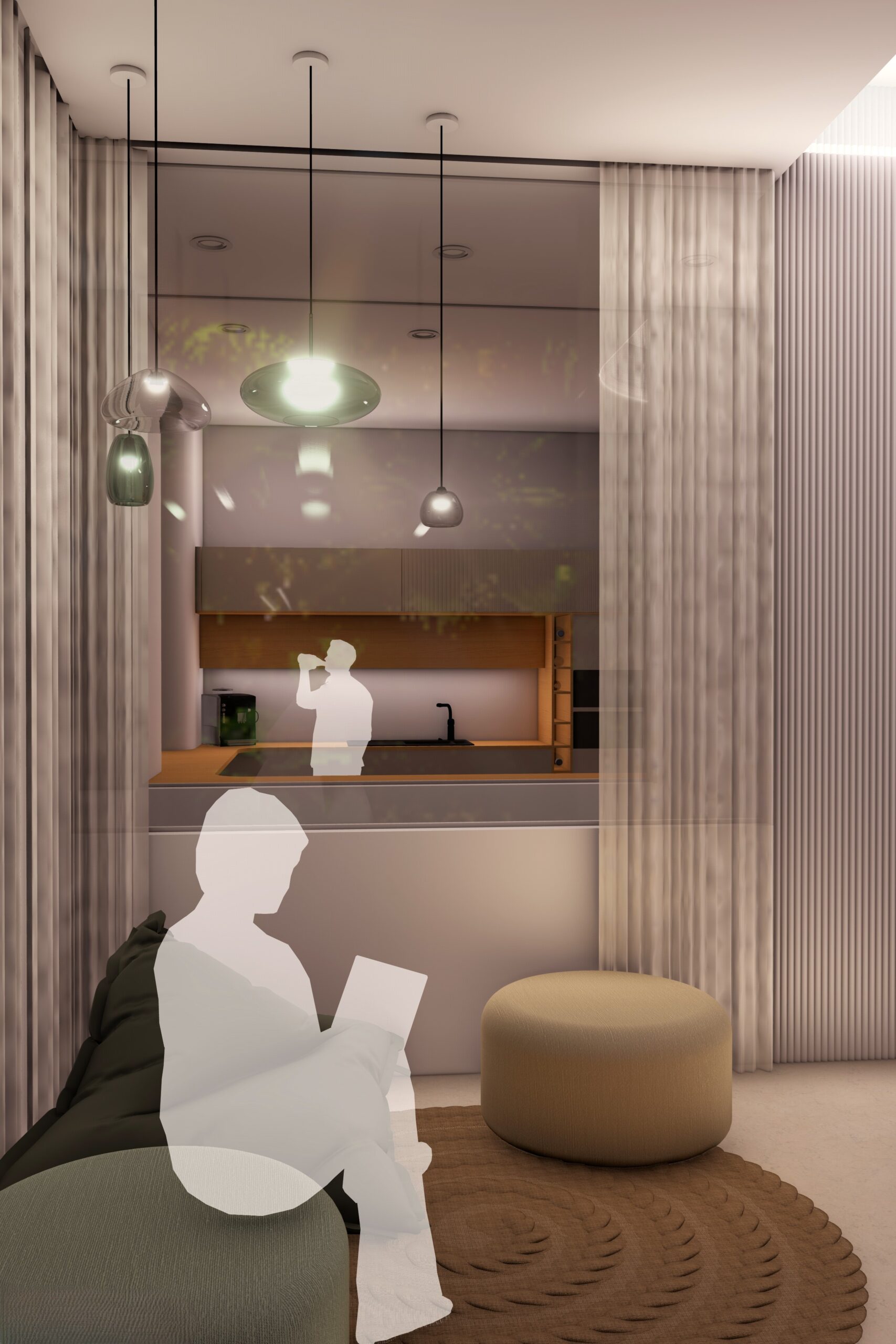
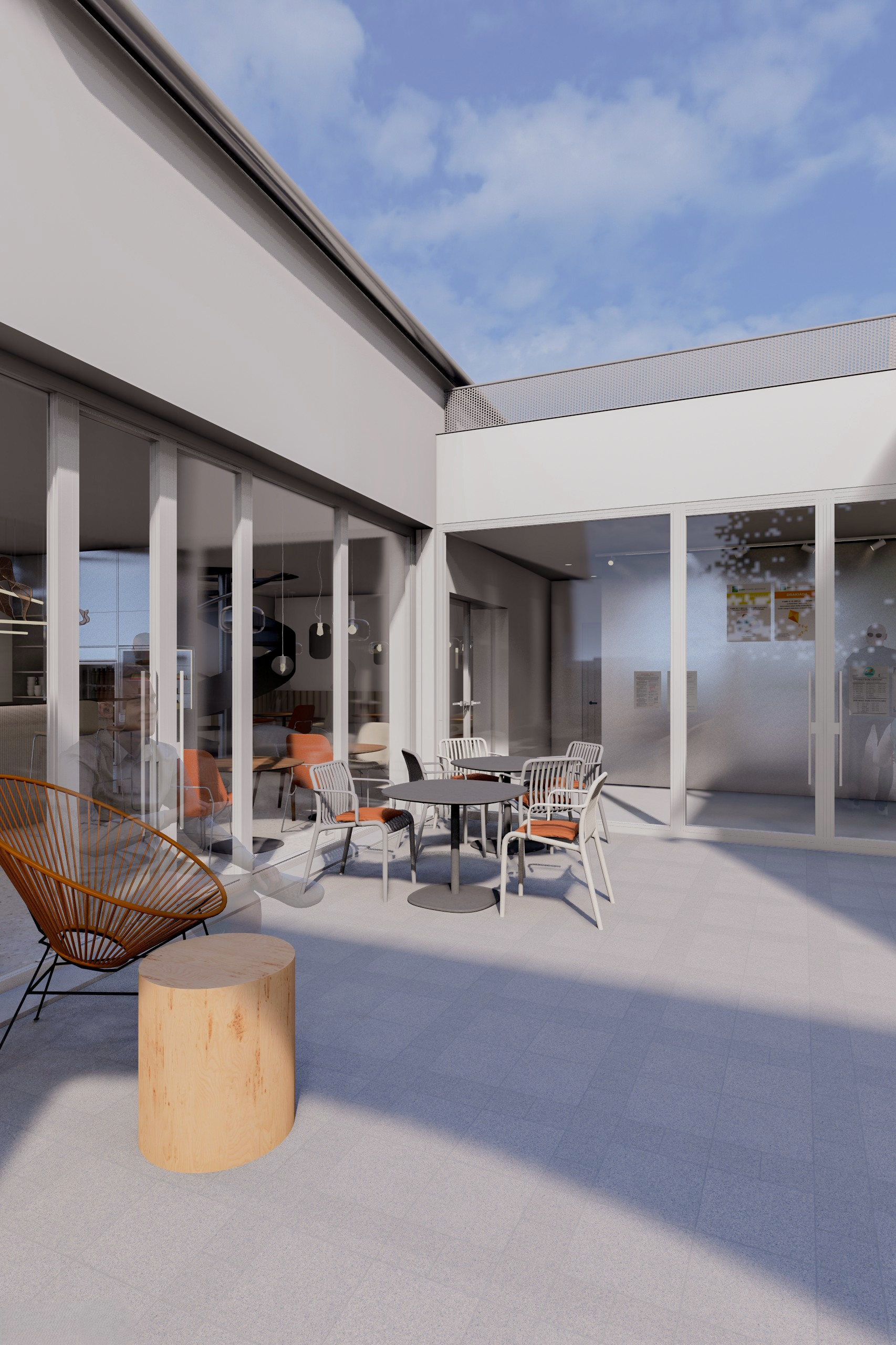
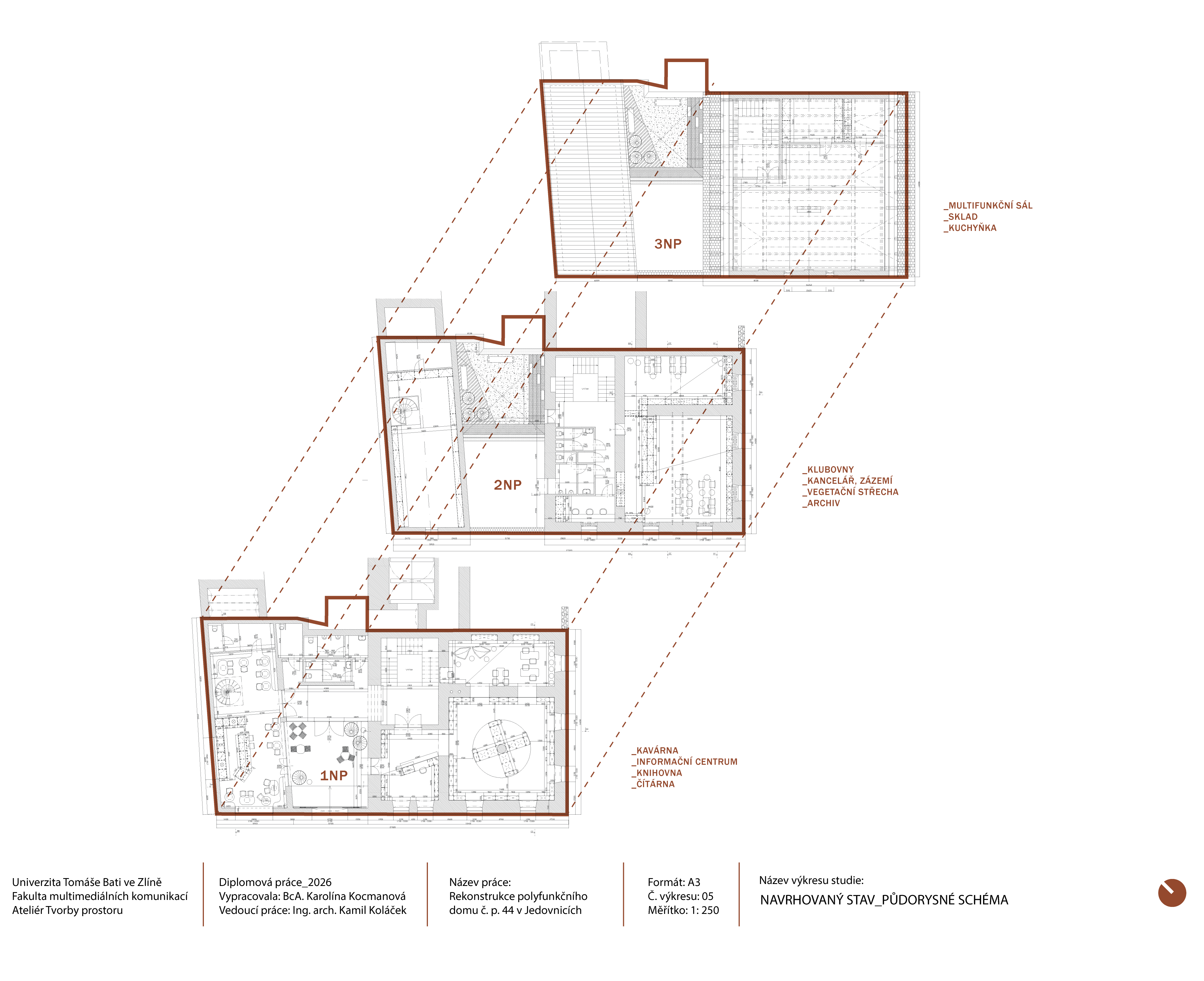
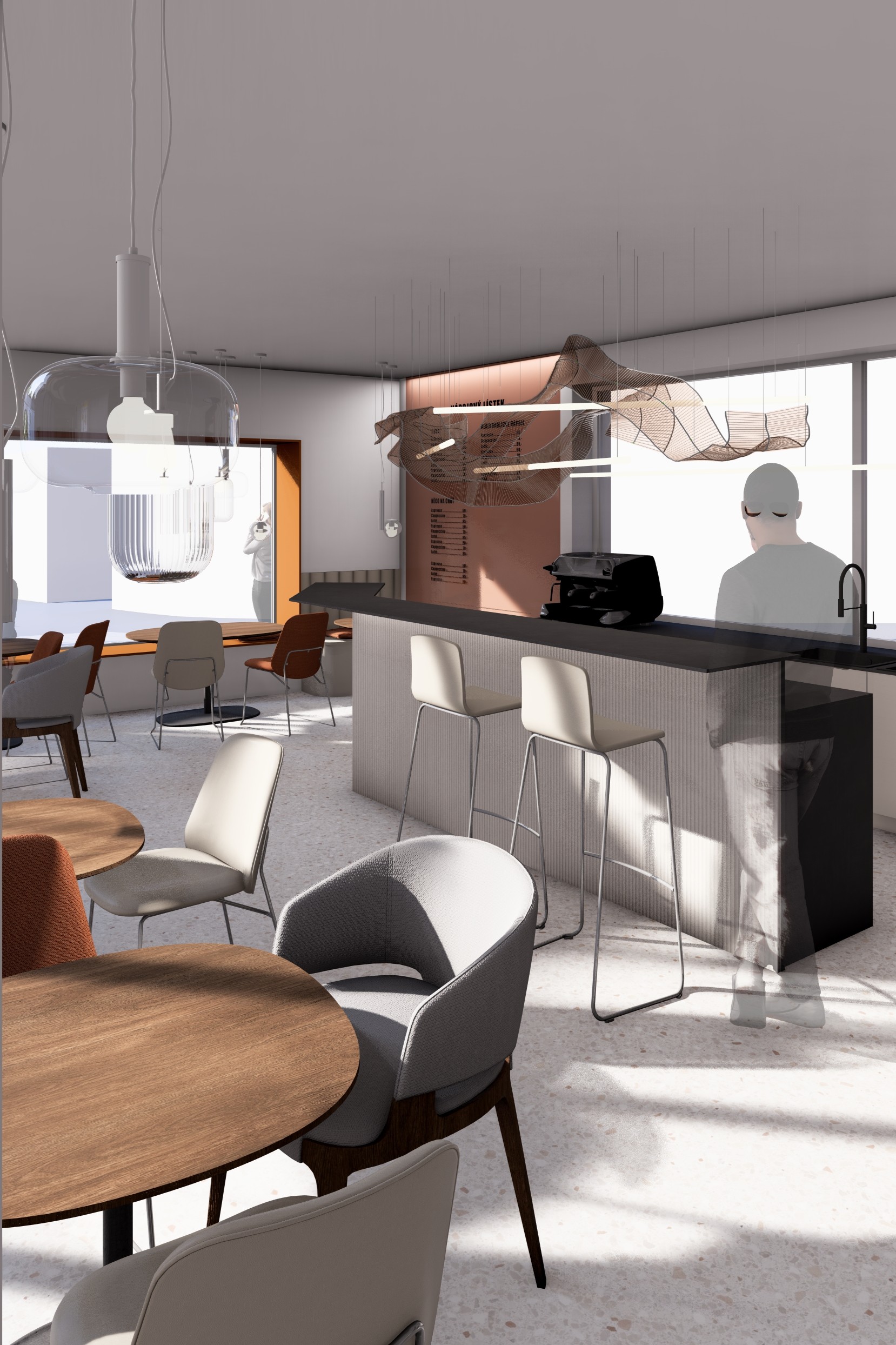
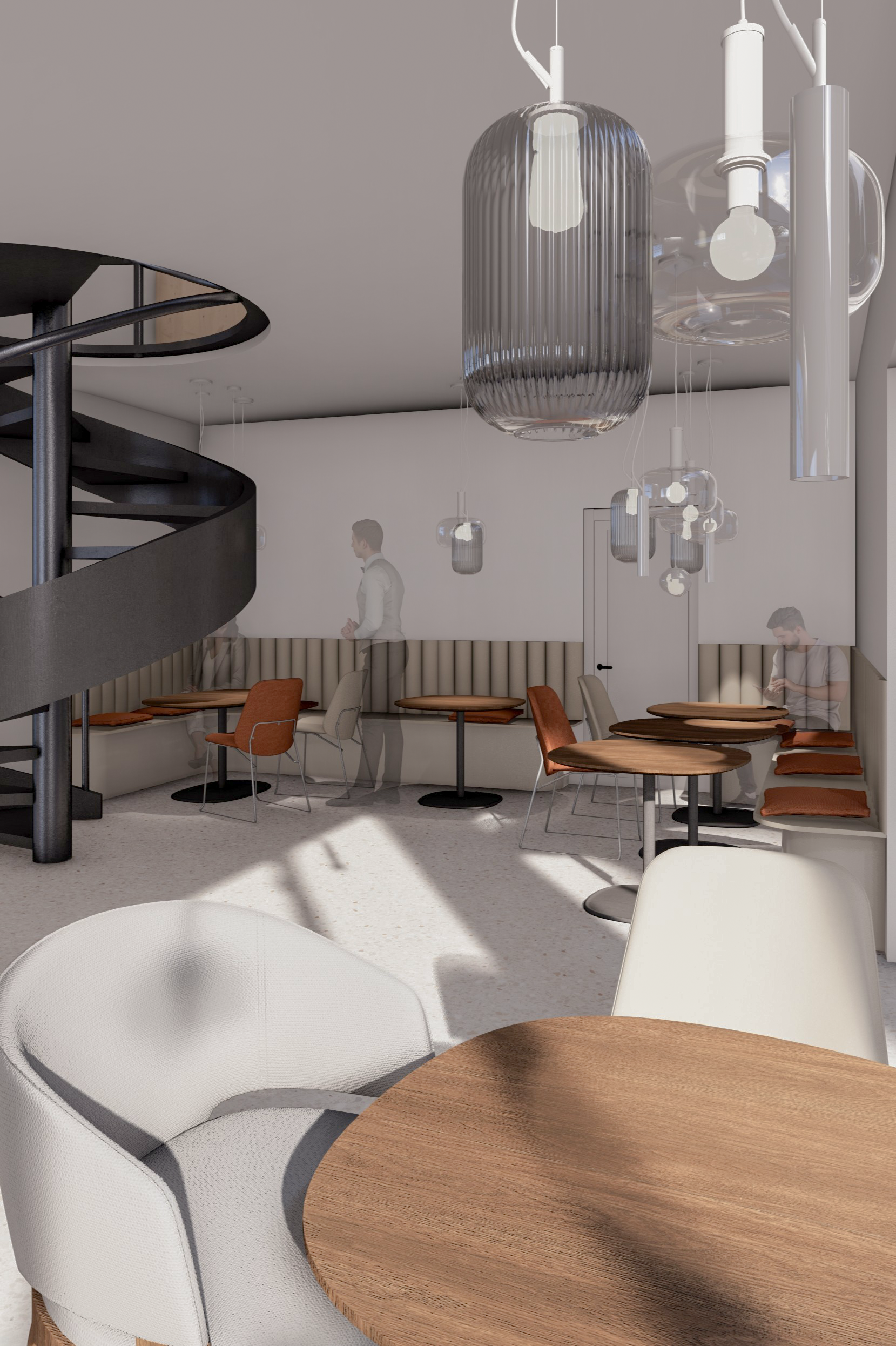
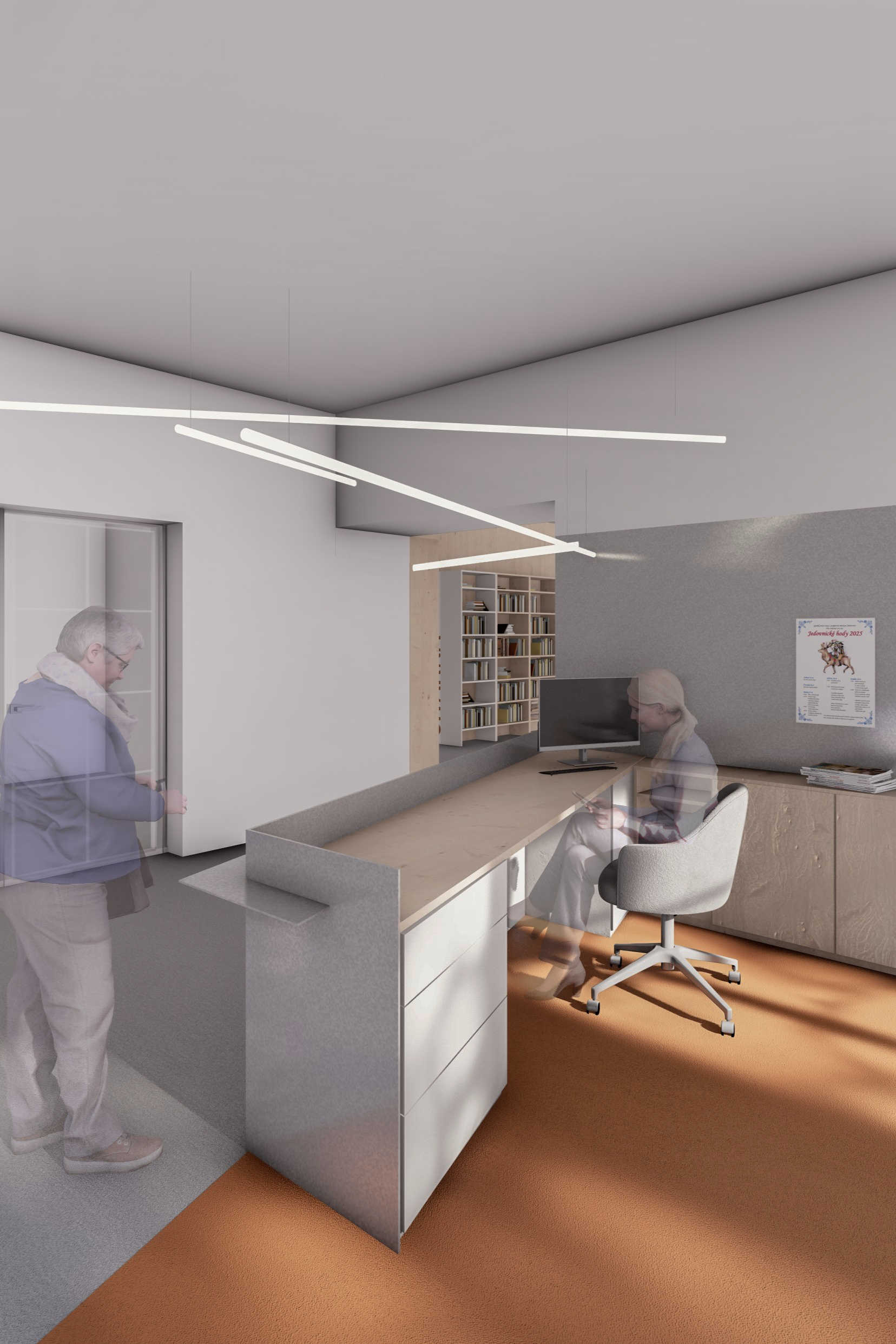
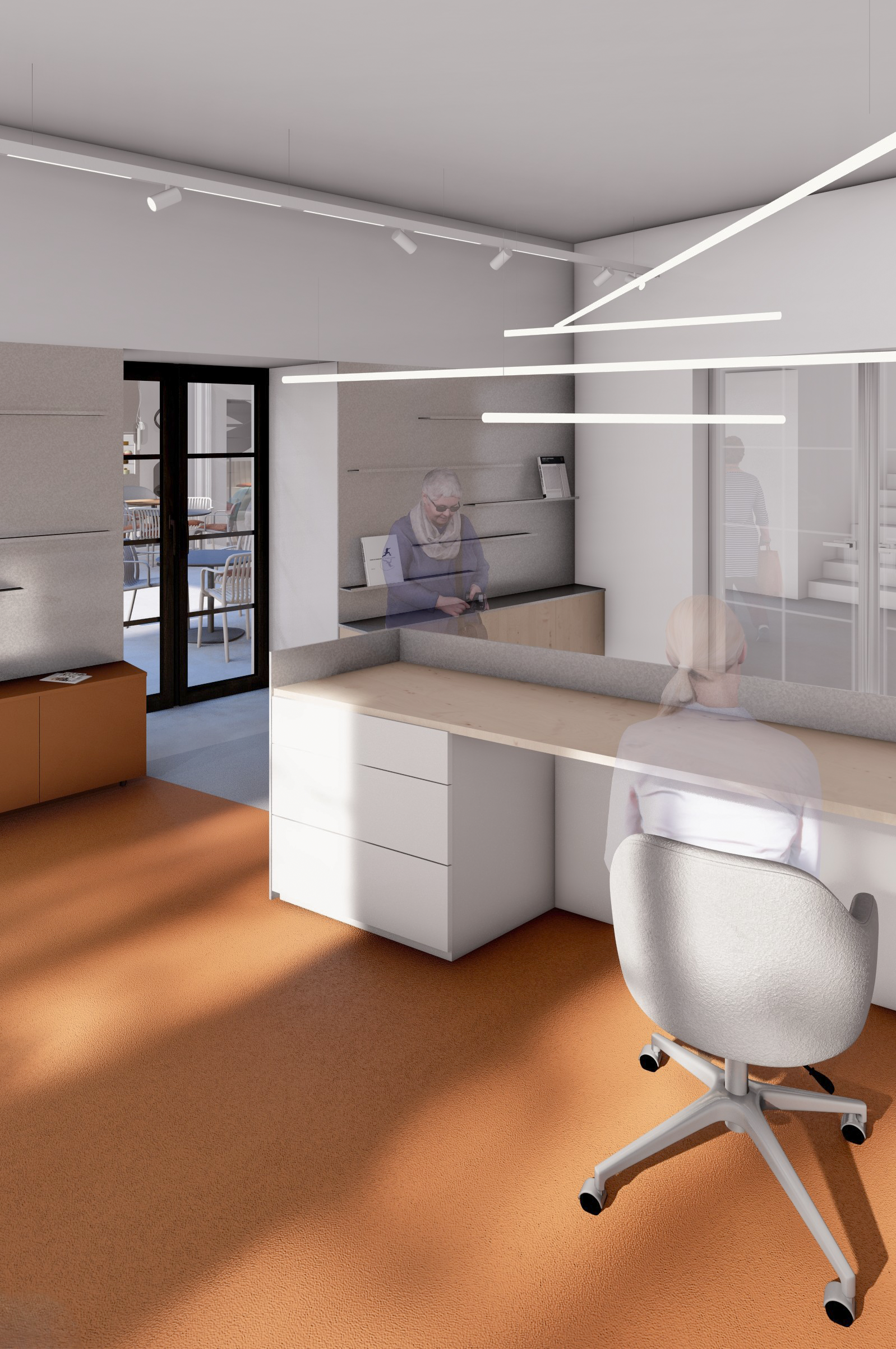
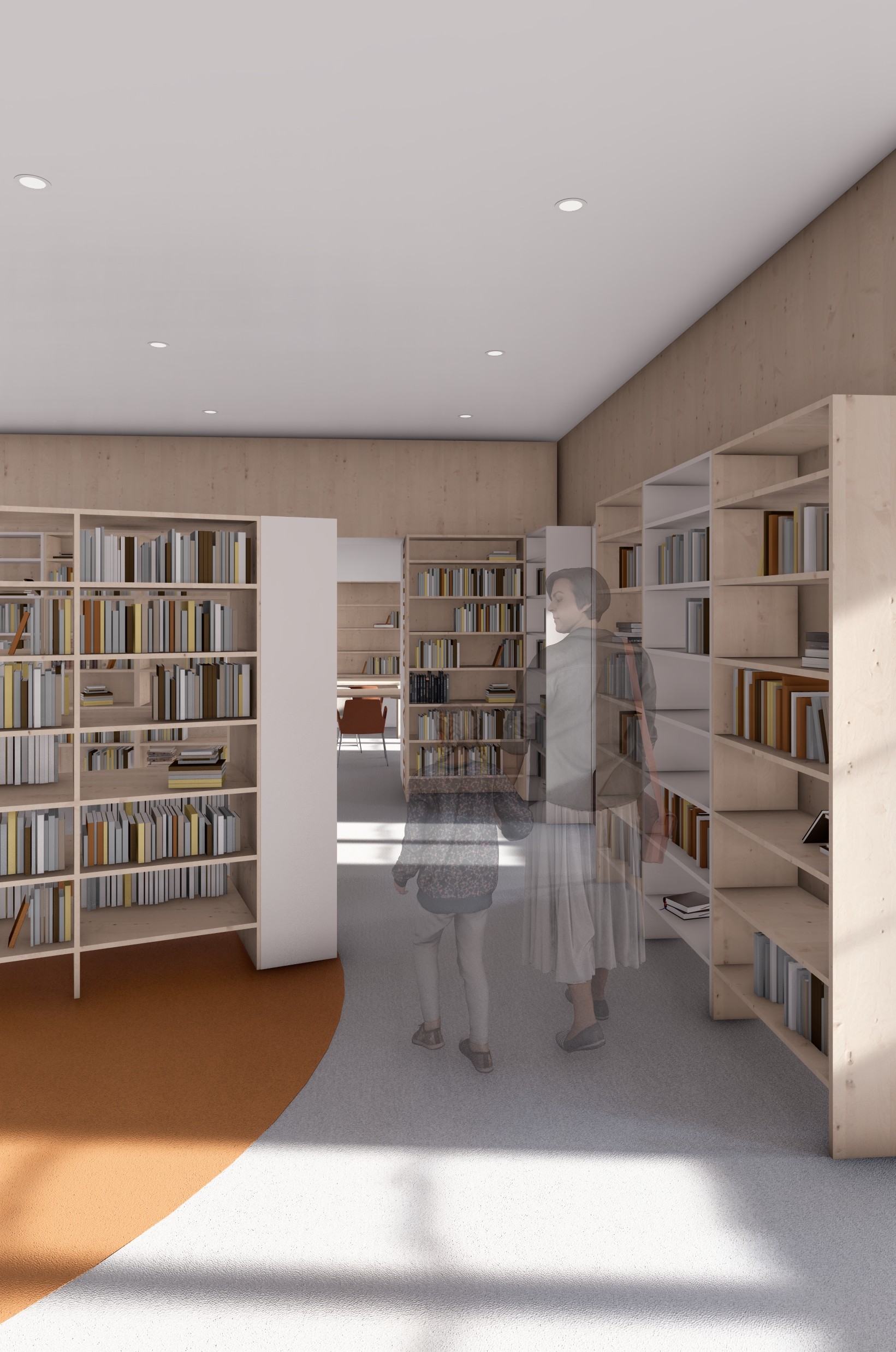
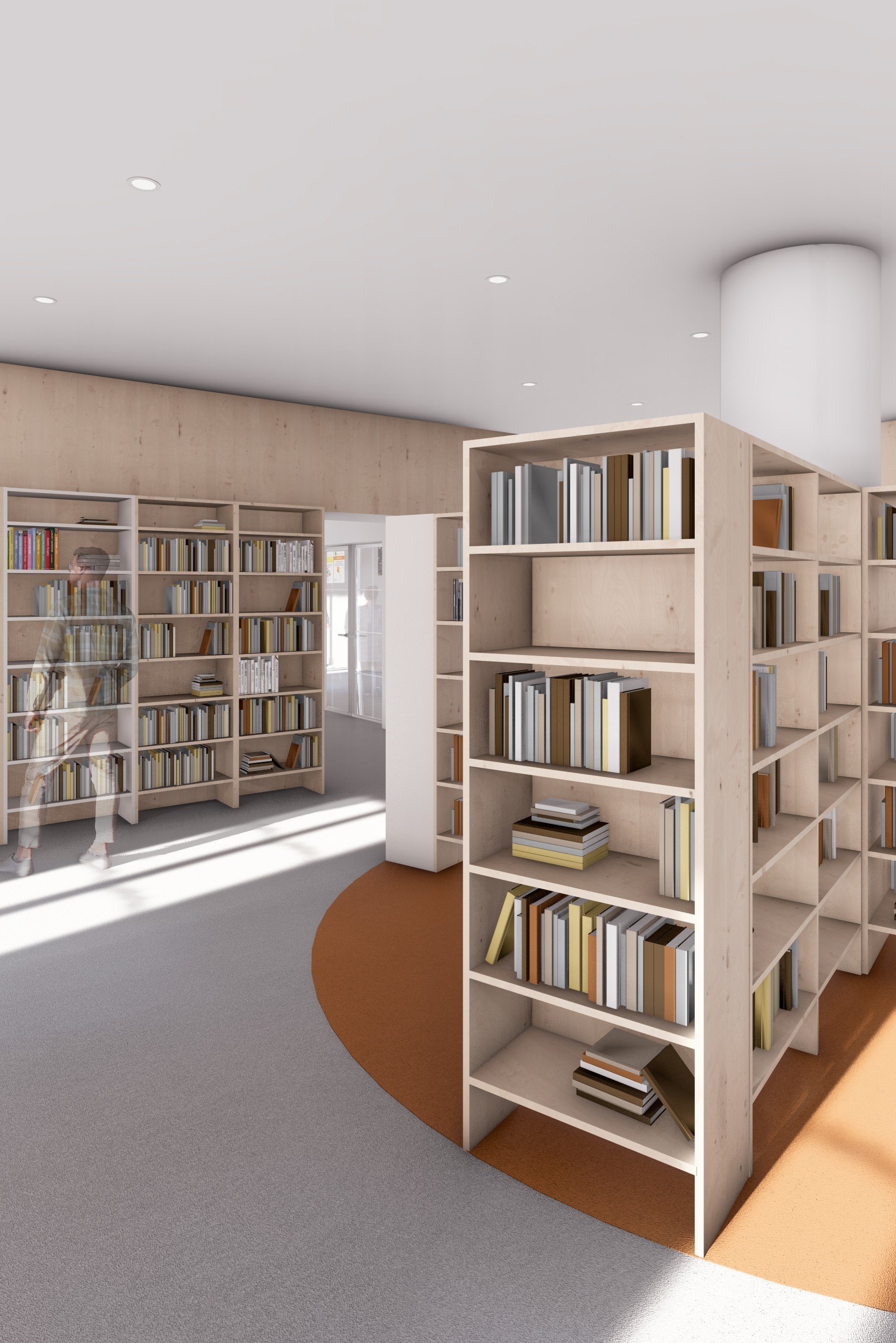
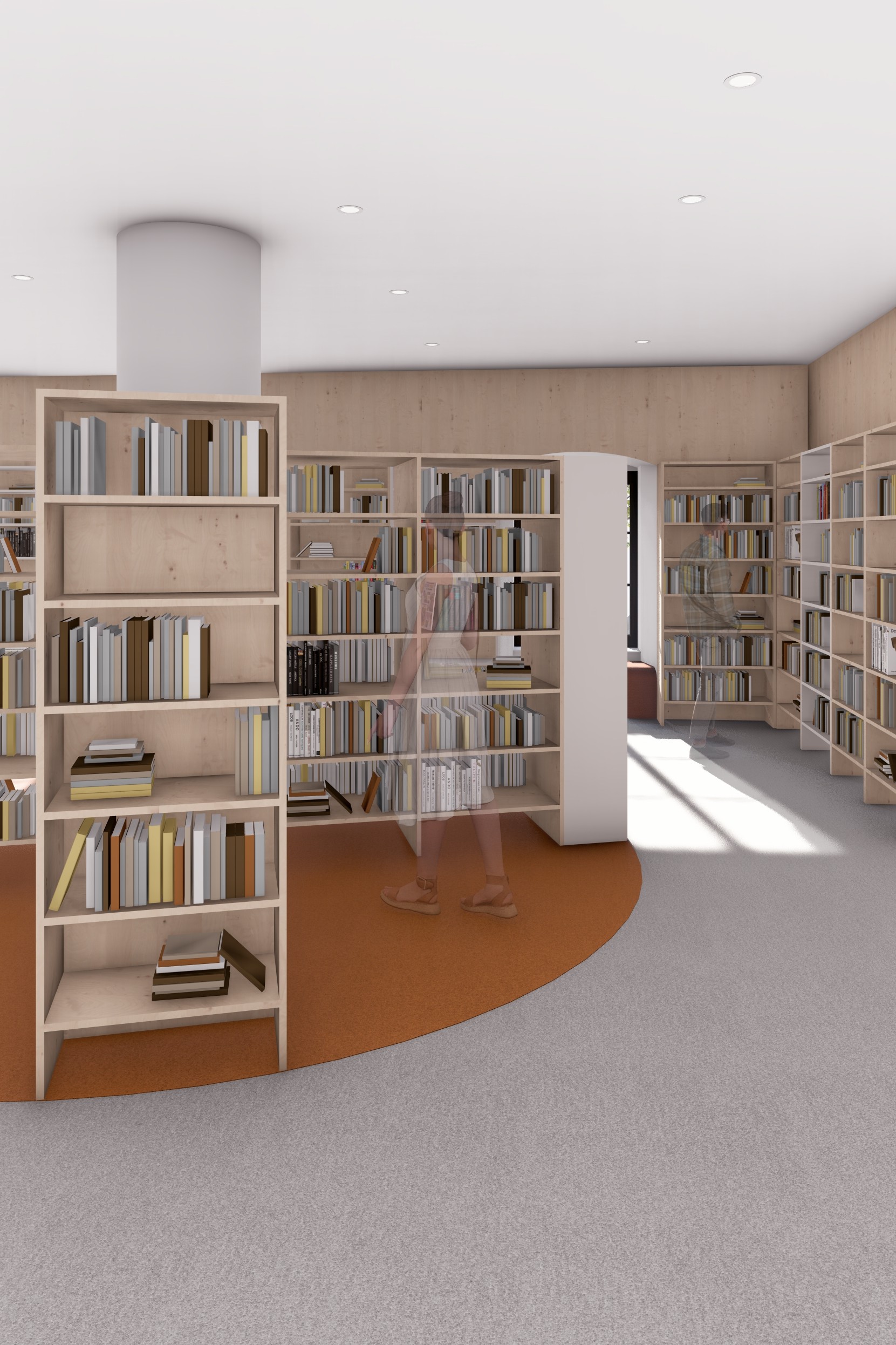
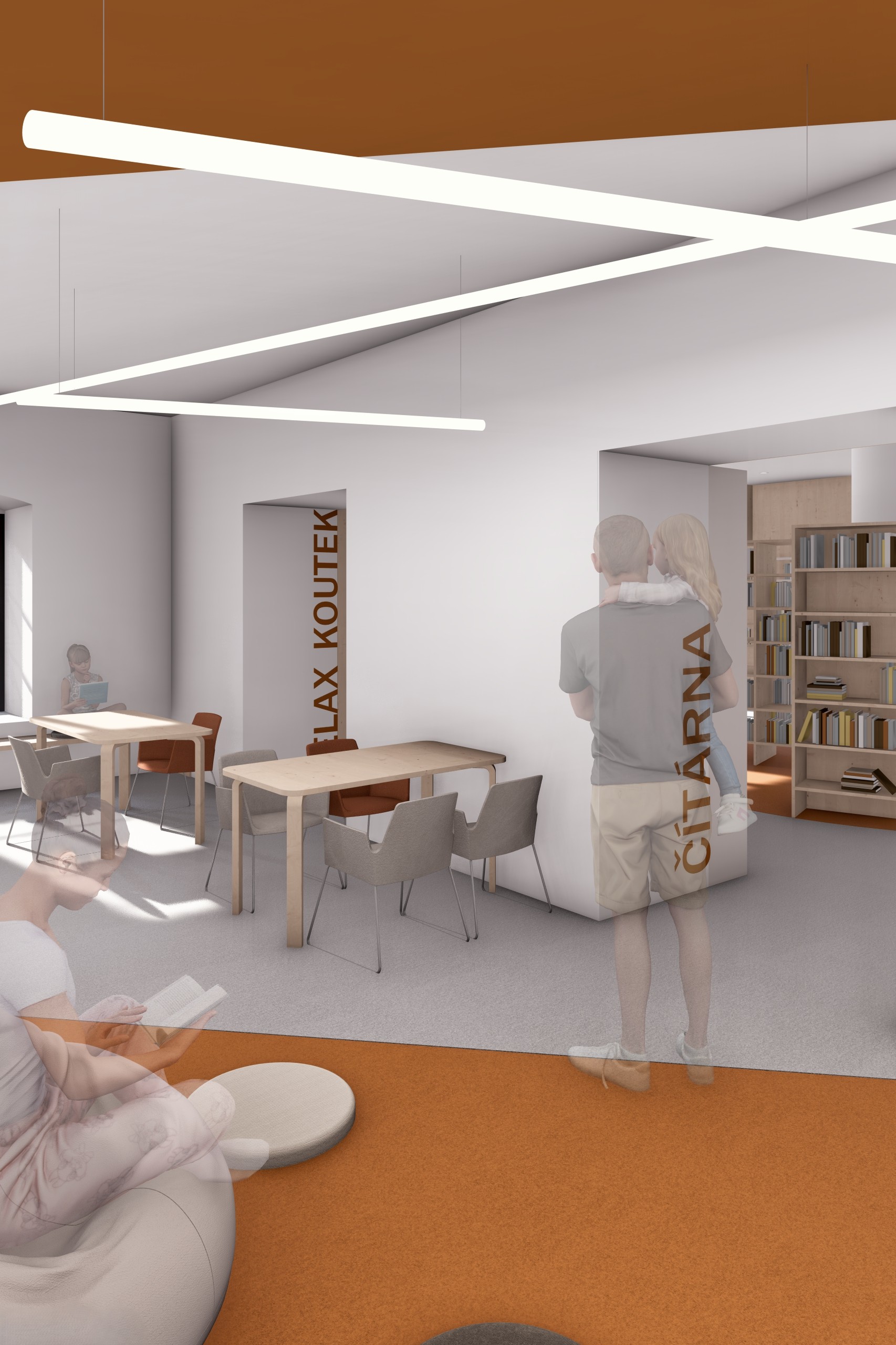
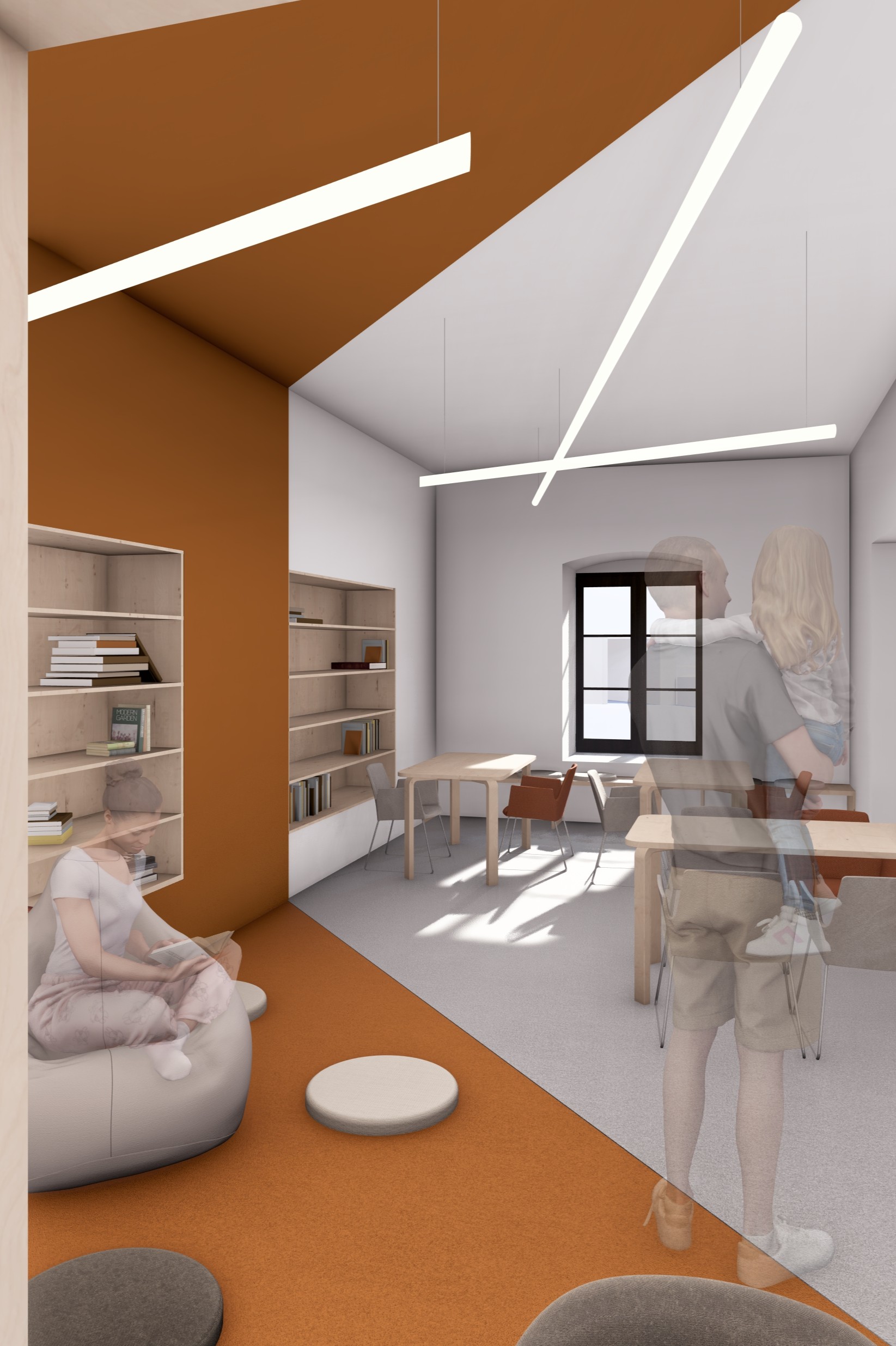
The first floor is dedicated to a café, restrooms, an information center, and a public library with a reading room. Between the café and the library is an entrance hall that connects all the functions on the ground floor. There is an information board here where visitors can find the latest news about events taking place in the town and the surrounding area. Restrooms for both the café and the library are, of course, provided. Almost the entire ground floor flows seamlessly into the courtyard, where, in good weather, there is outdoor seating for the café.
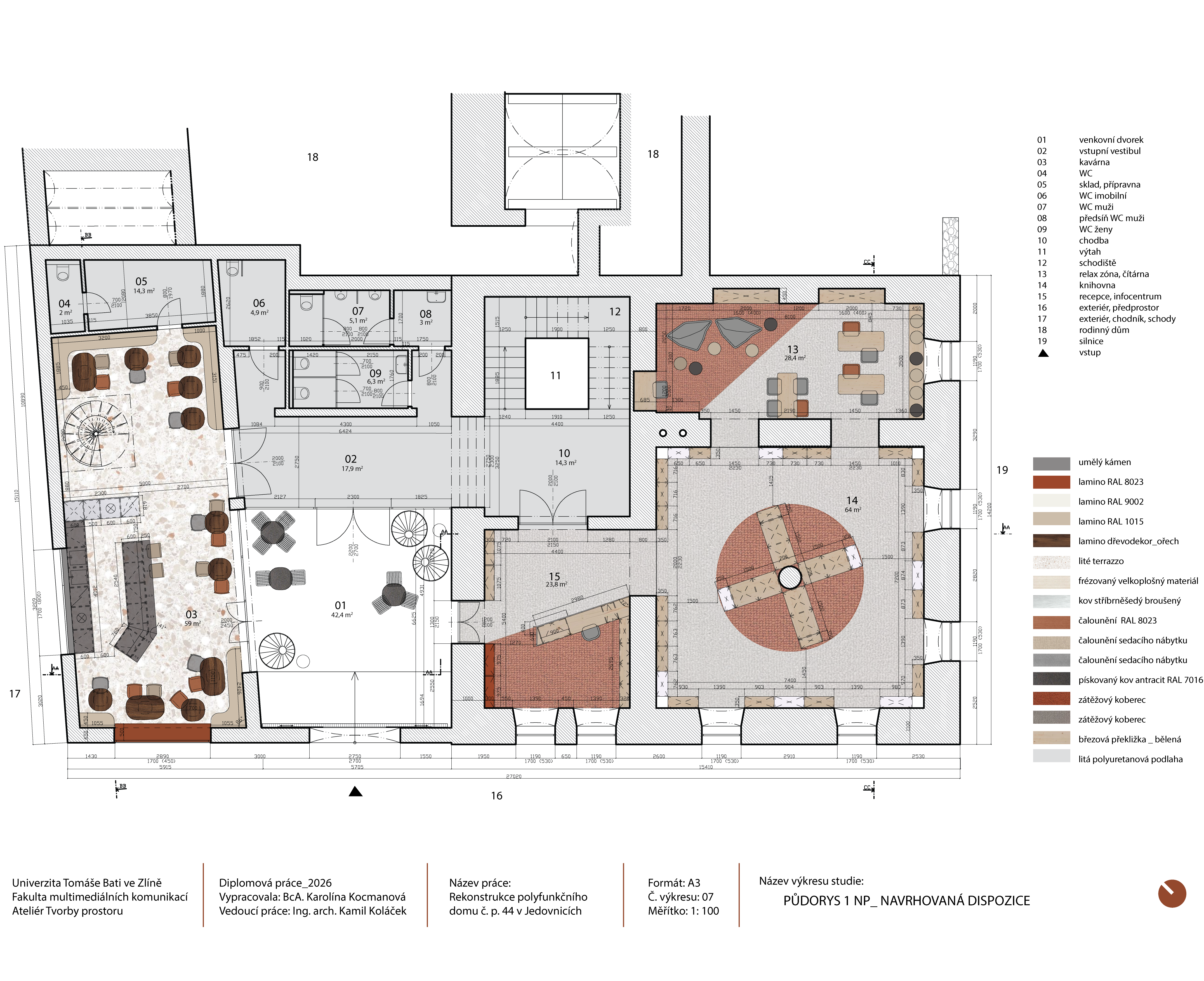
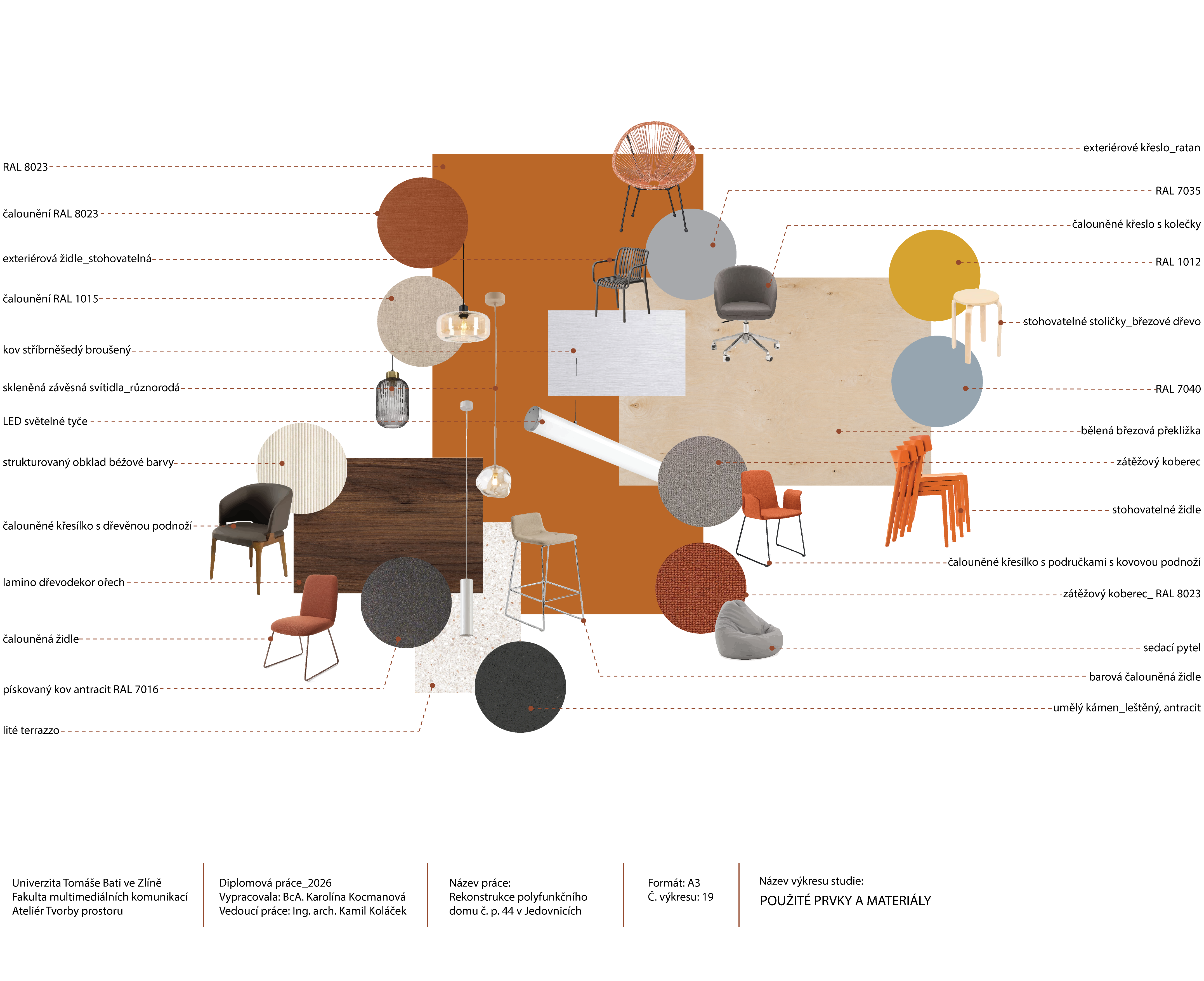
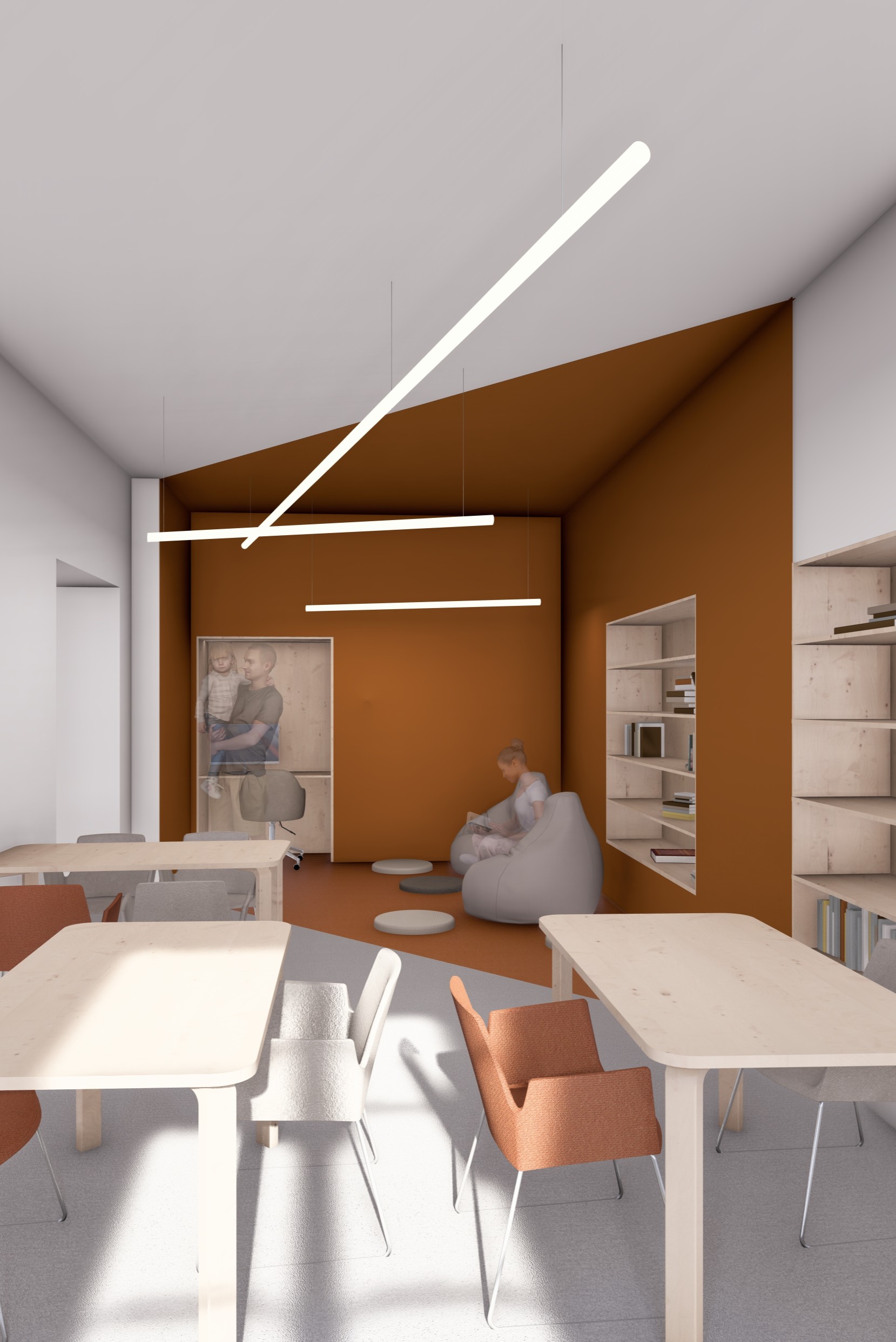
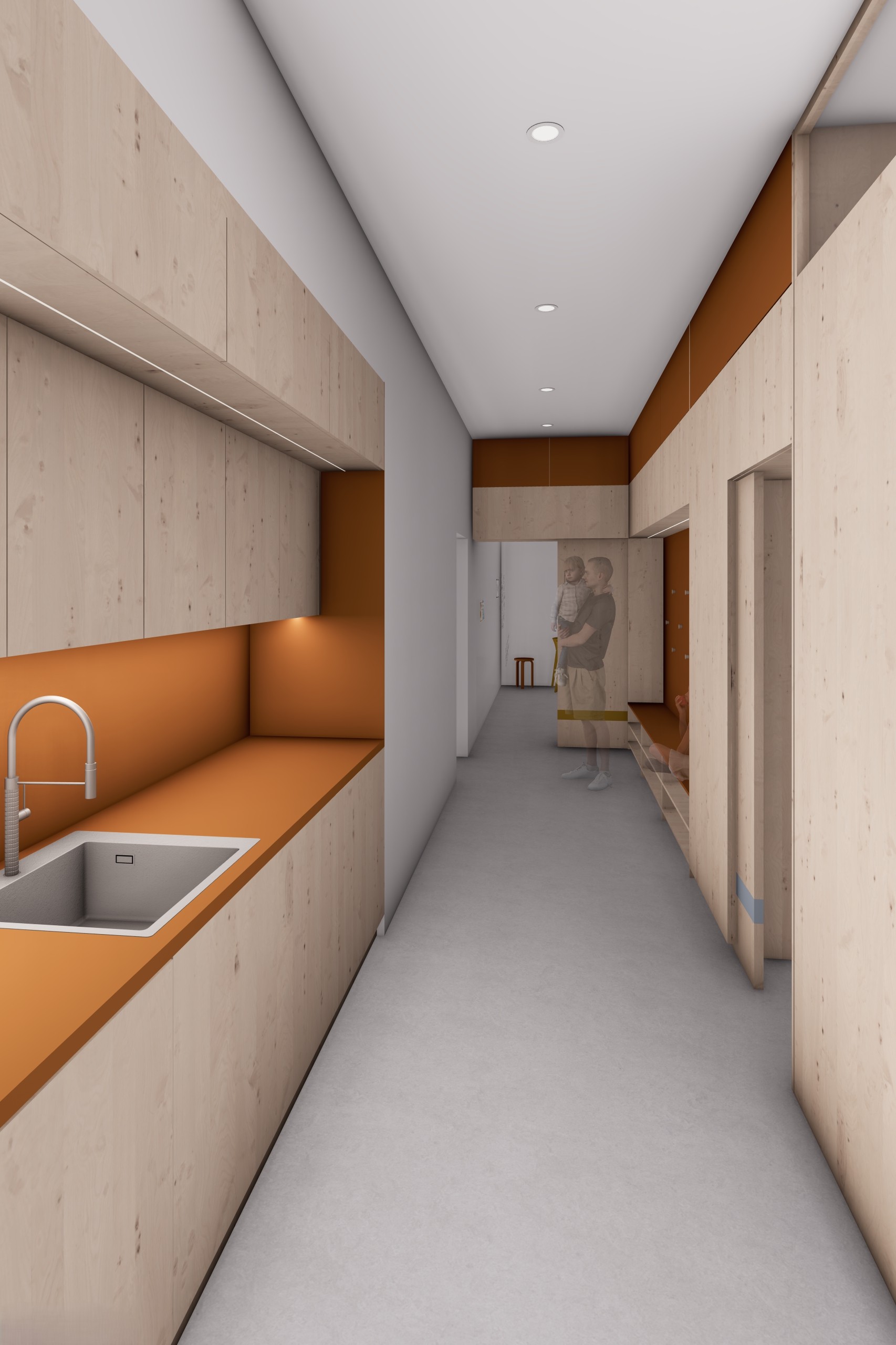
A key element that ties the entire multifunctional building together is the color orange. It appears on pieces of furniture, signage, upholstery, and seating elements. Another design element is the diagonal line, which breaks all rectangular principles and thus contrasts with the original historic masonry. The material connecting the ground floor is single-sided brushed stainless steel sheet; in the section designated for the information board, it is magnetic.
Second floor
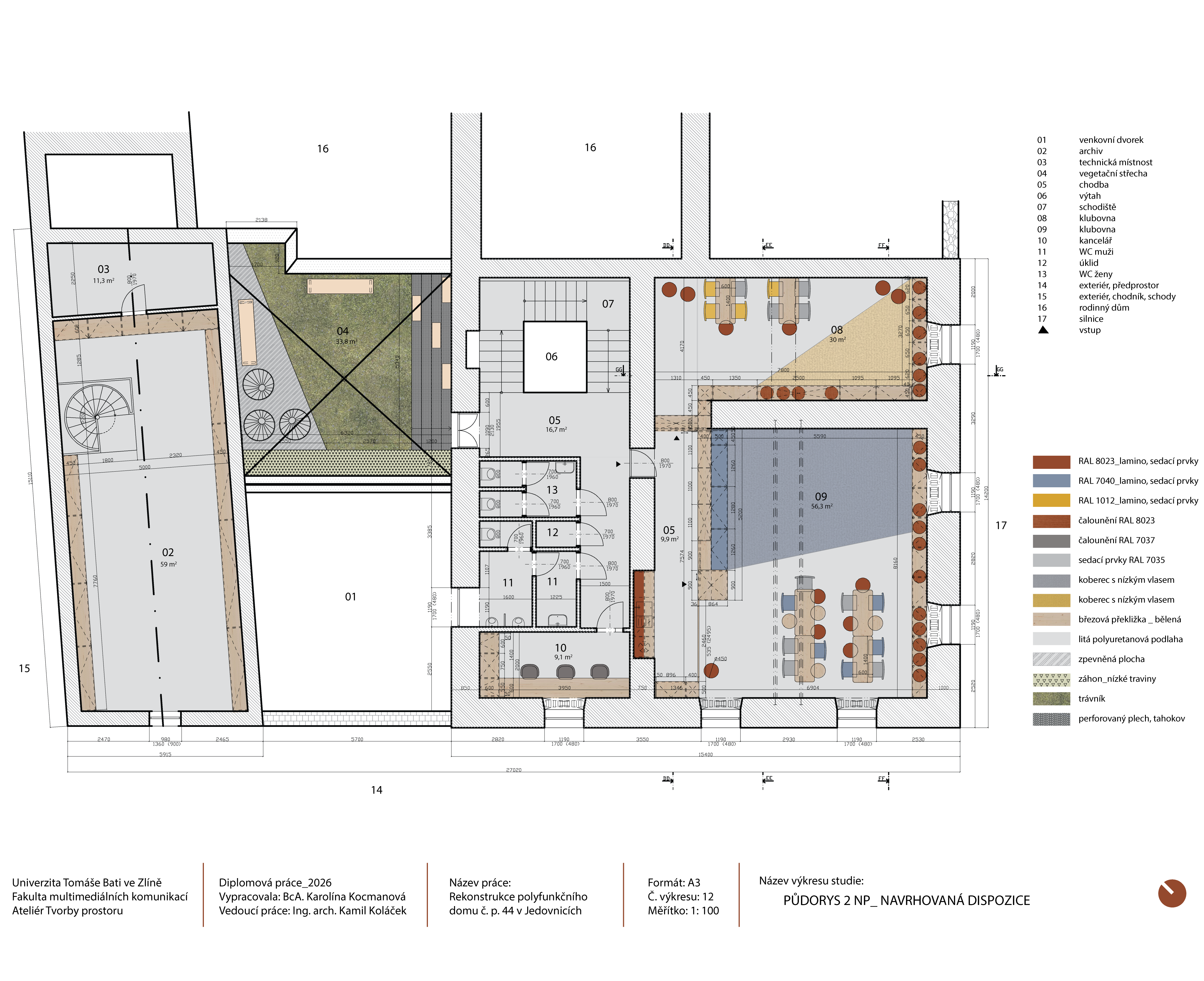
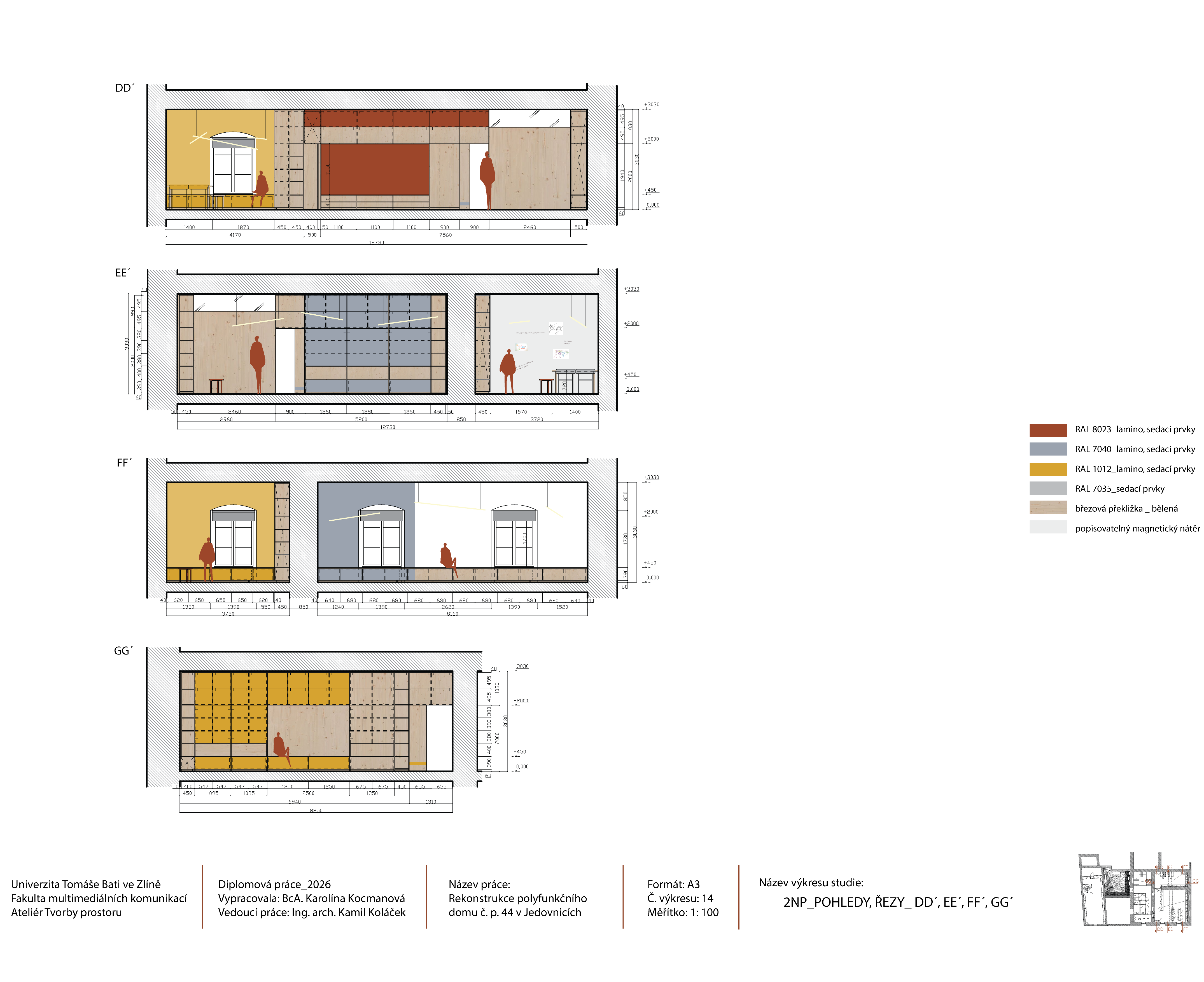
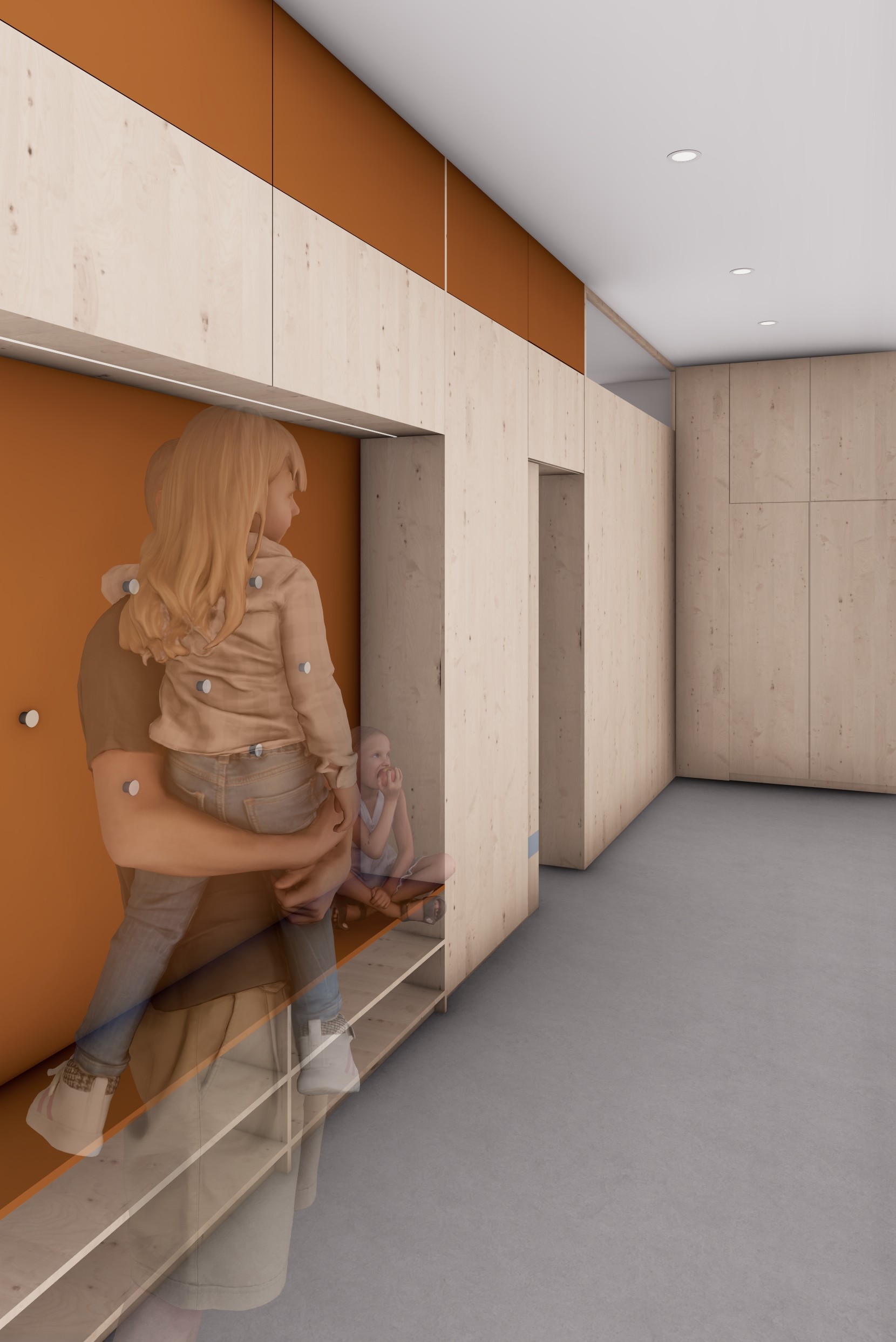
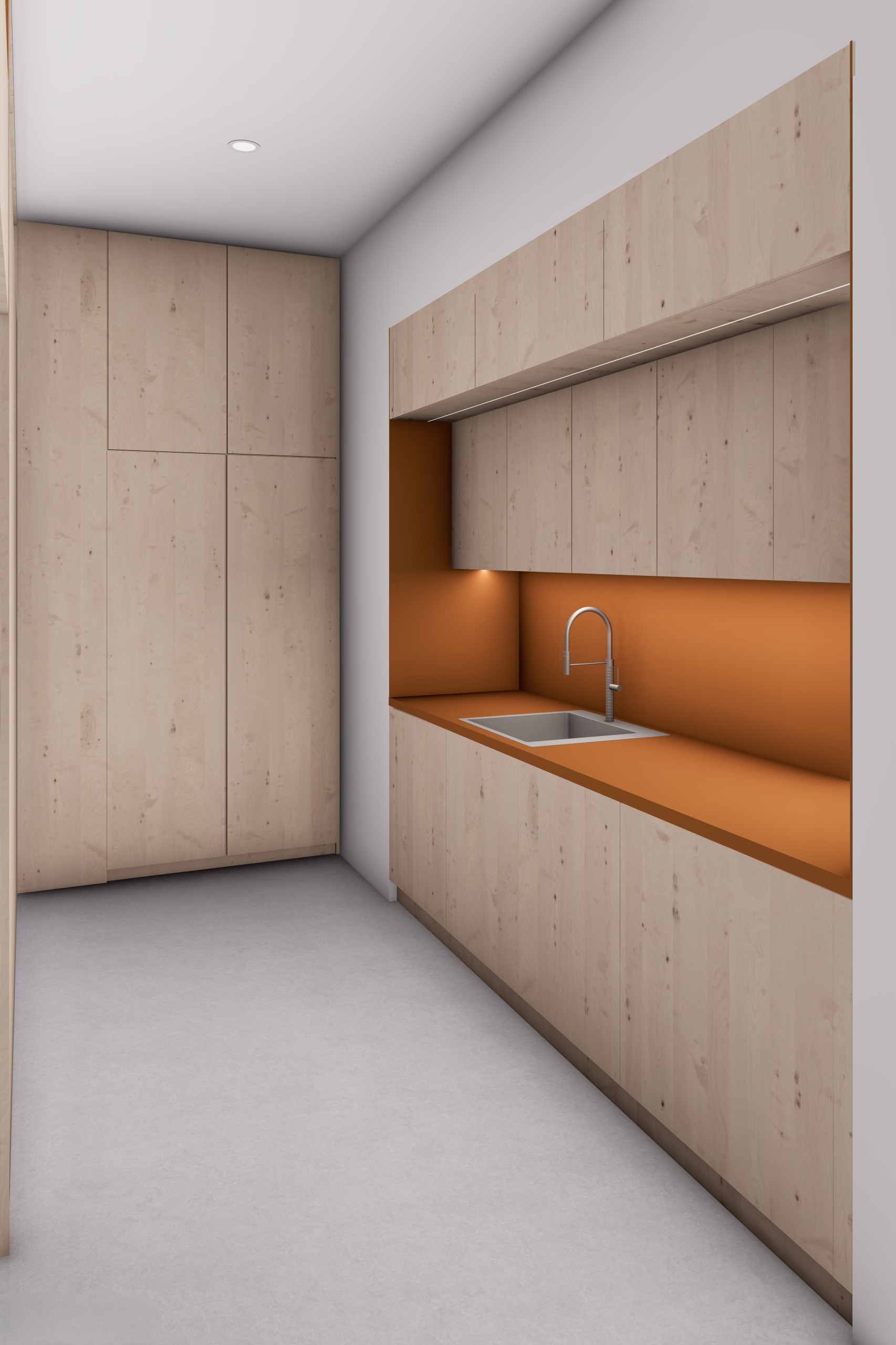
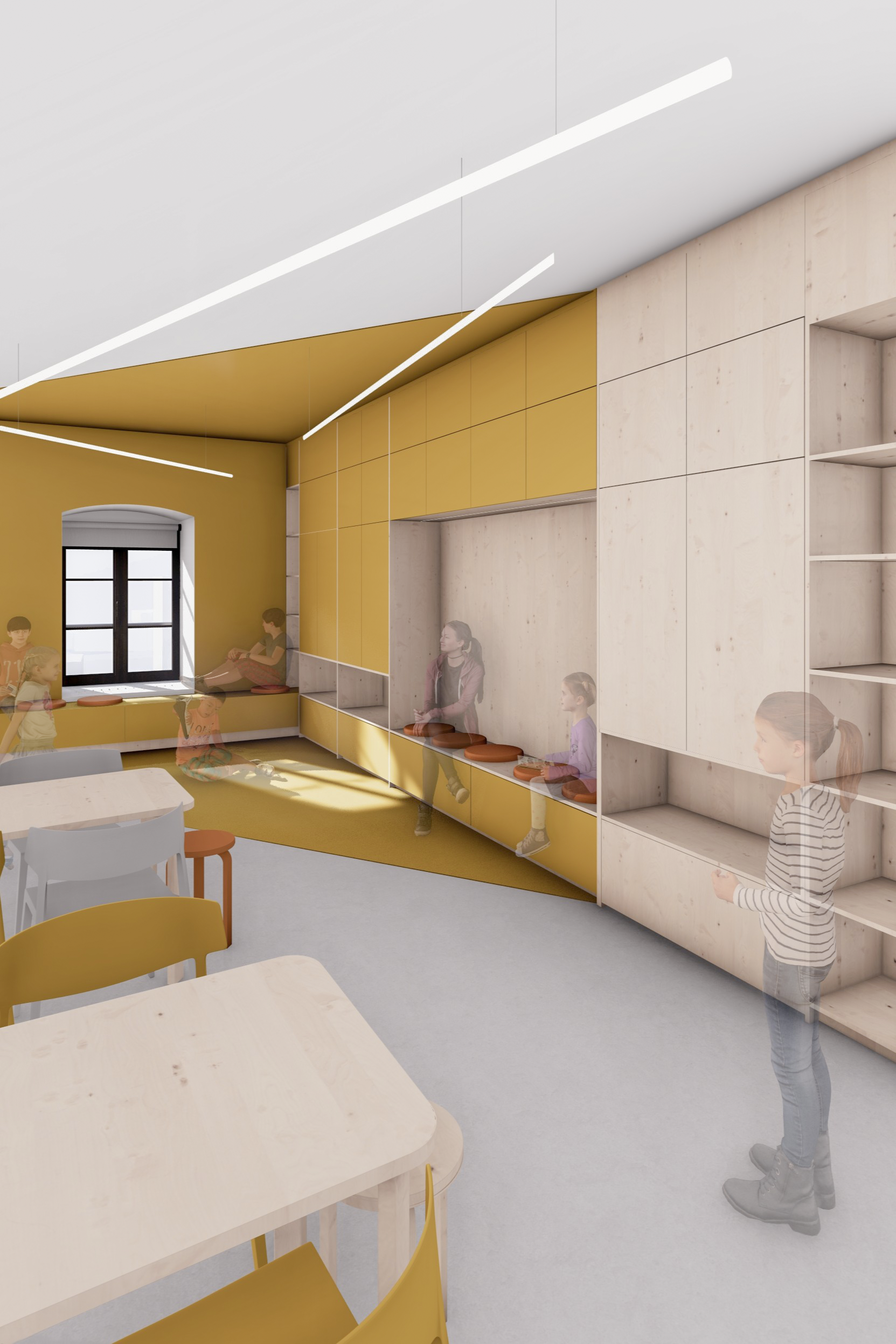
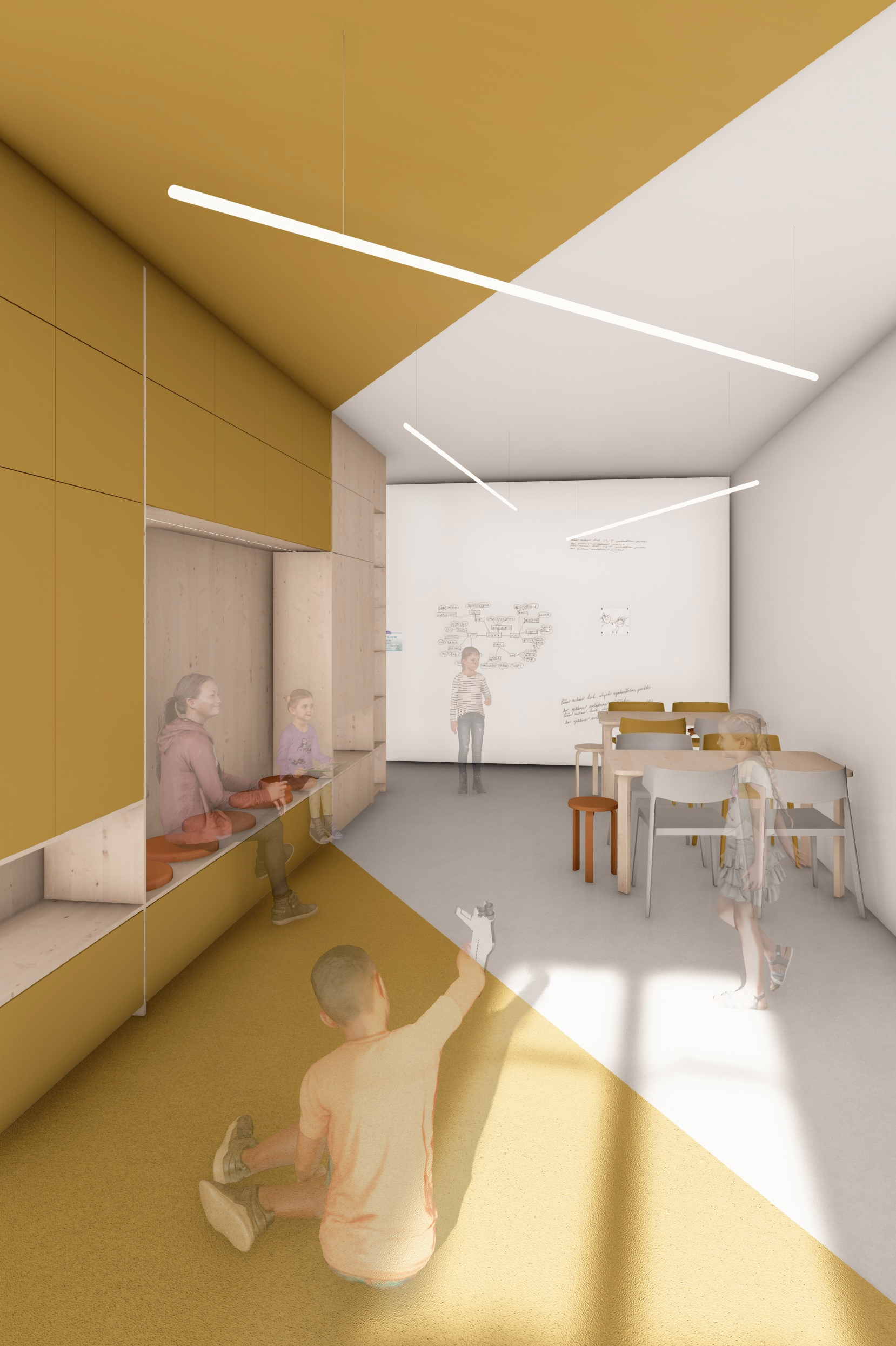
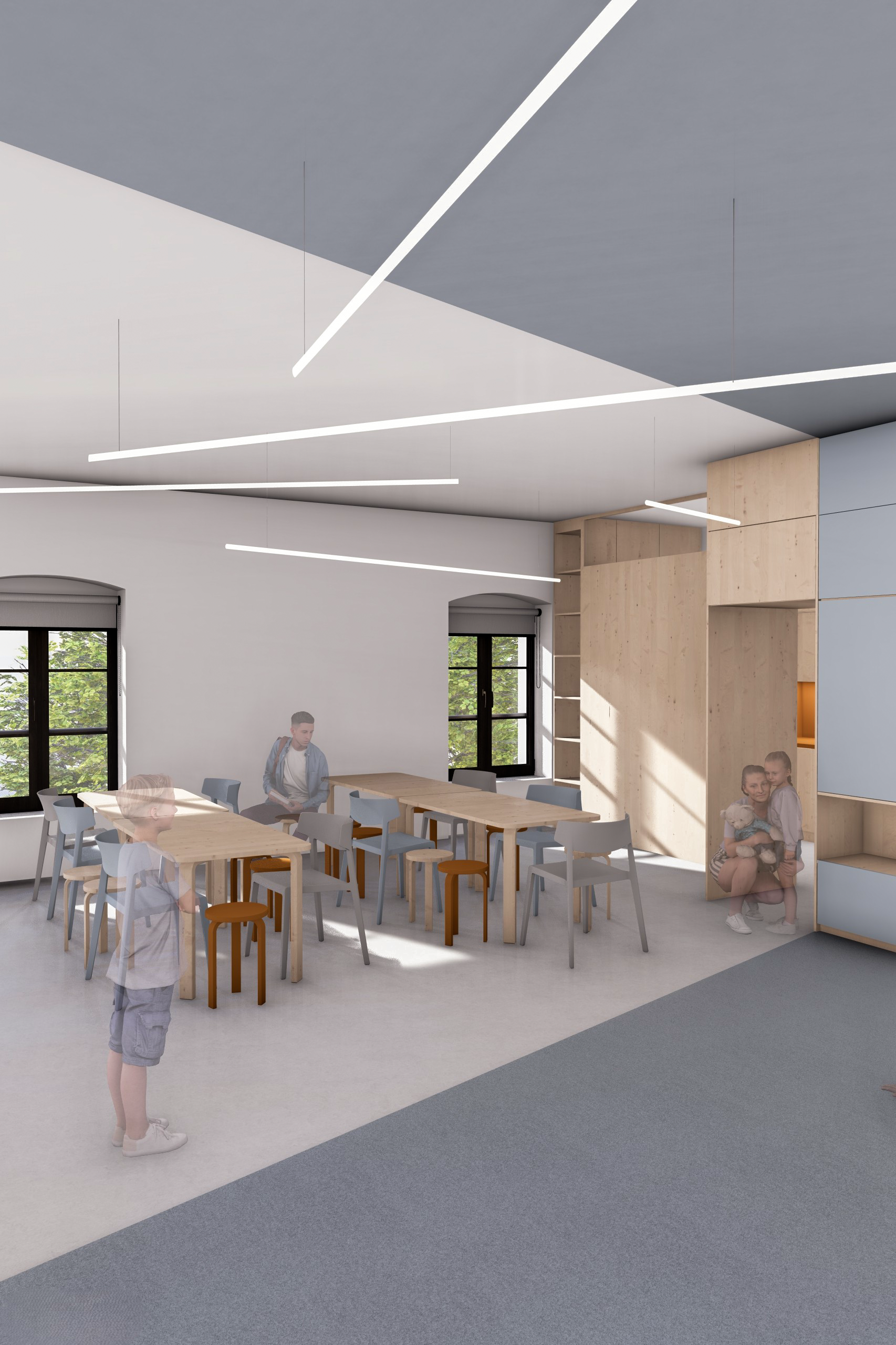
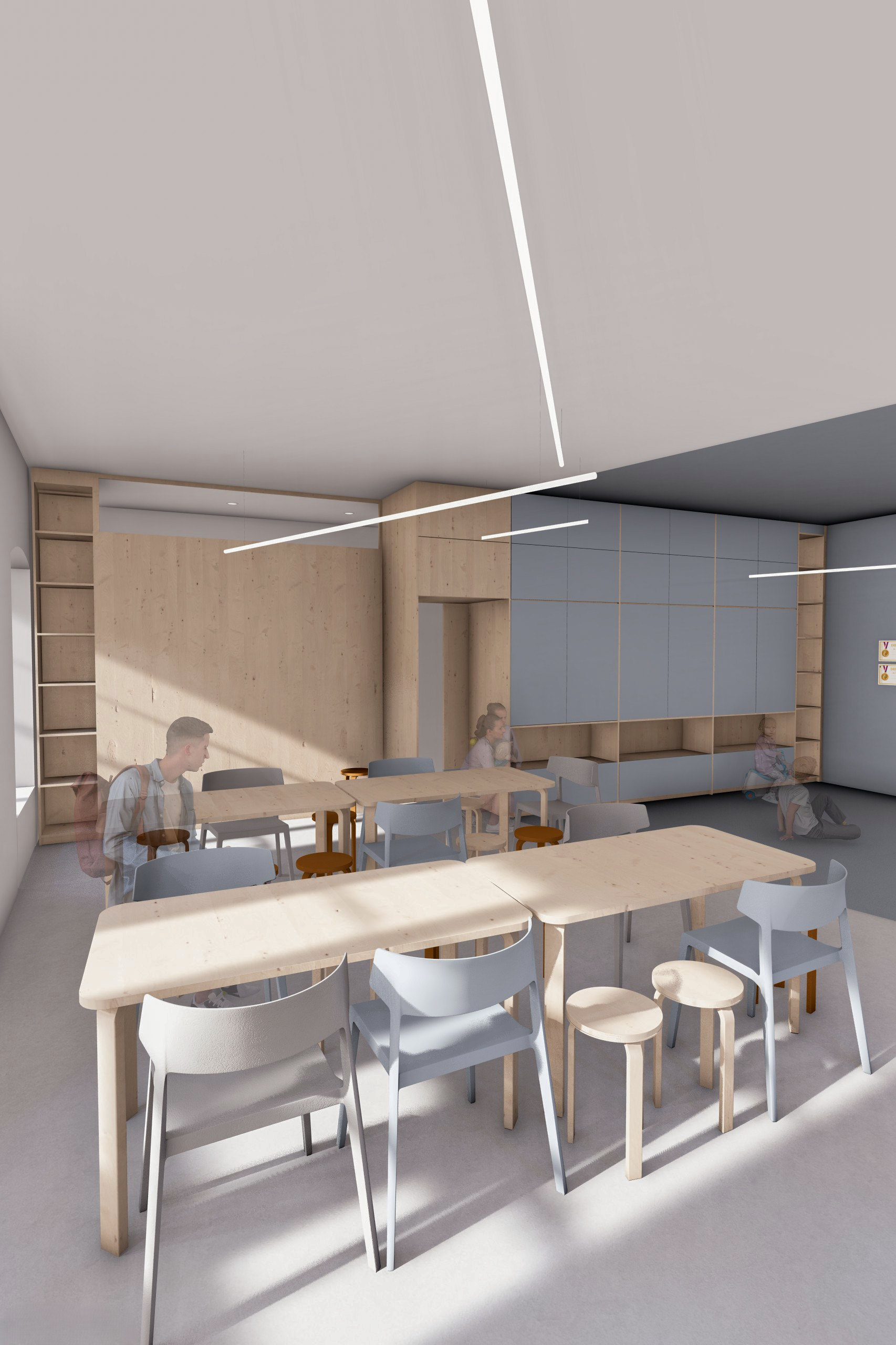
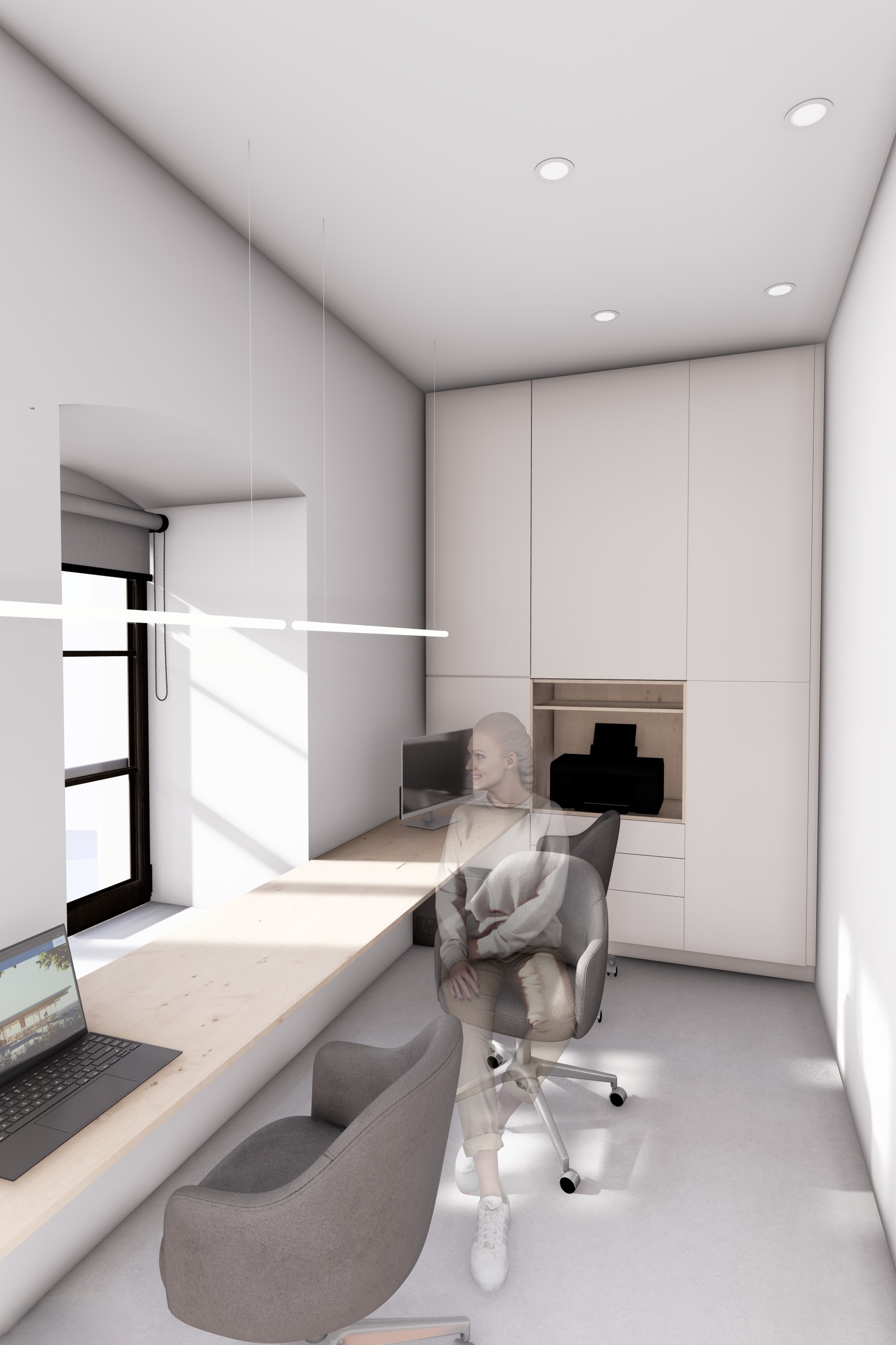
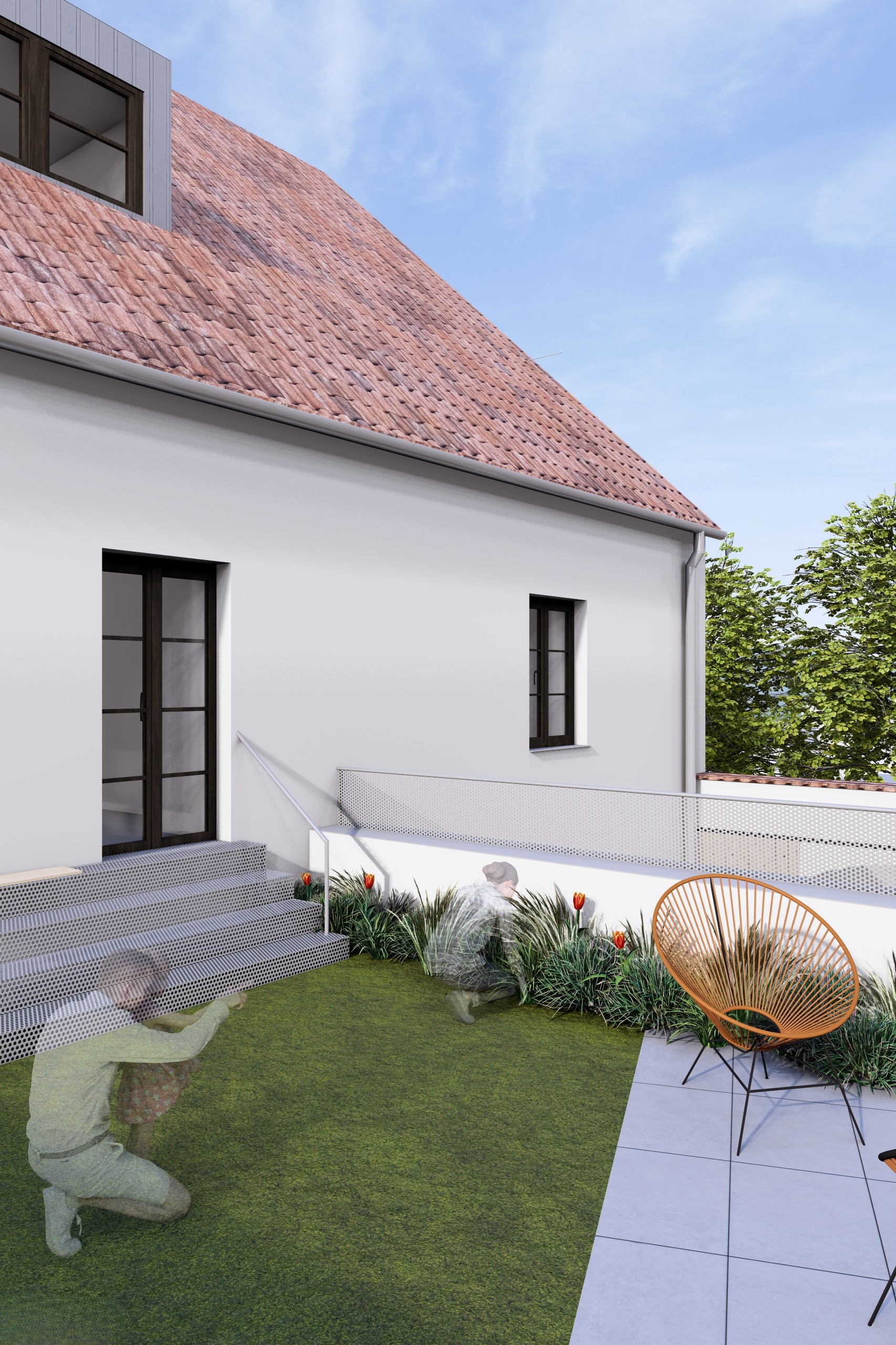
The second floor of the main building is accessible by stairs or elevator. It offers space for local clubs, complete with facilities and access to a green roof. The floor of the annex, above the café, is used as an archive and technical support area for the building. This space is not open to the public.
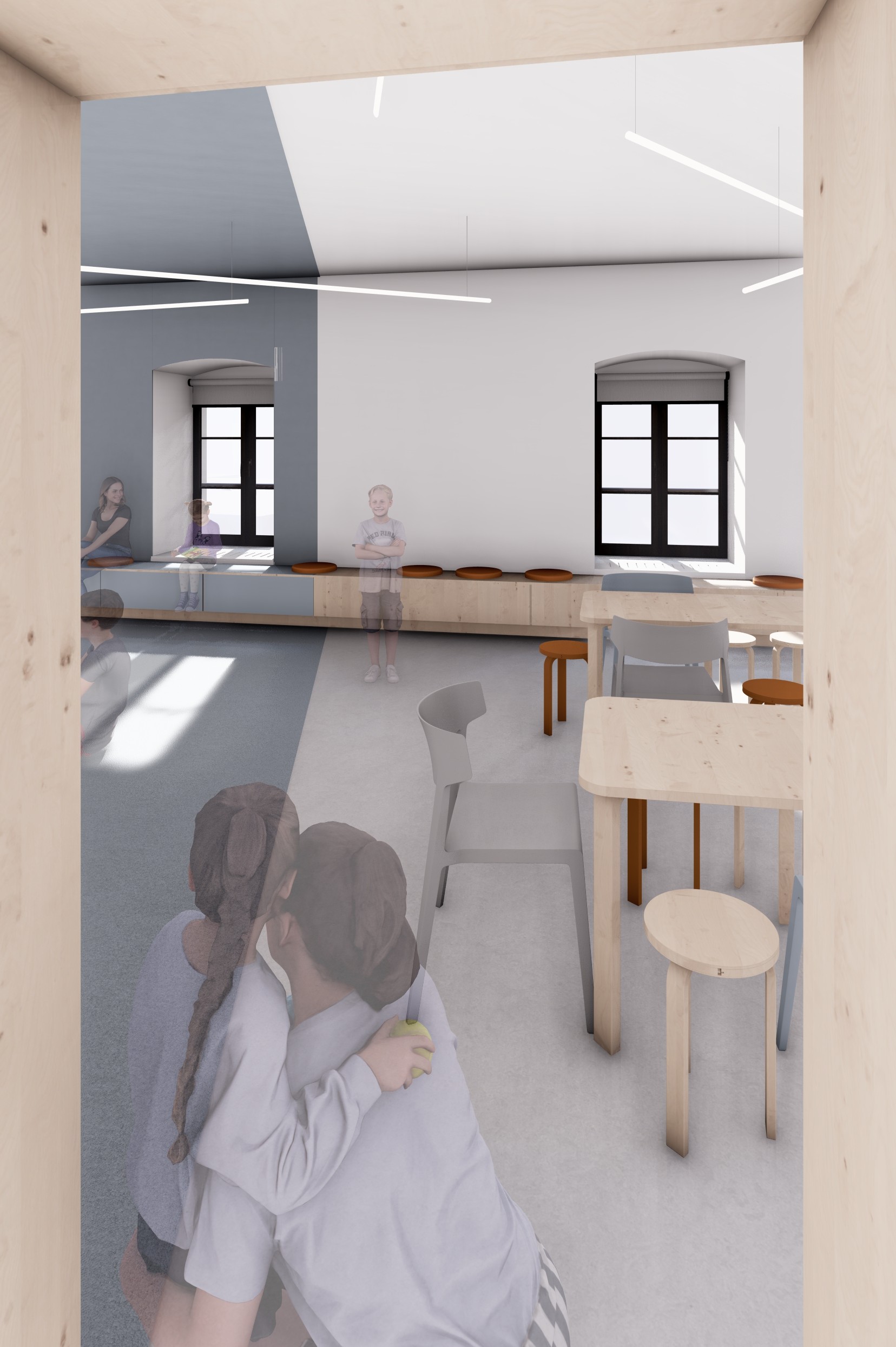
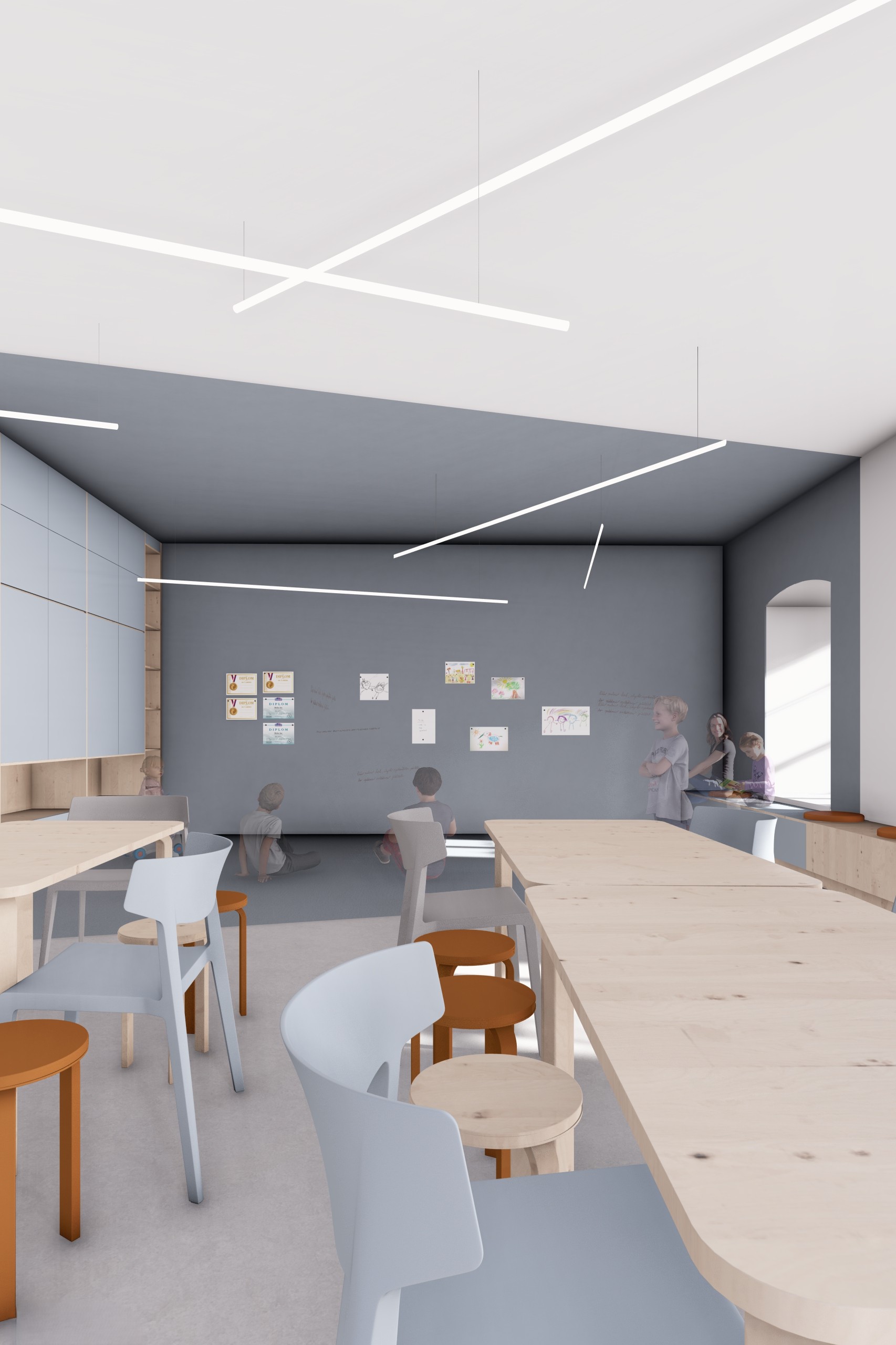
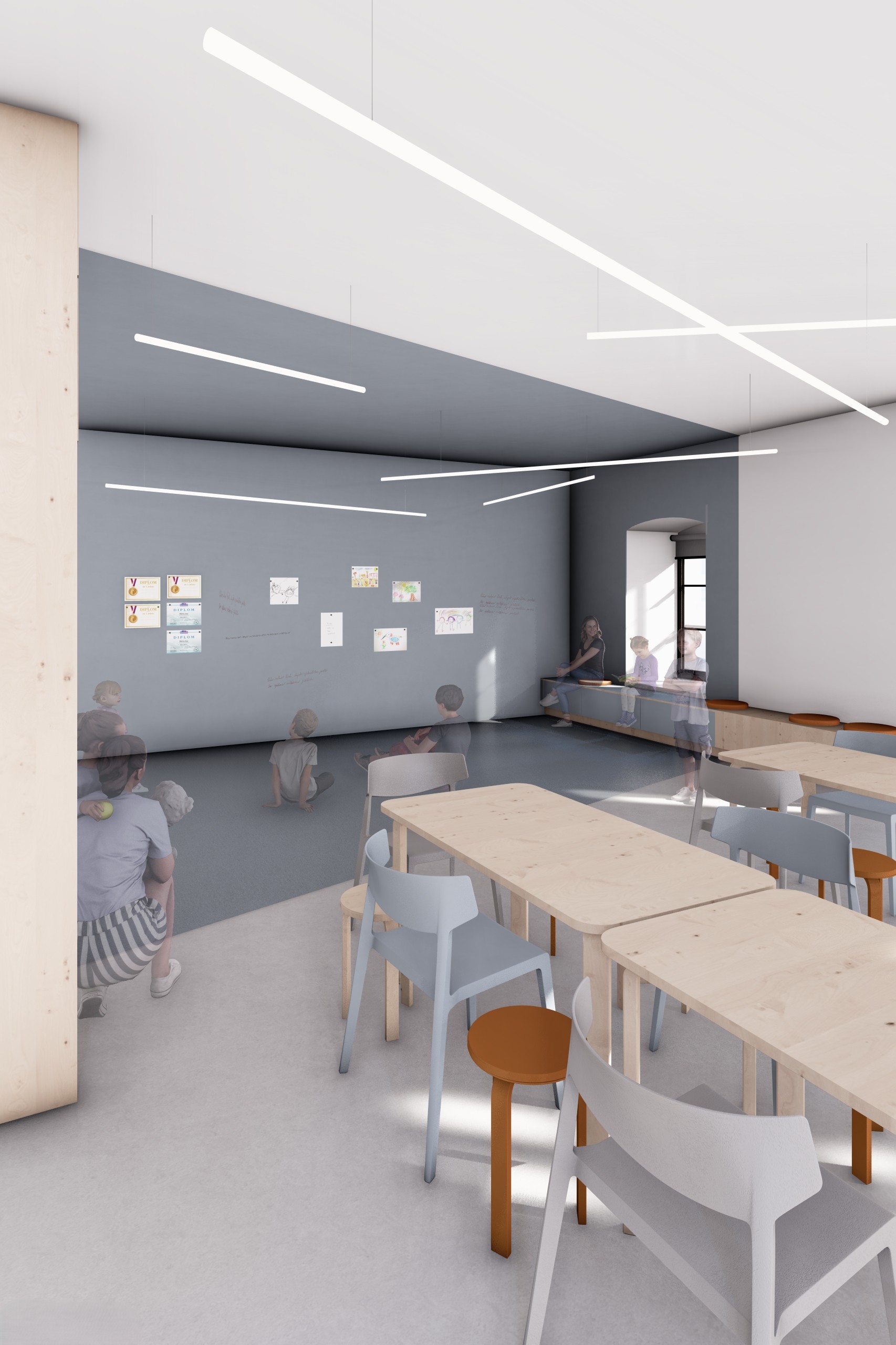
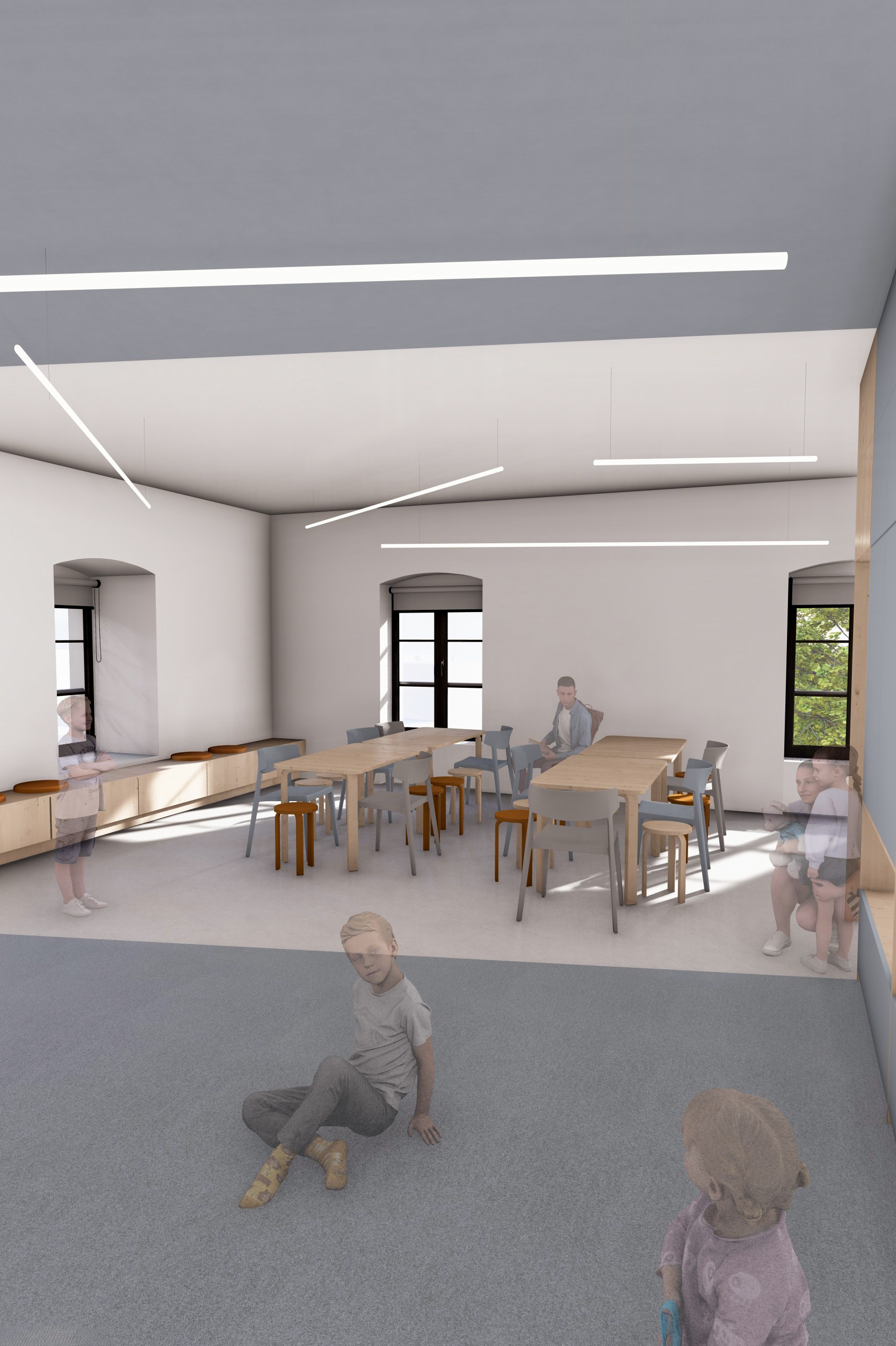
Third floor
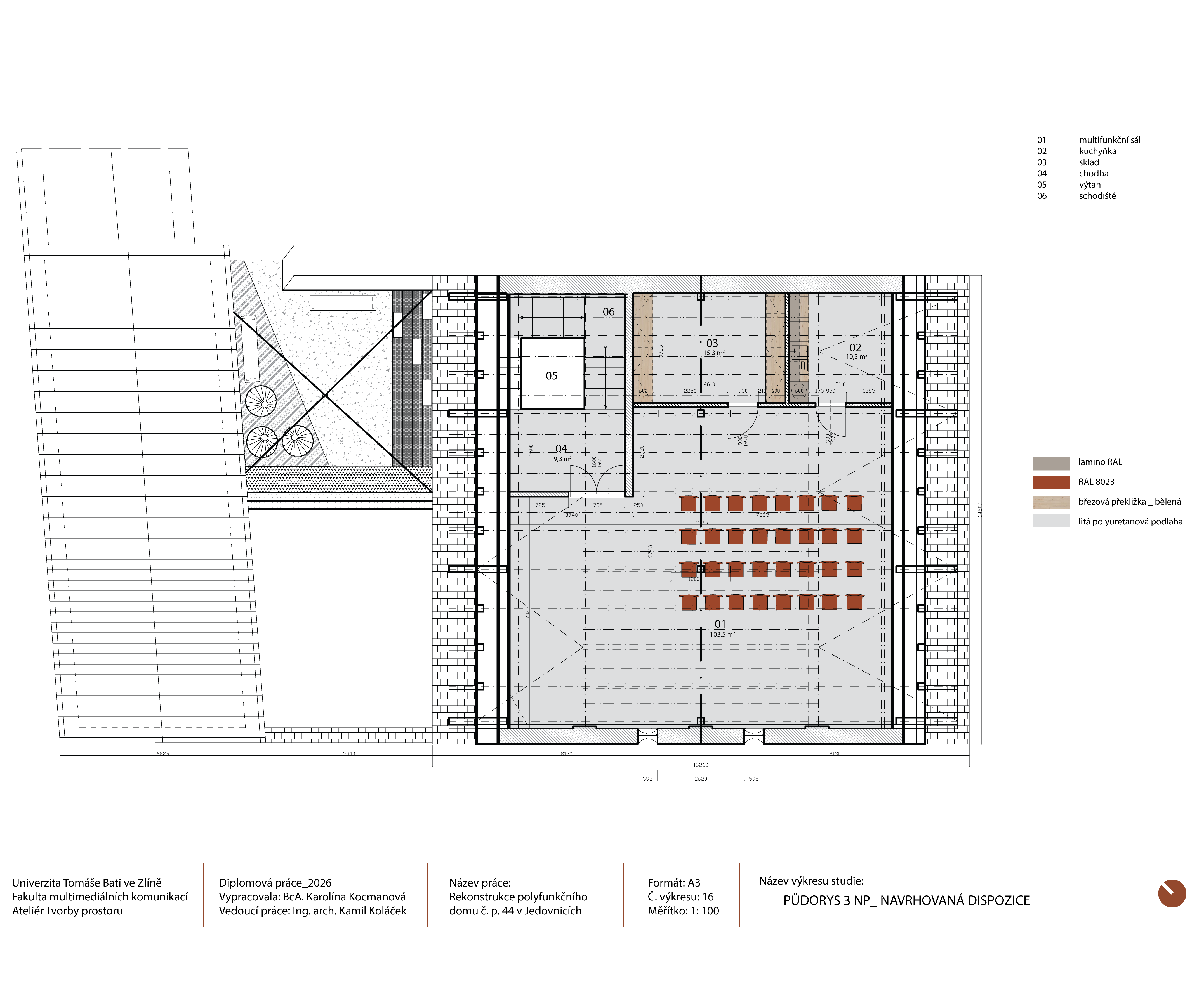
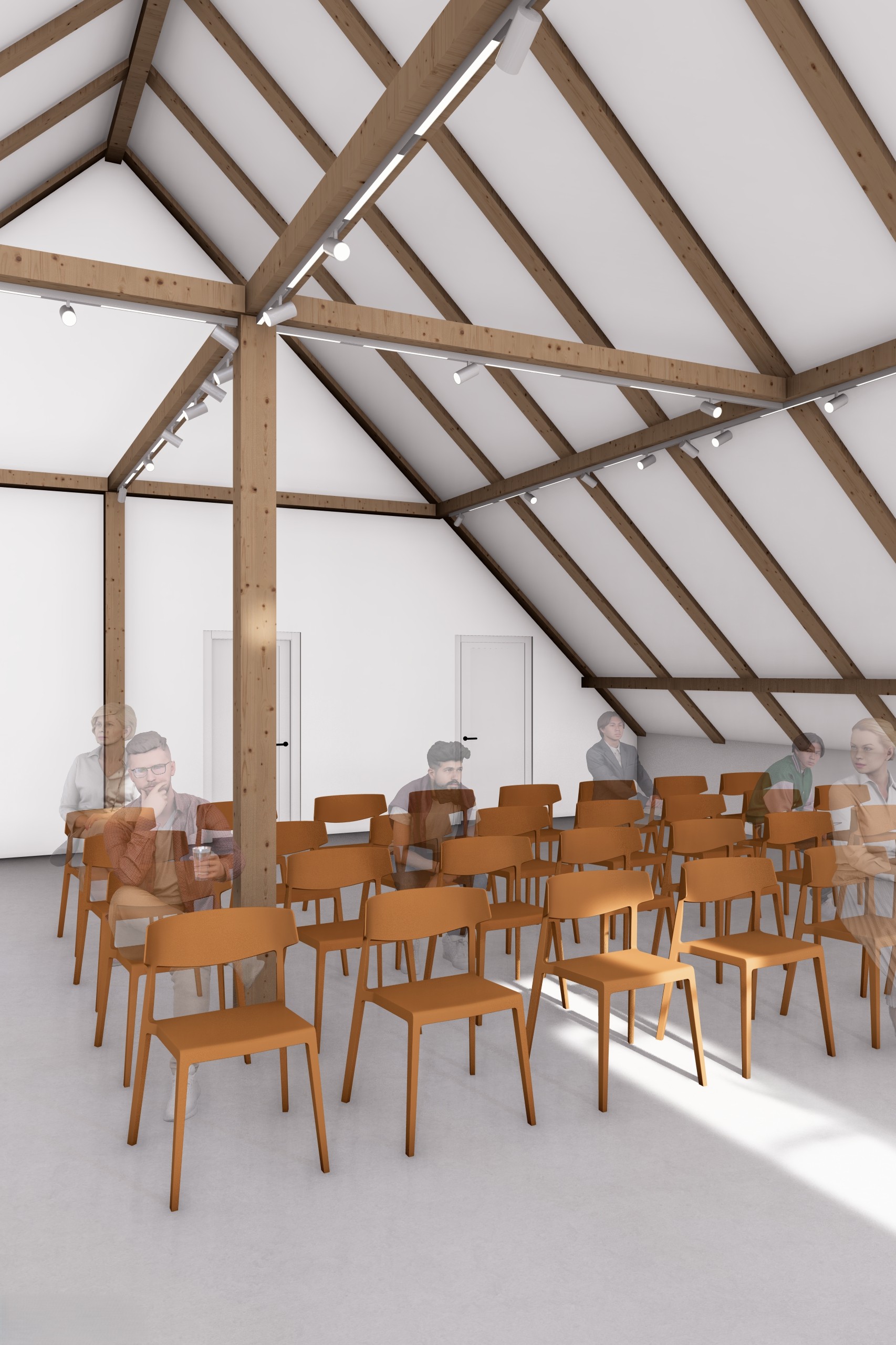
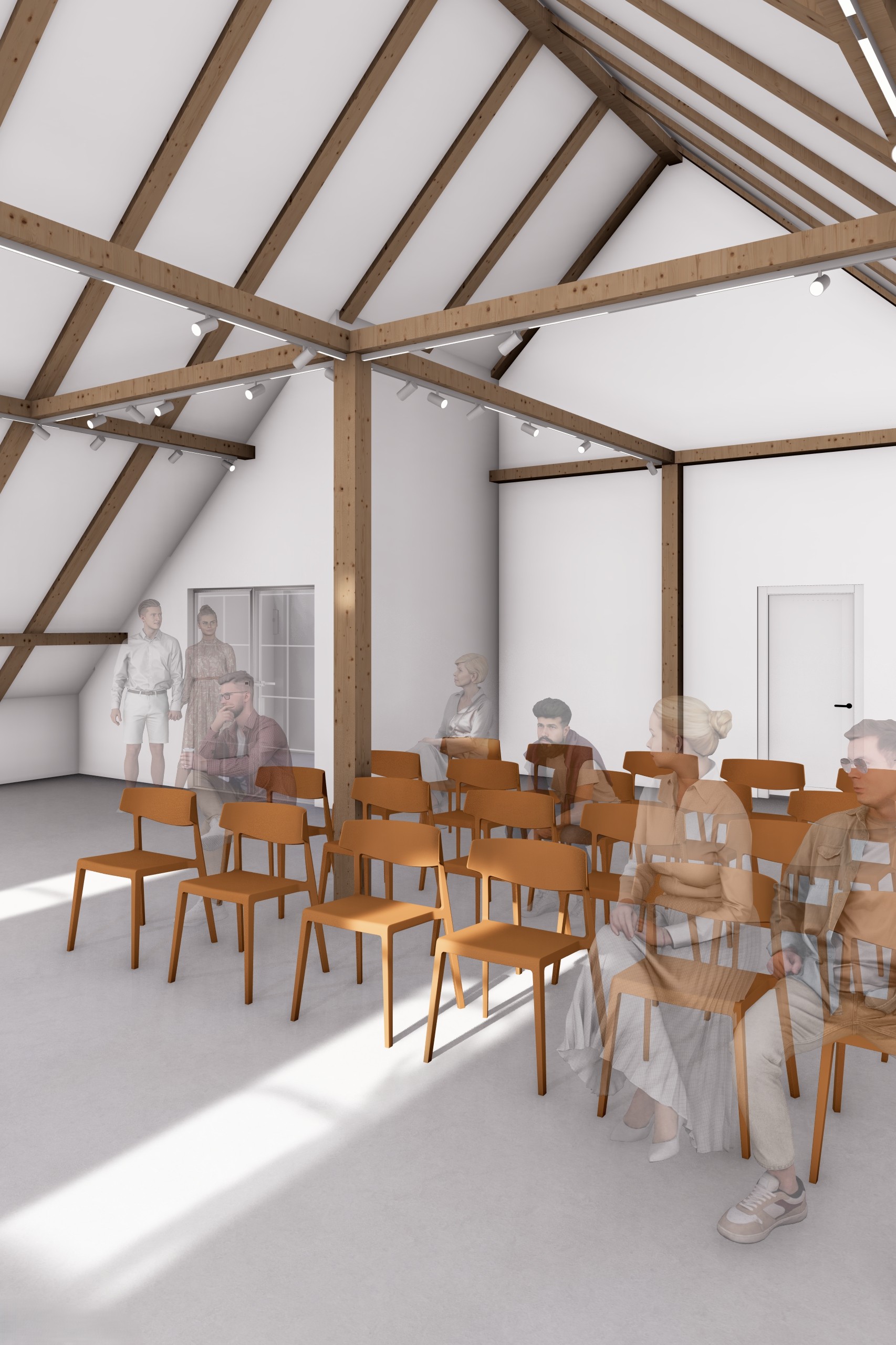
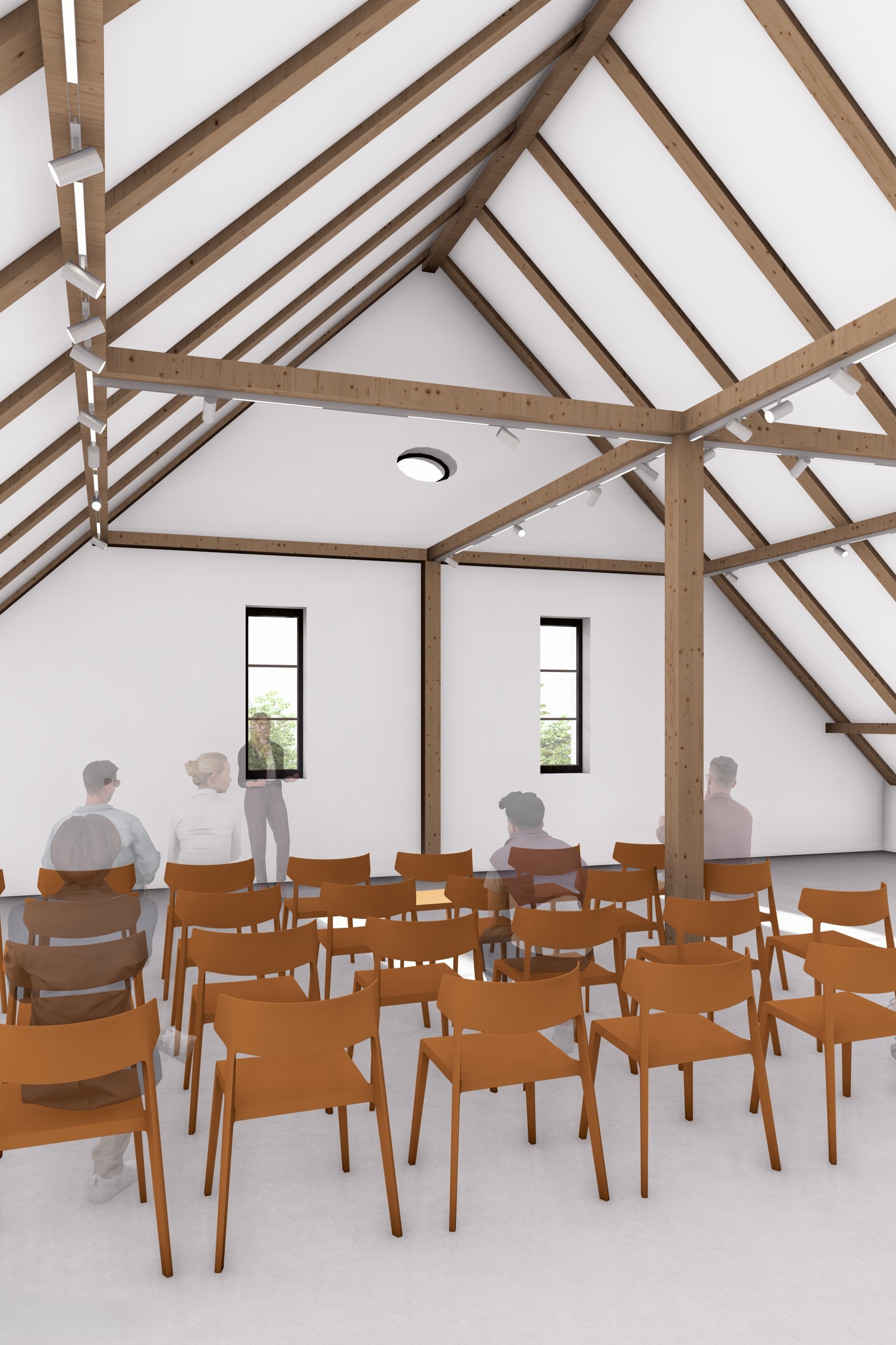
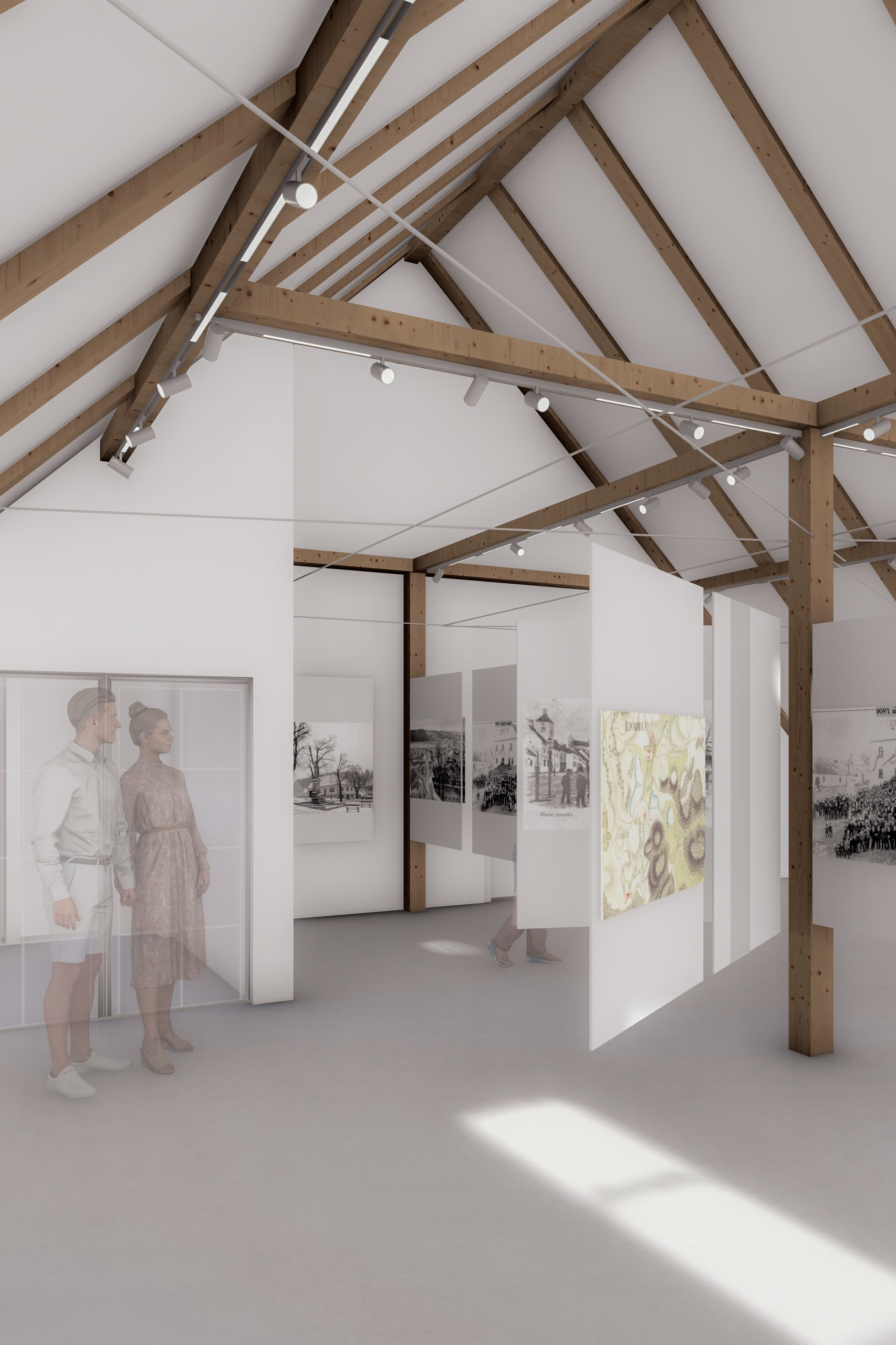
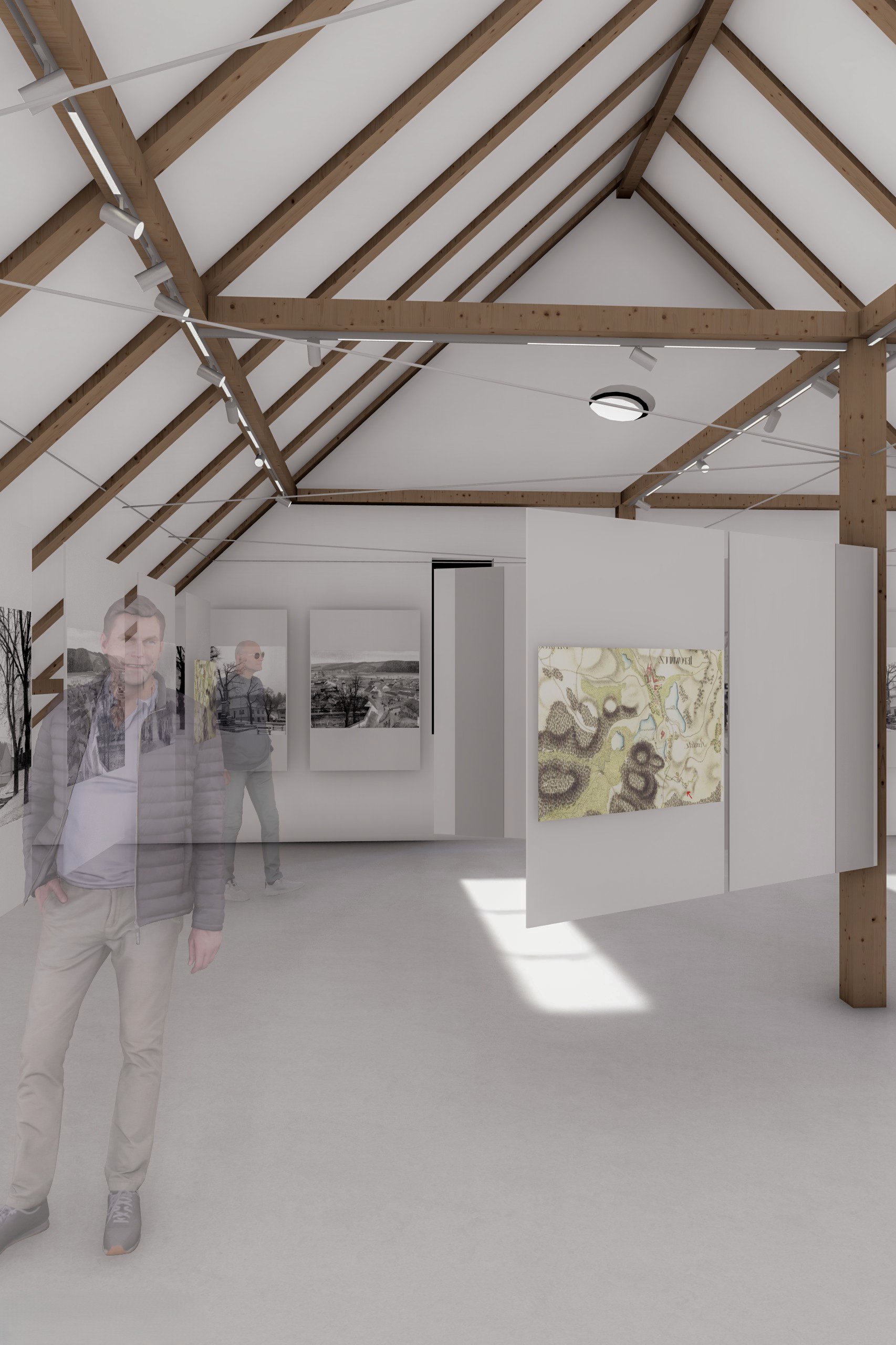
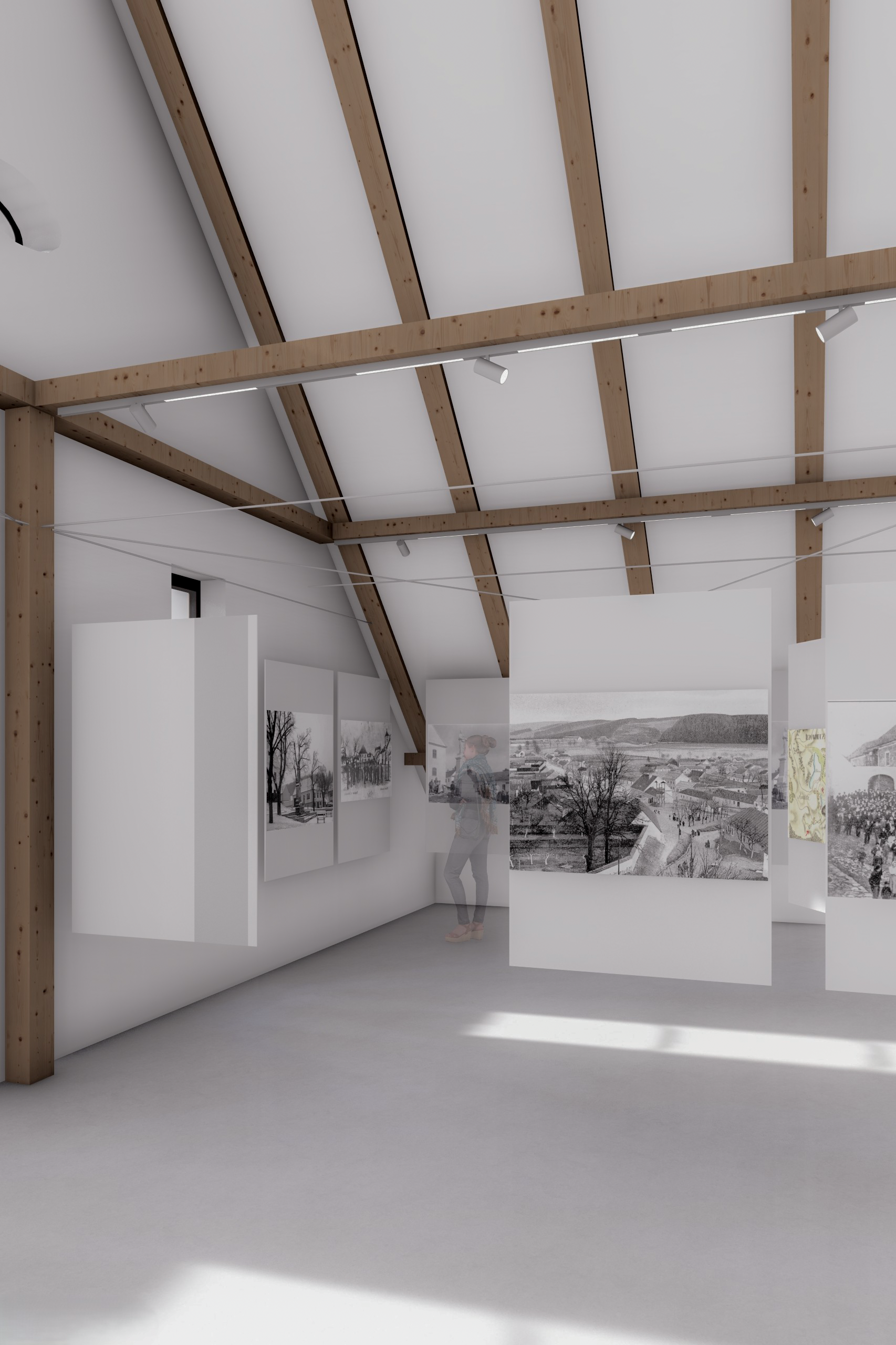
The attic of this historic building is accessible via a staircase or elevator. It is a relatively spacious area featuring an open, historic wooden roof truss. Its versatility makes it ideal for hosting various discussions, gatherings, small exhibitions, and intimate musical or other cultural performances.
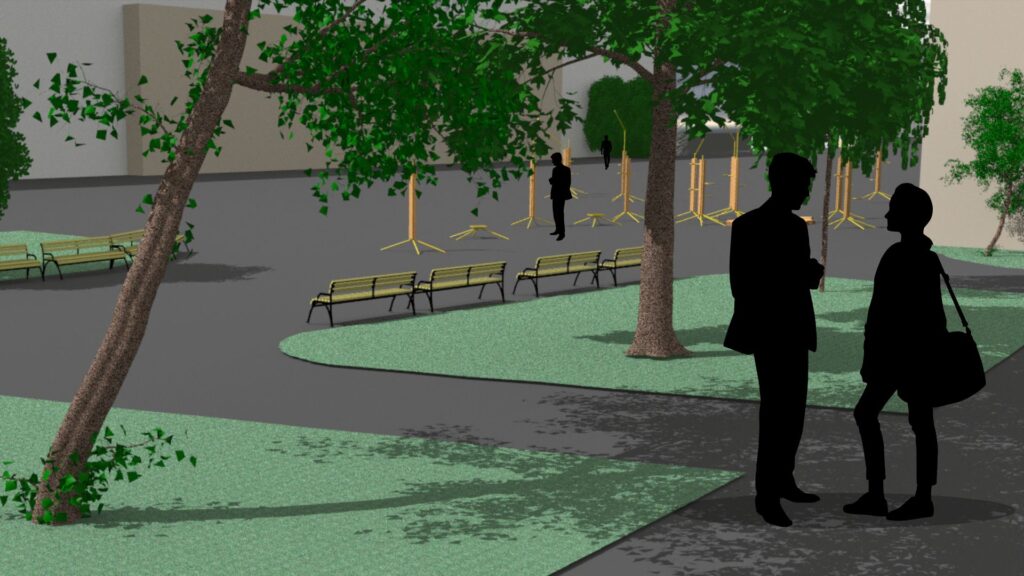
The exhibition system in the attic makes use of the exposed beam structure and a diagonal arrangement of hanging systems to display posters and other two-dimensional exhibits.
Material
The material design of this mixed-use building is based on the idea of a dialogue between the old and the new, their contrast, and how they complement each other. The interior design study emphasizes a formal contrast to the original historic, rectangular building. An important element is the diagonal, which disrupts the rectangularity of the rooms while complementing the building’s historic character. It is depicted in a slightly different way on each floor. Sometimes it is a linear element in the form of ceiling color or flooring material; at other times, this element is expressed through the mass of the furniture and furnishings. Each floor features a color accent that carries through to all surfaces—whether the floor, walls, ceiling, or furniture. All these elements are complemented by LED bar lights, which add the finishing touch to the interior with their versatility.
A bold orange color, featured in various parts of the interior, ties the entire house together, complemented by a neutral gray-toned poured concrete floor. The orange is intended to symbolize a return to brick, the historic building material.