Site under review
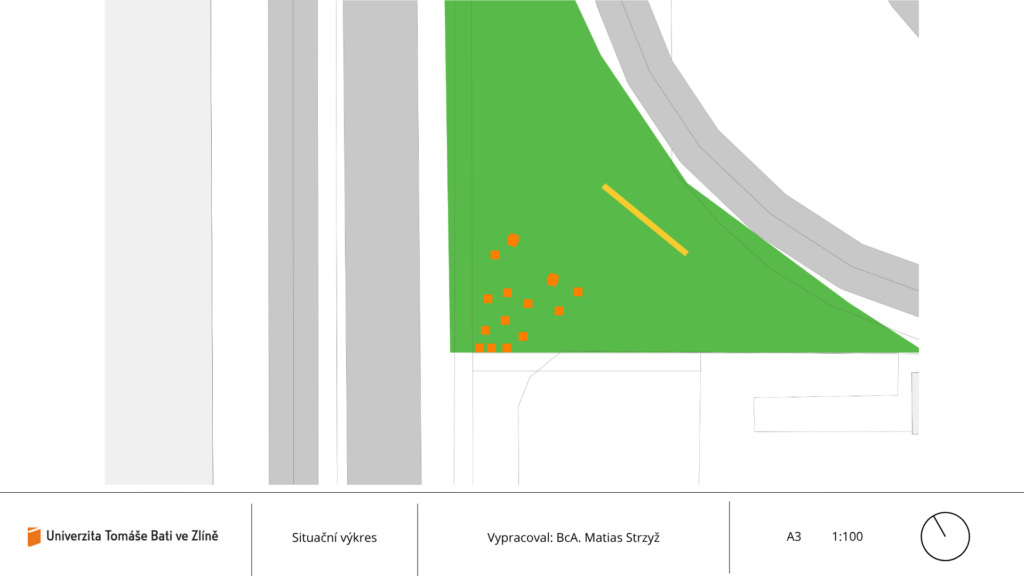
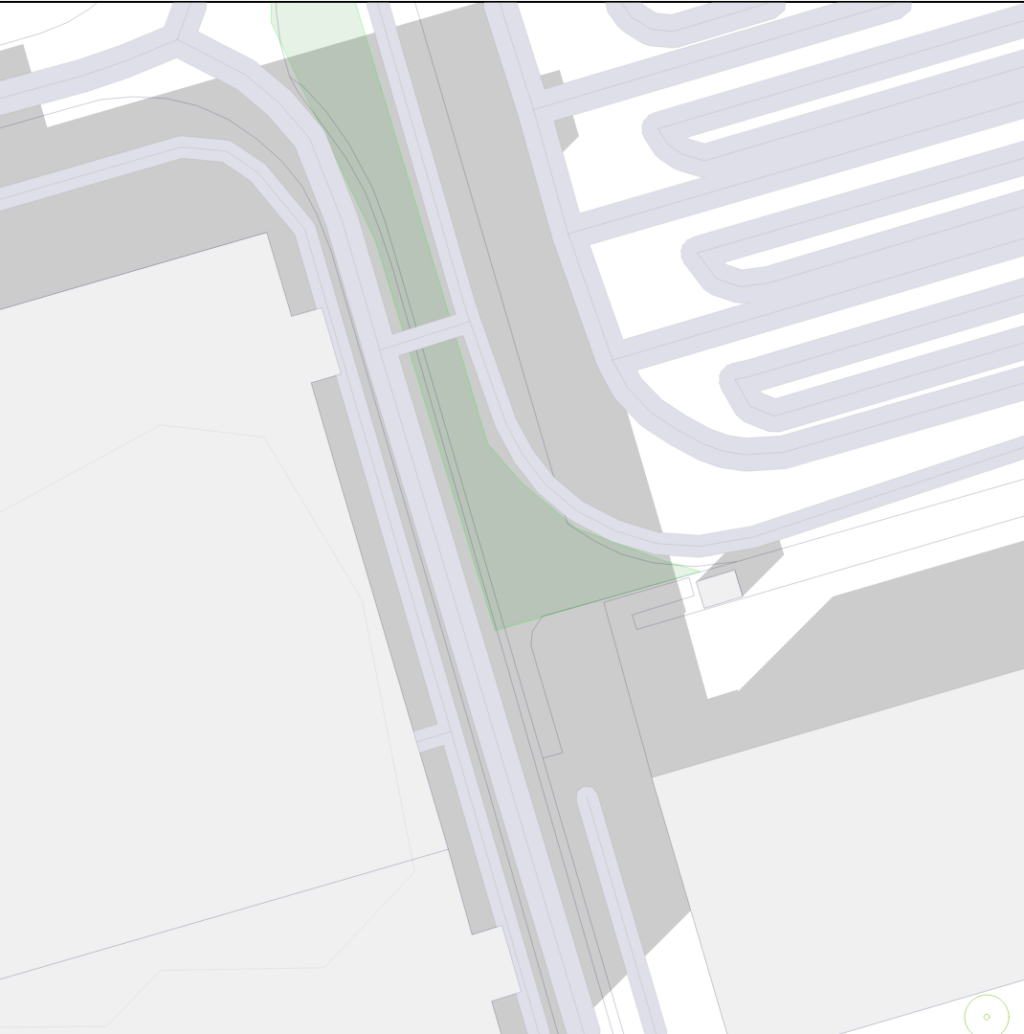
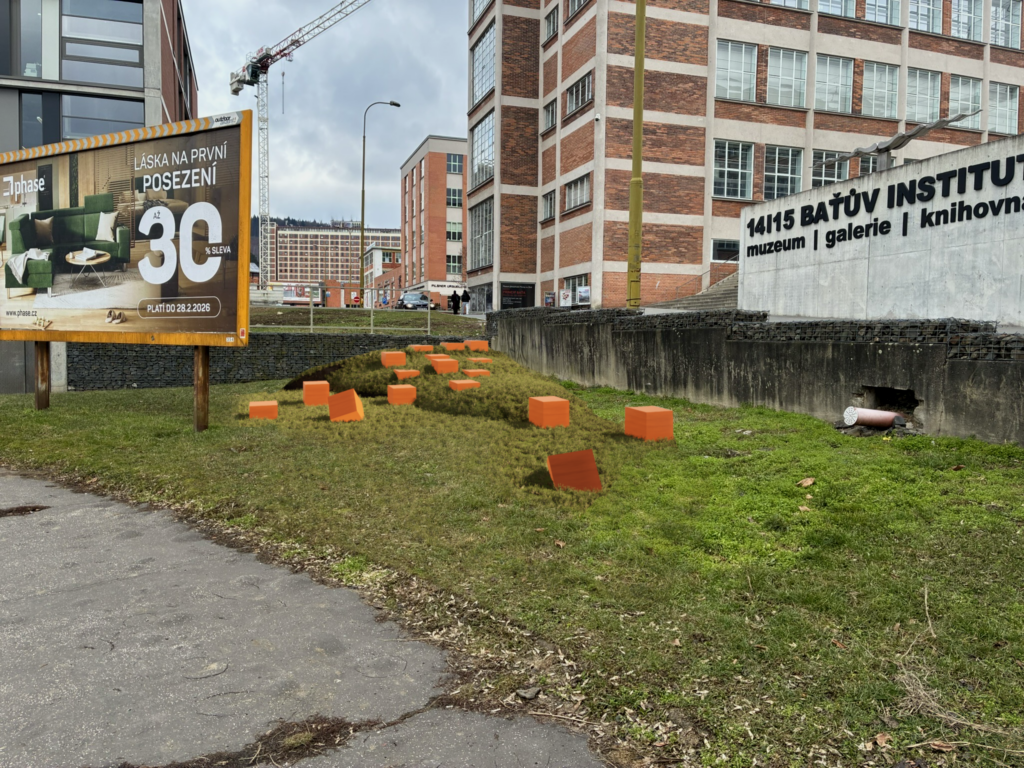
A green wedge in the corner of the bus station.
On the side of the factory complex, near Buildings 14 and 15, natural movement towards the bus connections is obstructed by several barriers (people climb over the wall that separates the areas long before they reach an official opening). A turnyboard further compounds the overall impassability. The current state of the bus station reinforces the users’ tendency to spend as little time waiting here as possible. The site under review can offer a more cultivated and pleasant alternative.
The site is part of a large-scale Transport Terminal project. However, its overall implementation depends on subsequent investment plans, making its timeline difficult to predict. A temporary intervention, carried out within a reasonable timeframe, can improve the situation for the users of this space.
Concept
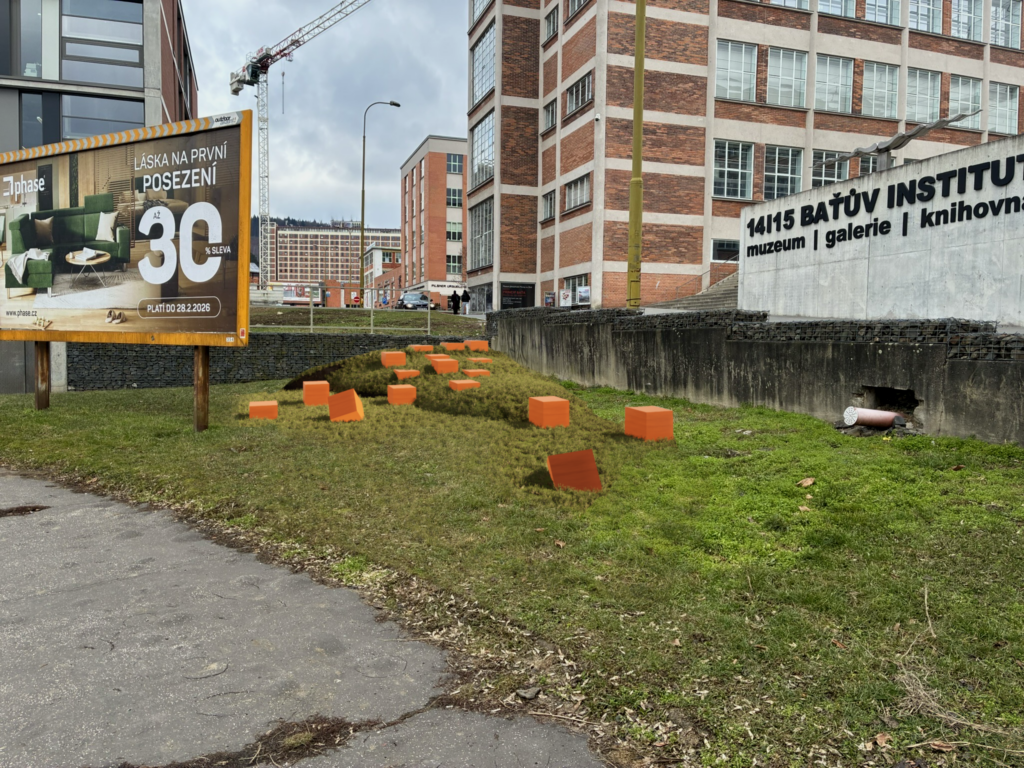
In this proposal, I work with a prominent motif of orange cubic elements that abstract the iconic Baťa houses – one of the ultimate symbols of the city of Zlín. These “cubes” are not merely a visual reference; they become an active tool for shaping the space.
By positioning them strategically, I redefine the existing informal shortcut that people previously used to bypass the barrier, transforming it into a natural, high-quality pedestrian zone. An element once perceived as an obstacle is thus converted into a fully integrated part of urban movement.
At the same time, the cubes function as multifunctional street furniture – allowing for passage, seating, and informal use. Children can use them for play and movement, while others can utilize them as a place to relax, eat, or wait for the bus. The design thereby encourages spontaneous interaction and naturally revitalizes a previously neglected space.
Design Variants
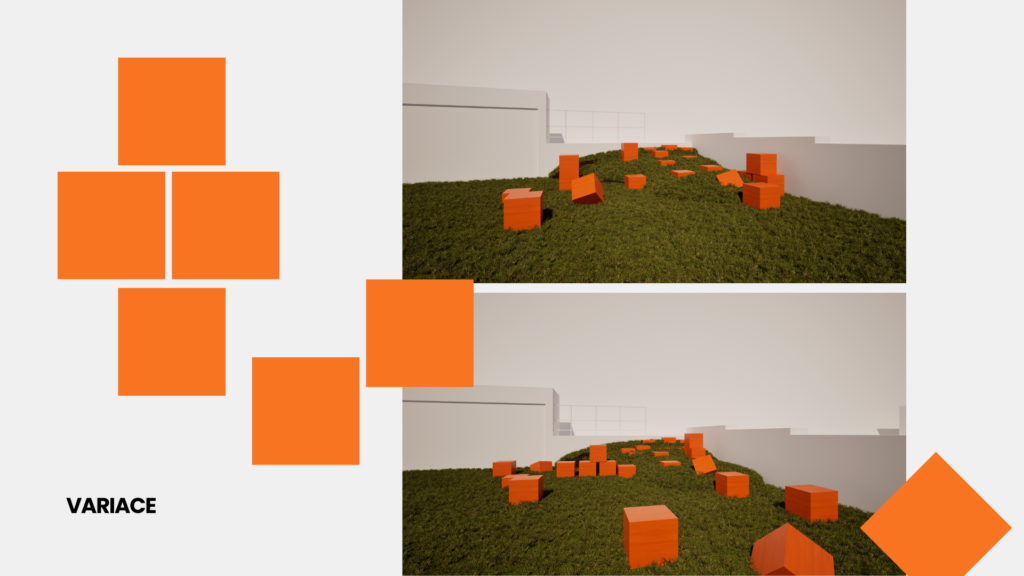
Variability is a key principle of the design. The individual orange cubic elements can be freely assembled, layered, and combined, creating an open-ended system that allows for various spatial configurations. The inspiration stems from the Baťa structural module, typical for the city of Zlín, which is reinterpreted here into a contemporary, more playful form.
The cubes thus form a dynamic structure that can respond to the specific needs of the site – ranging from linear guidance of movement and defining seating zones to accentuating important points within the space. They can be stacked vertically to create simple wayfinding elements, small “towers,” or visual landmarks that improve the legibility of the space.
Thanks to its modularity, the design offers long-term flexibility; the elements can be rearranged, expanded, or reduced according to current usage. The space thus avoids becoming static, instead turning into a living organism that can naturally evolve along with the needs of its users.
Materials
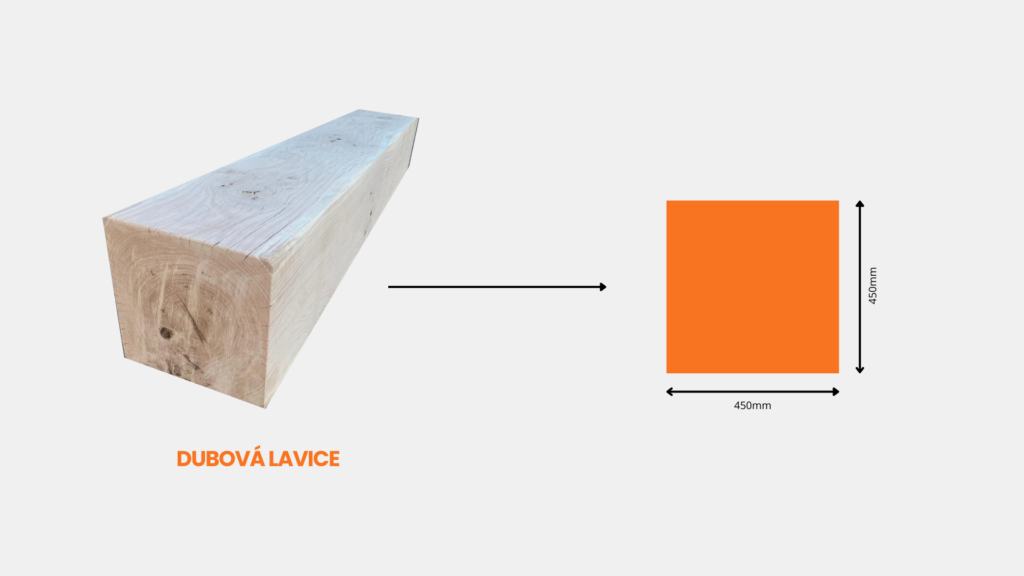
The proposed cubic elements are based on readily available, solid oak timber benches, which are modified into a uniform cube format. This approach allows for the utilization of a standardized and easily accessible element, which is further transformed to take on a new spatial meaning.
The individual modules are then finished with a striking orange coating, creating a clearly legible visual motif that references the industrial and functionalist tradition of the city of Zlín.
The use of solid oak ensures high durability and a long lifespan for the elements in the public realm, while their prefabricated nature allows for simple production, easy replacement, and variable configurations within the design.
Installation
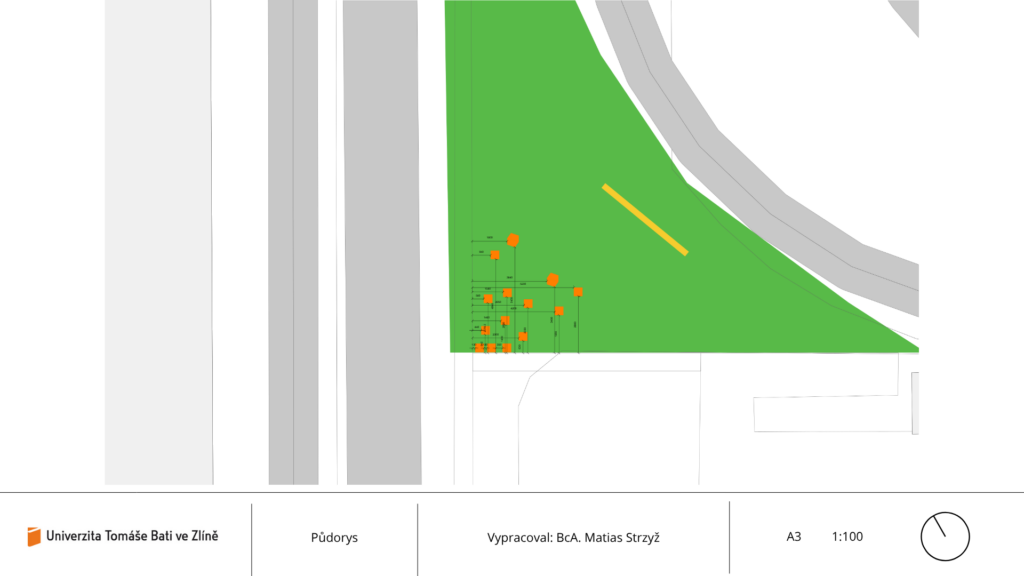
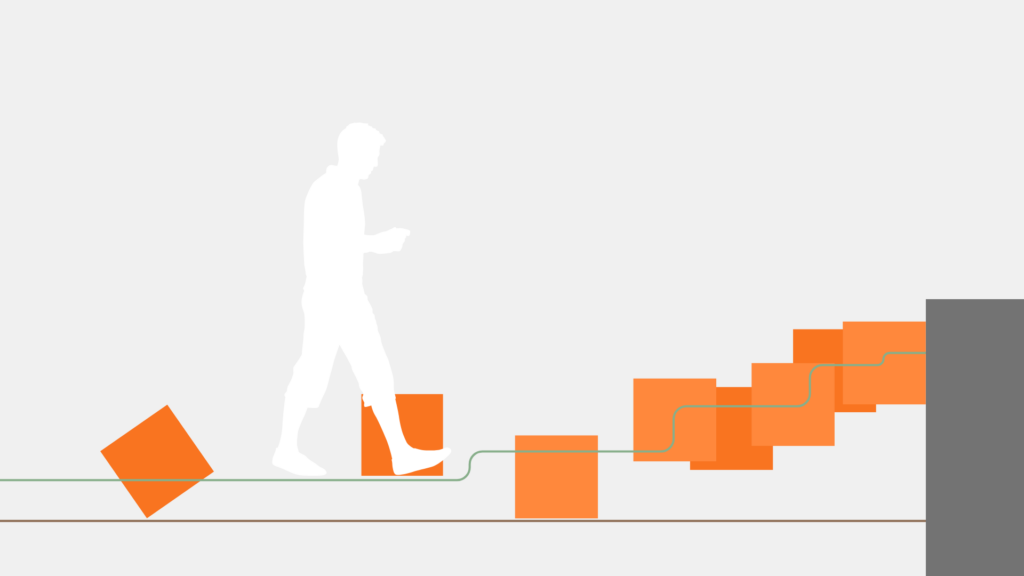
The installation of the cubic elements is designed through terrain modeling. A gentle earthen slope will be created at the intervention site, into which the individual cubes will be partially embedded. This principle allows for their natural anchoring without the need for complex structural interventions.
At the same time, embedding the elements into the terrain creates optimal height grading, which naturally forms a stepped arrangement. As a result, the cubes are not only stably set into the ground, but they also define a comfortable and intuitive route for pedestrian movement.
Architectural Drawings