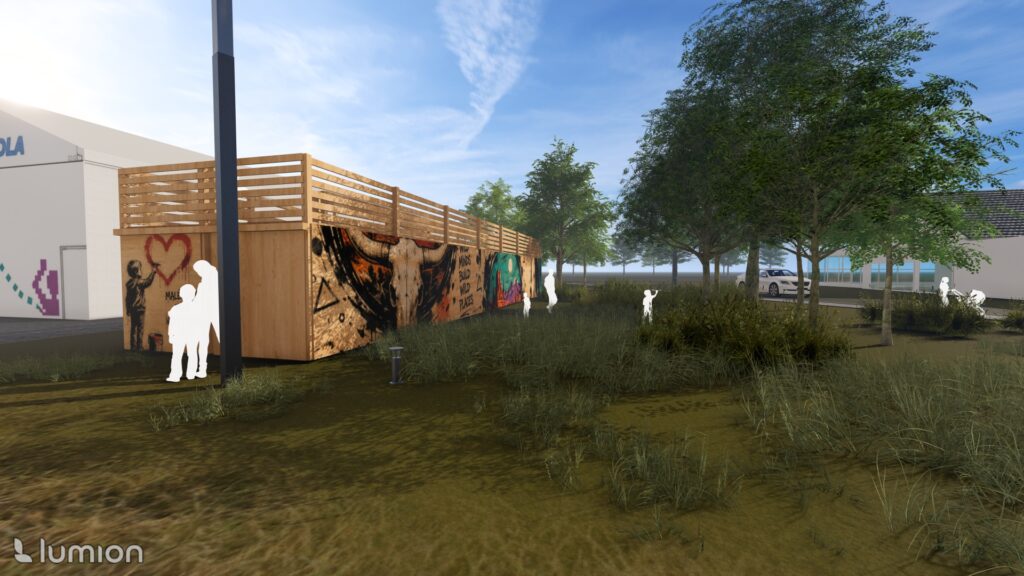
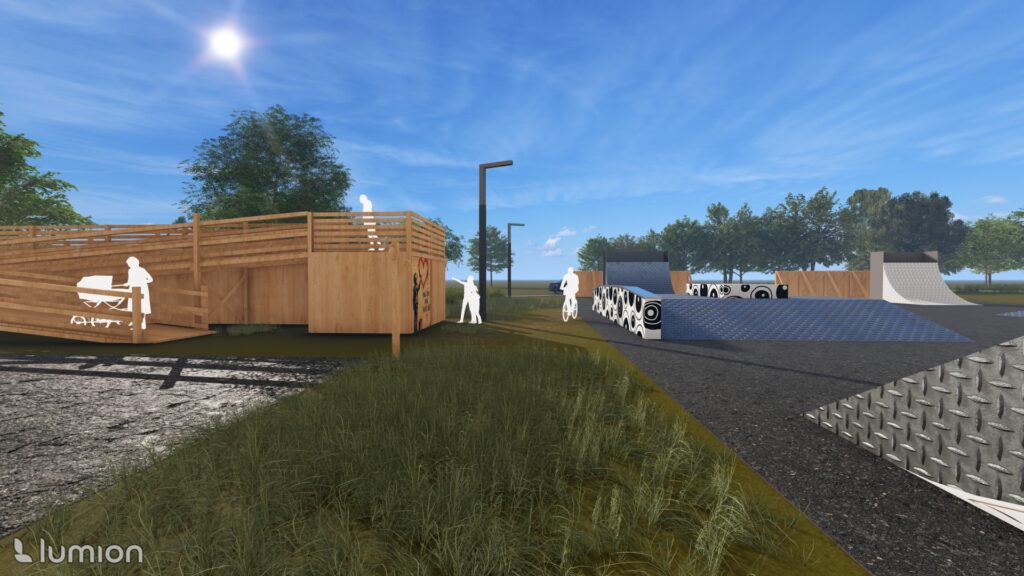
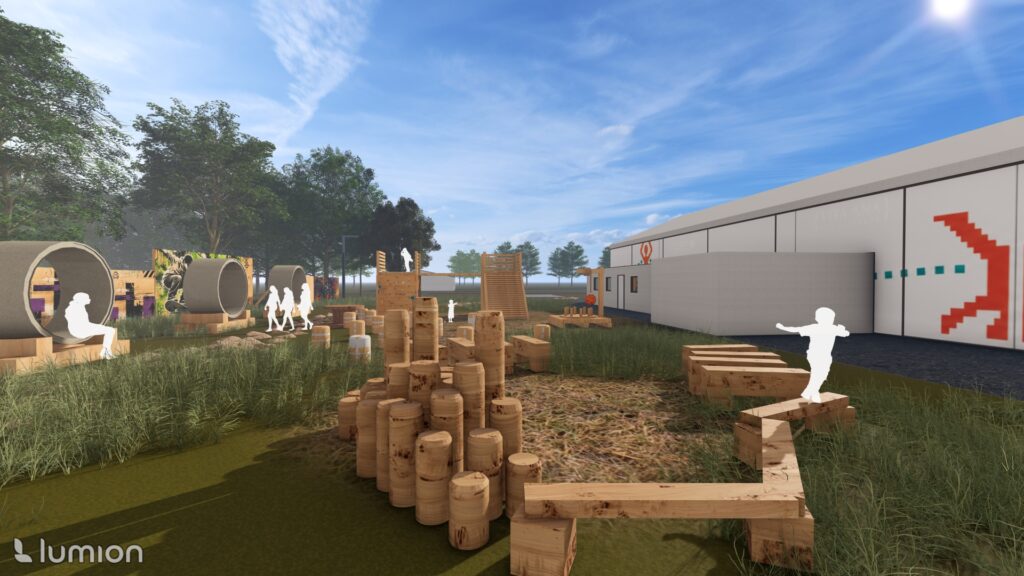
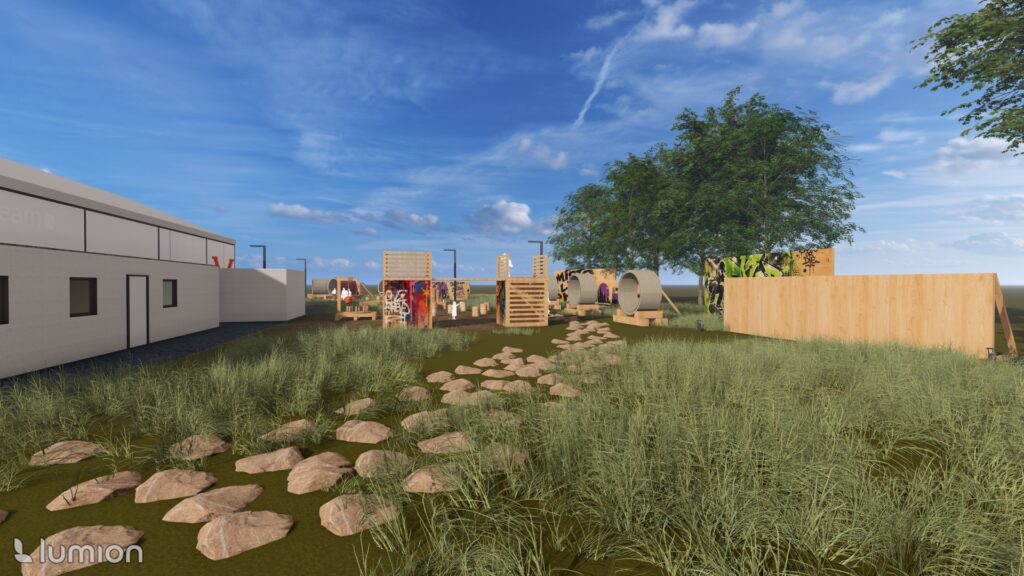
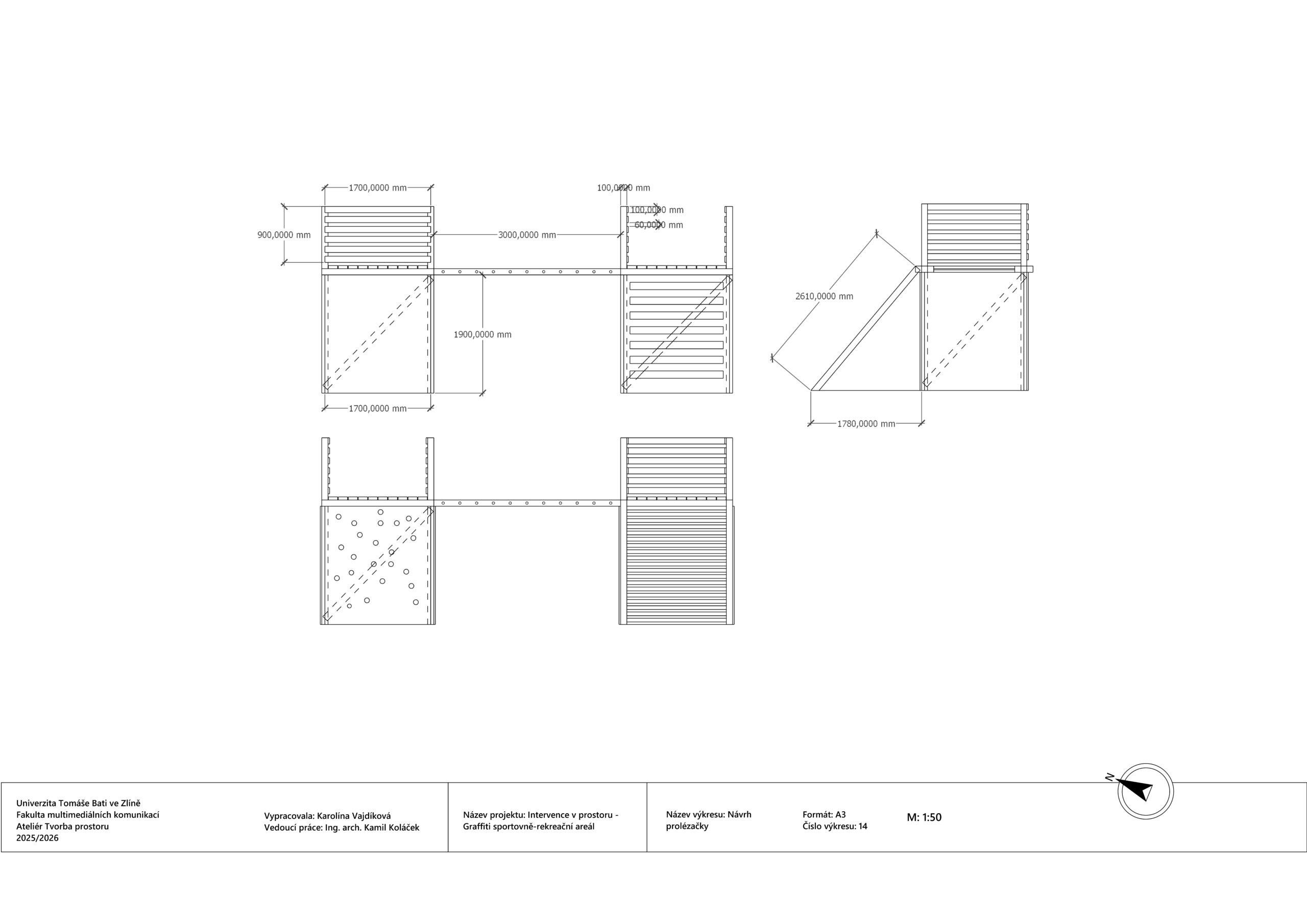
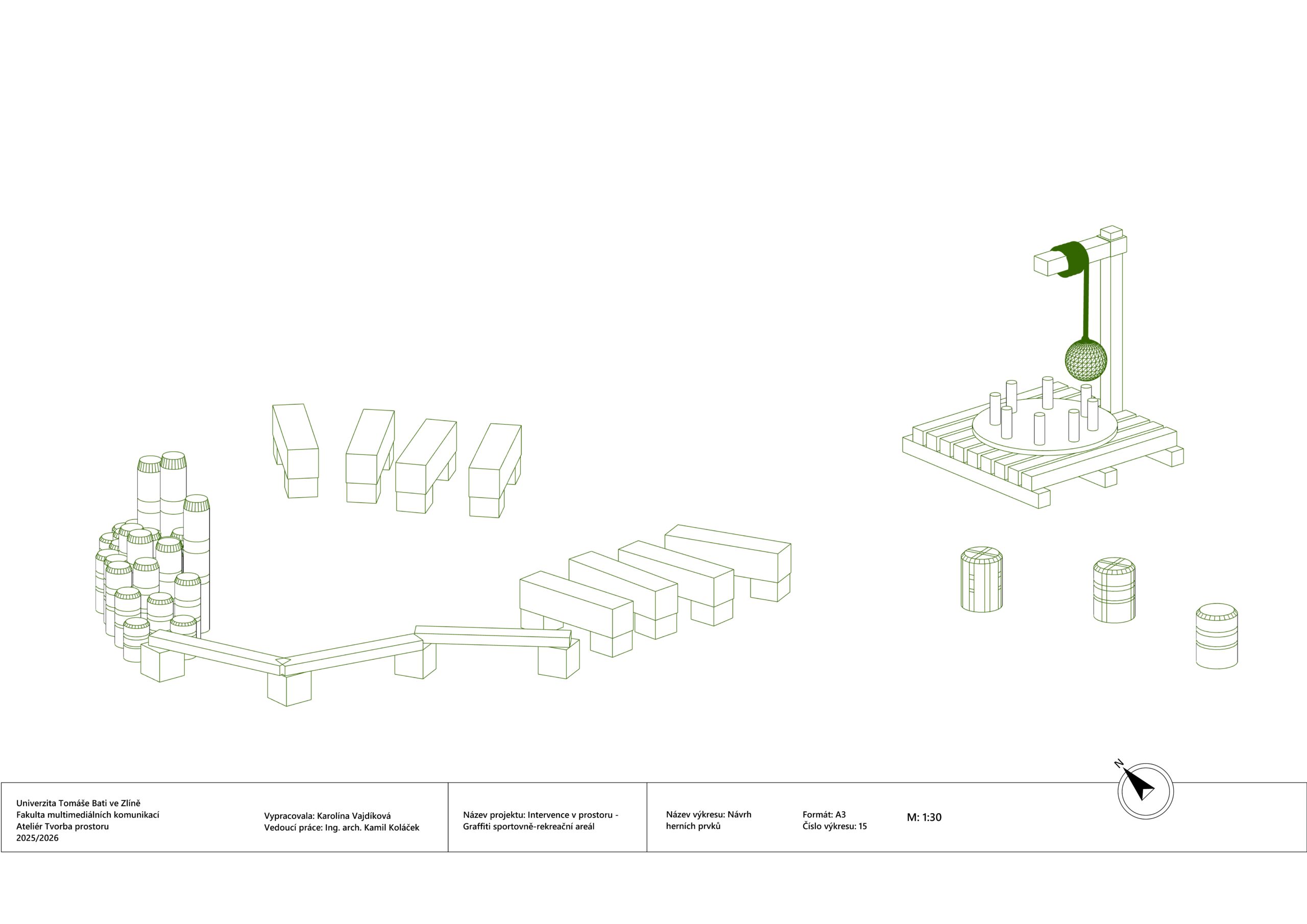
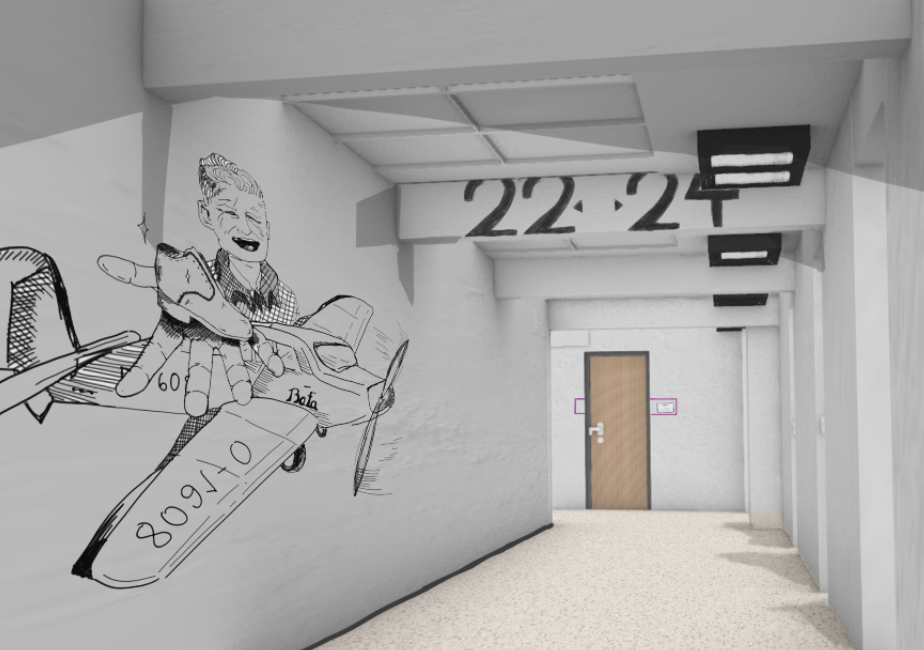
The aim of this thesis was to design a spatial intervention in the area surrounding the Ice Rink and Skatepark in Napajedla through the creation of a legal graffiti sports and recreational complex. The proposal responds to the current condition of the site, which appears underutilized, fragmented, and lacking quality facilities for leisure activities for different age groups. The main idea of the design was to create a space that supports creativity, social interaction, and community life in Napajedla, while also providing an opportunity for legal artistic expression through graffiti.
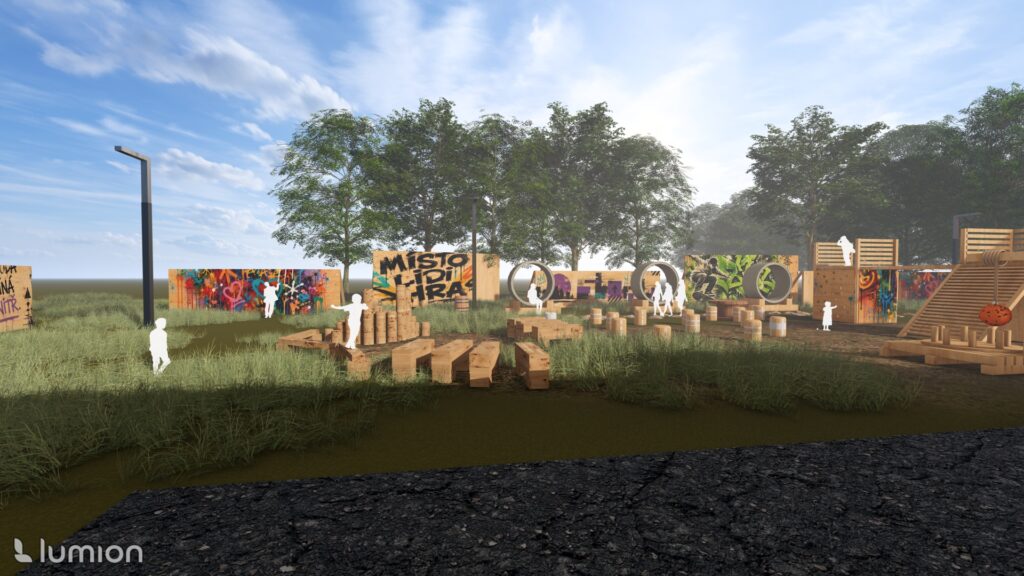
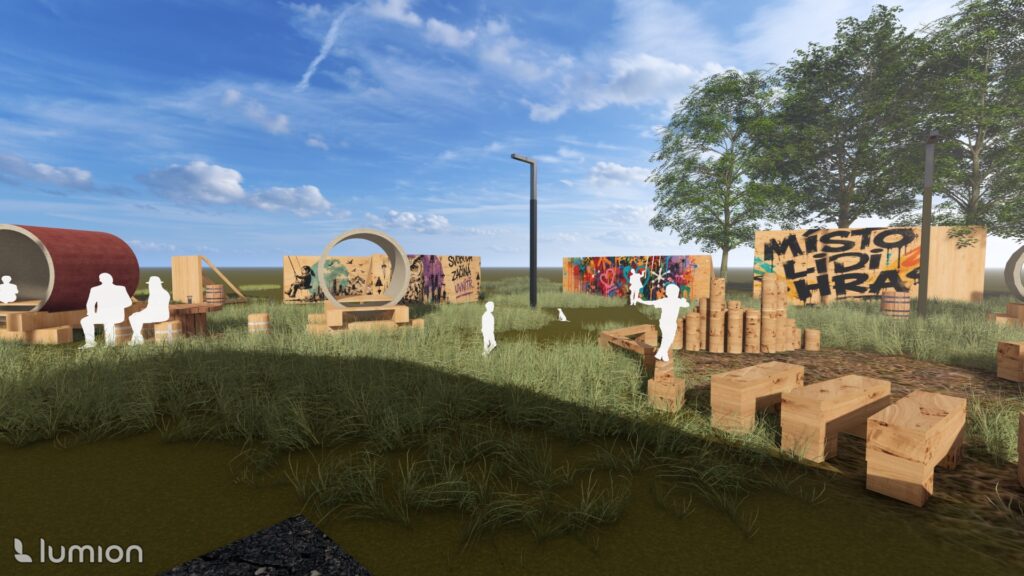
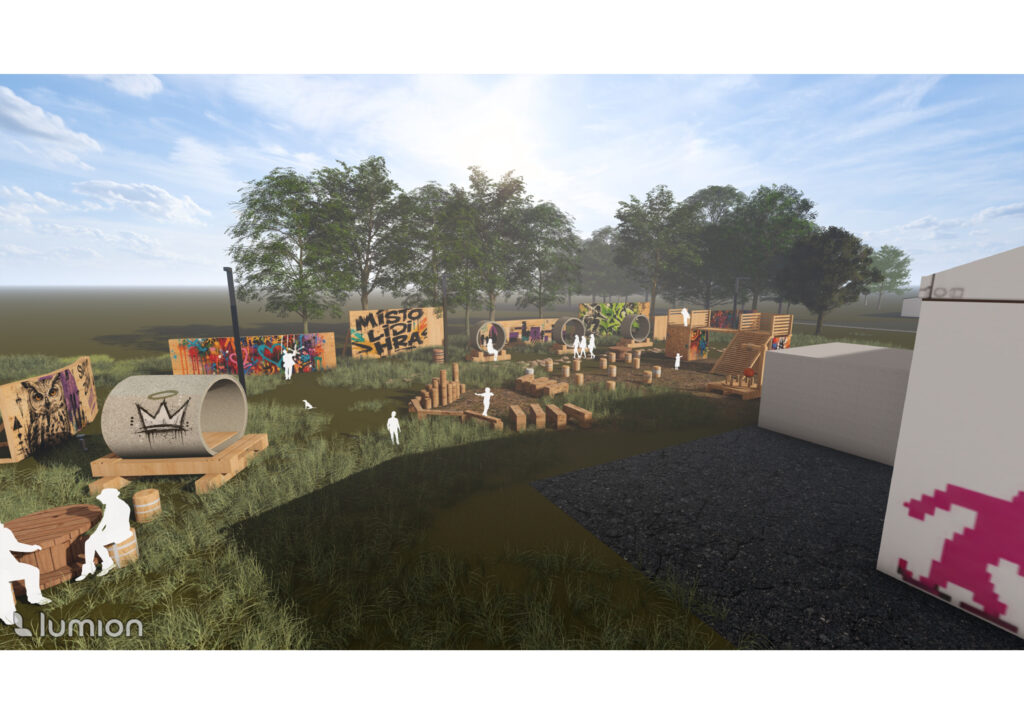
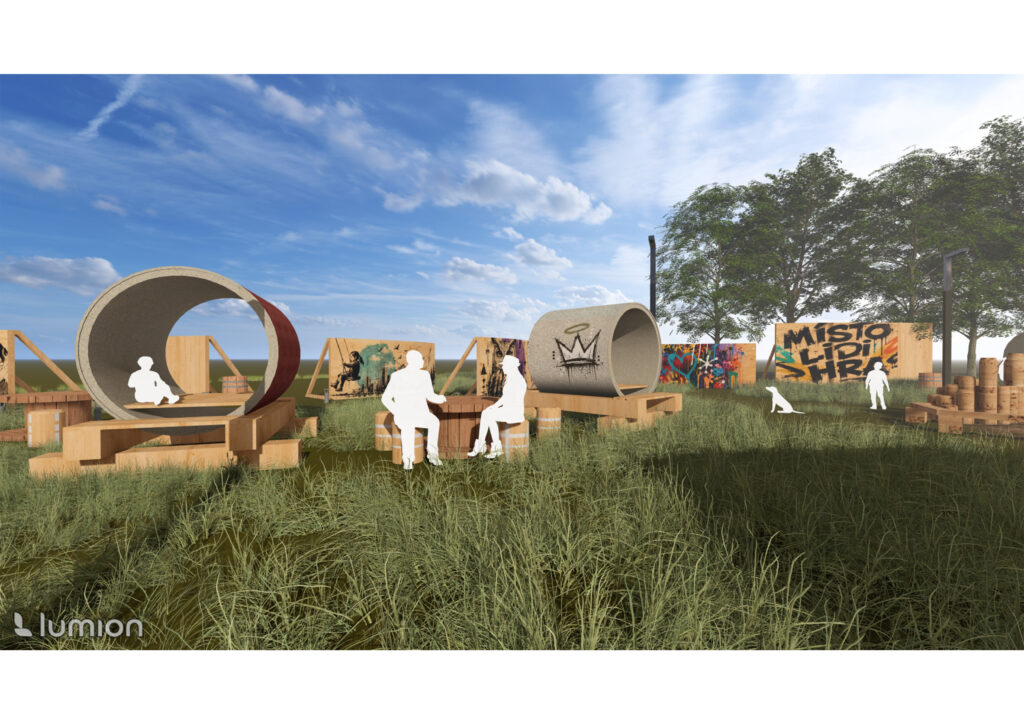
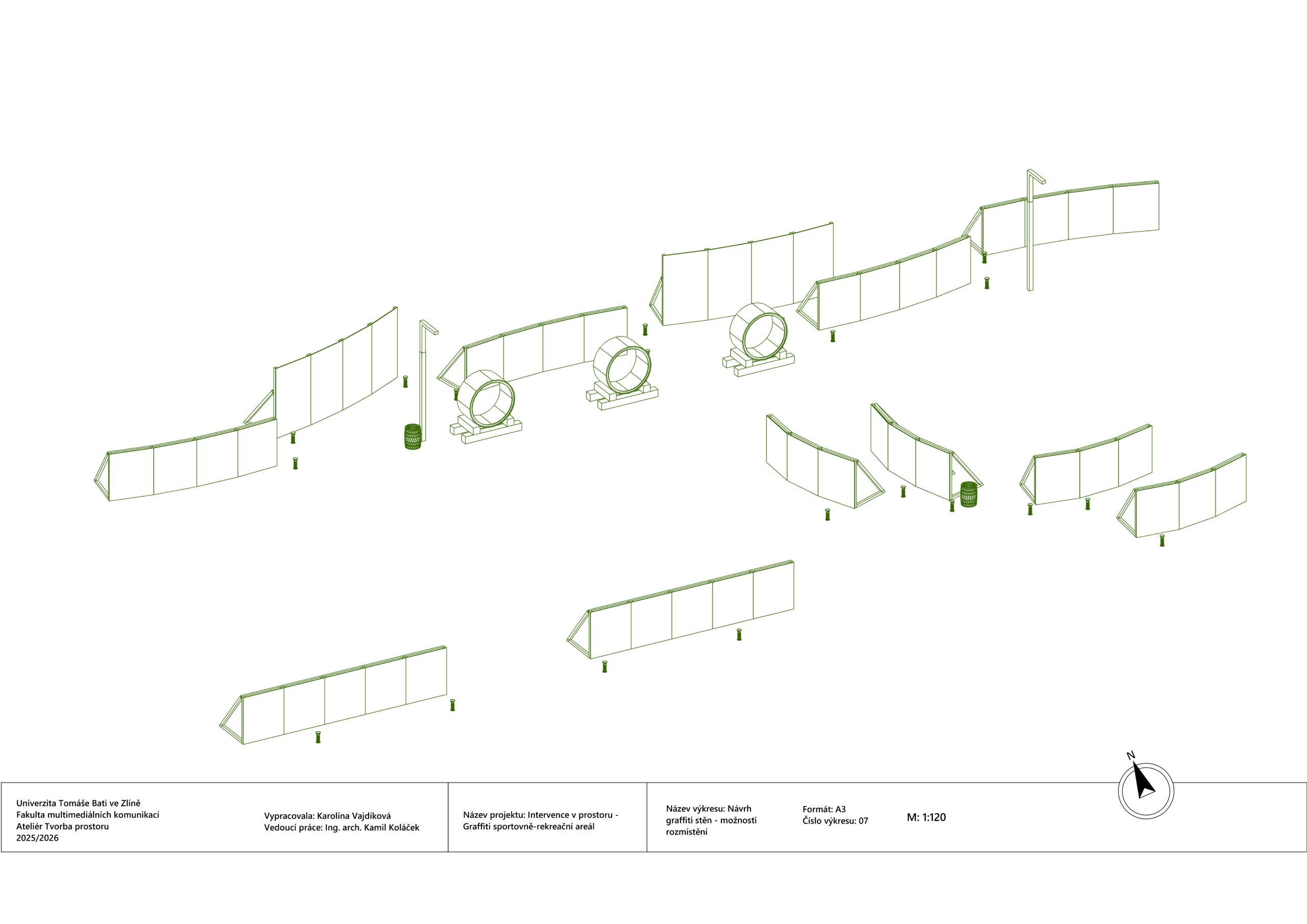
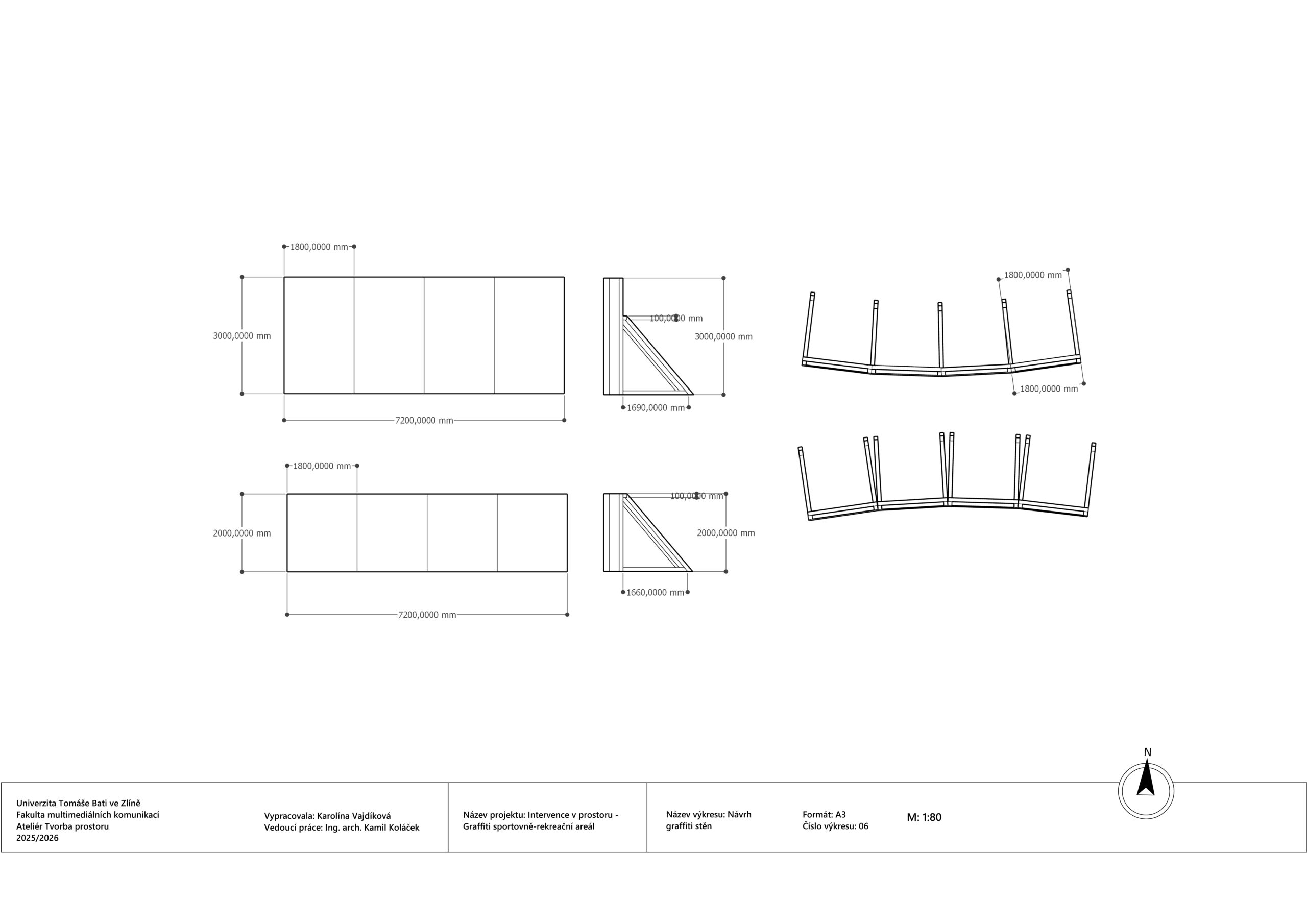
The thesis deals with the themes of temporality, flexibility, and the relationship between construction and the landscape. The design is based on the principles of simple and easily demountable structures, which allow for possible relocation or future expansion. Flexibility is primarily reflected in the system of graffiti walls, whose structures are designed using larch timber beams and moisture-resistant OSB boards. The use of natural materials also contributes to a more sensitive integration into the surrounding landscape.
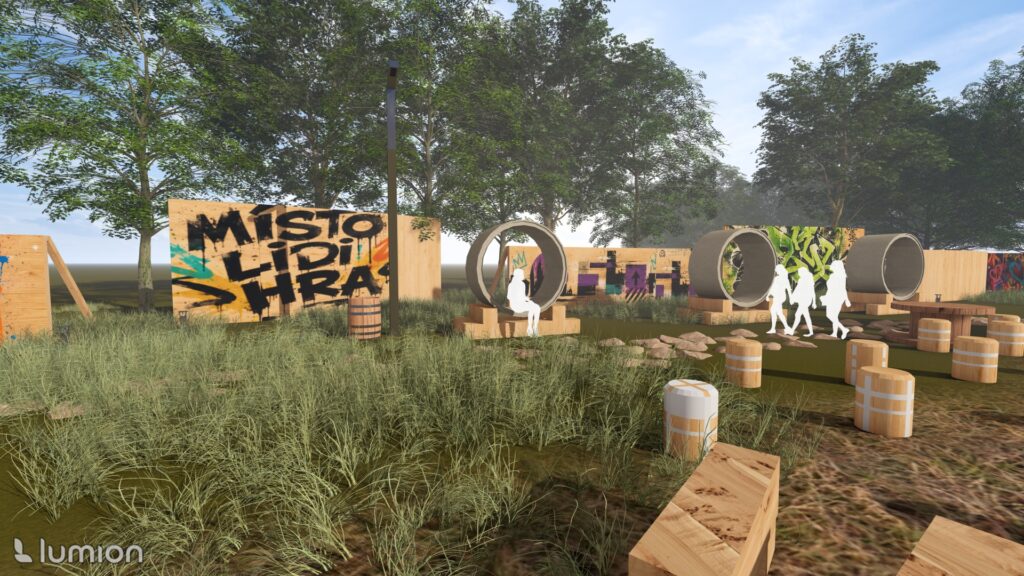
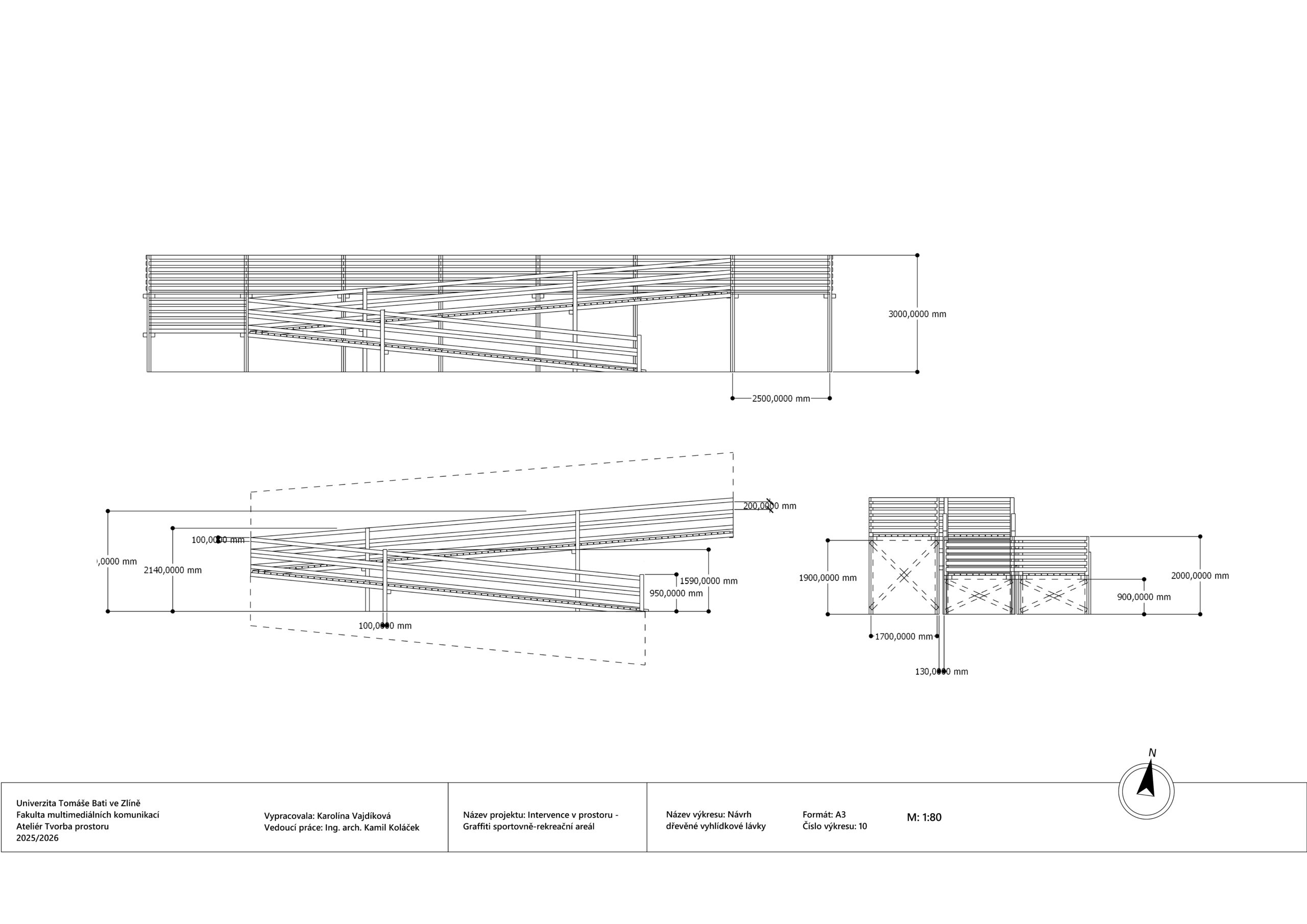
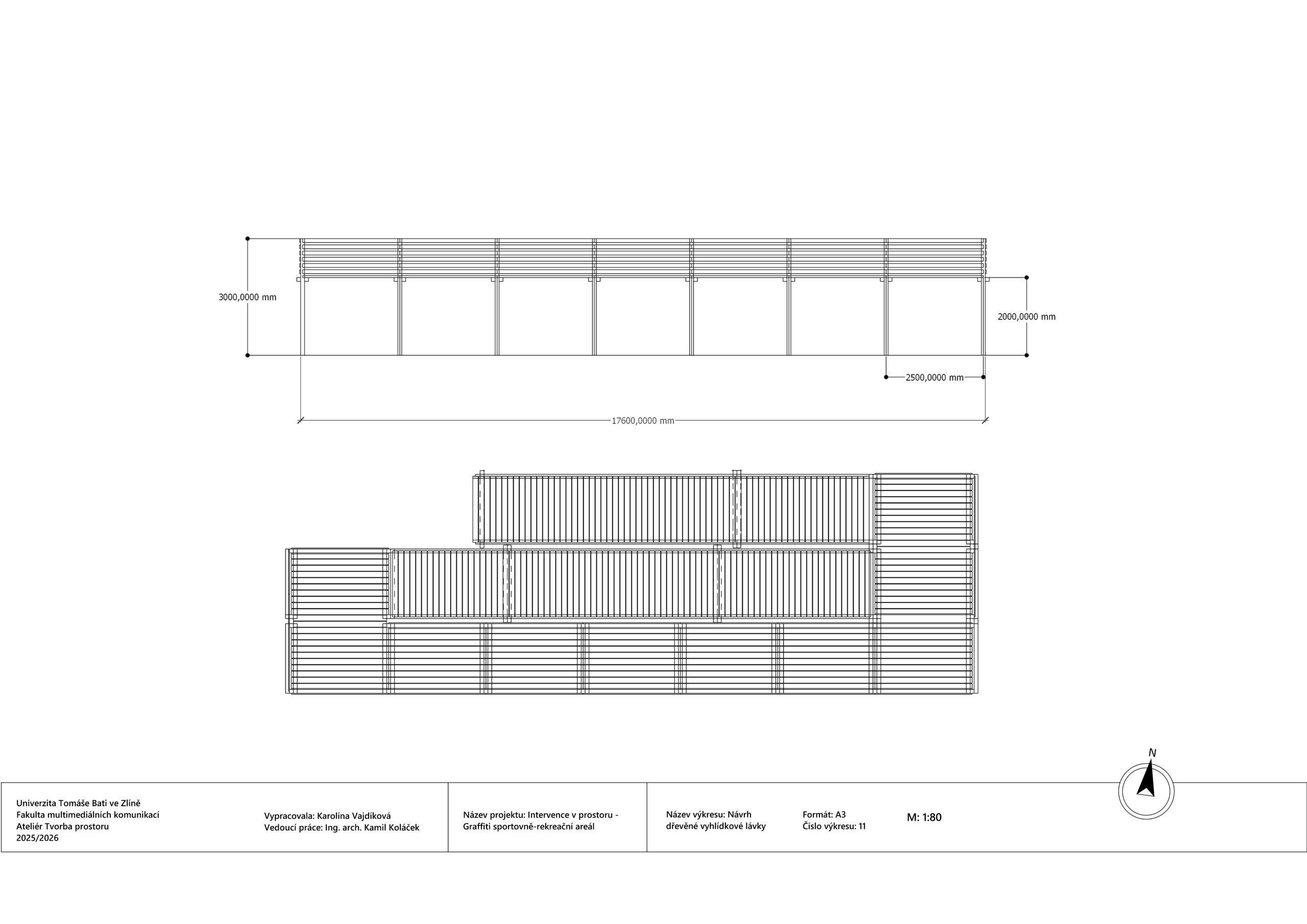
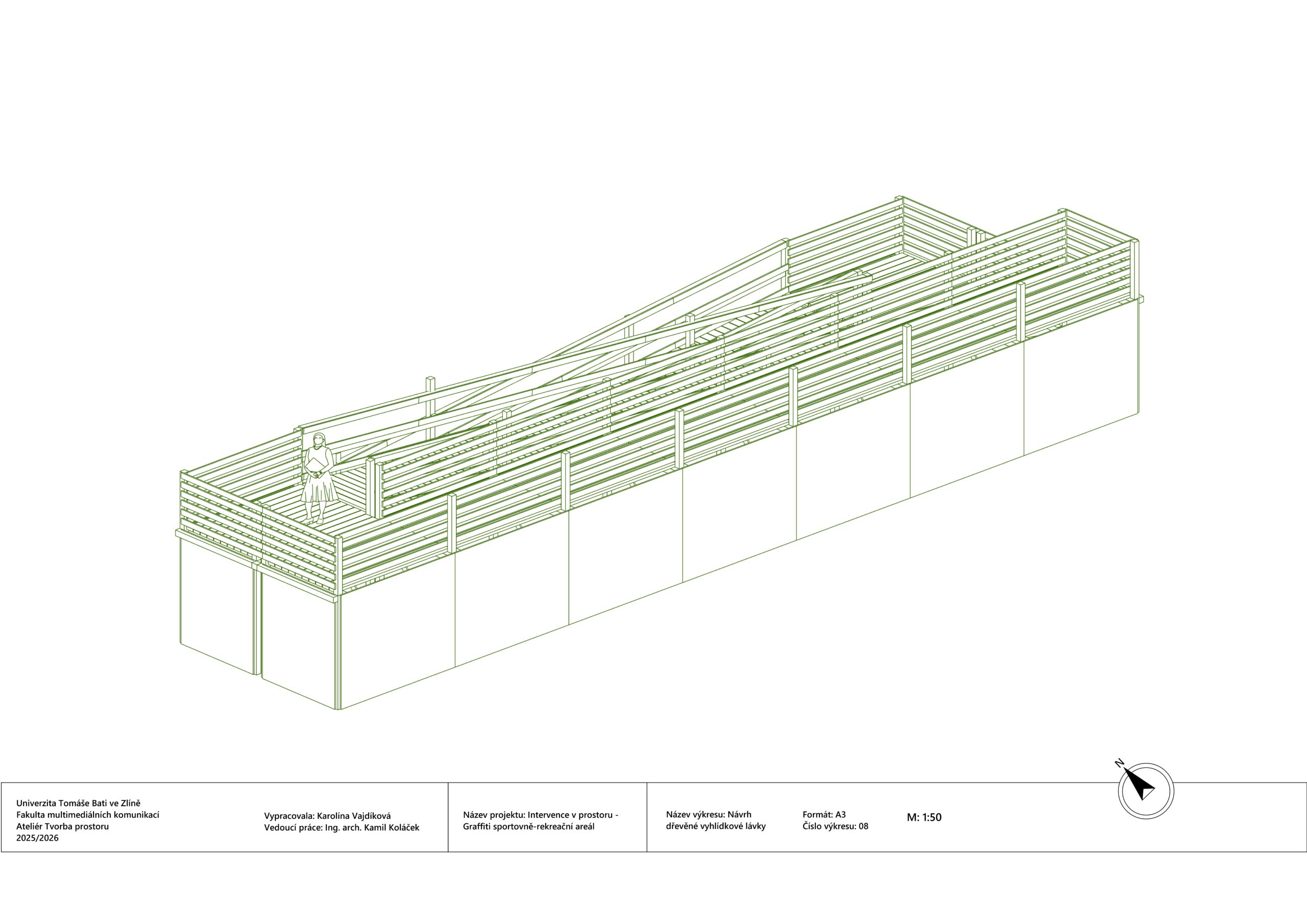
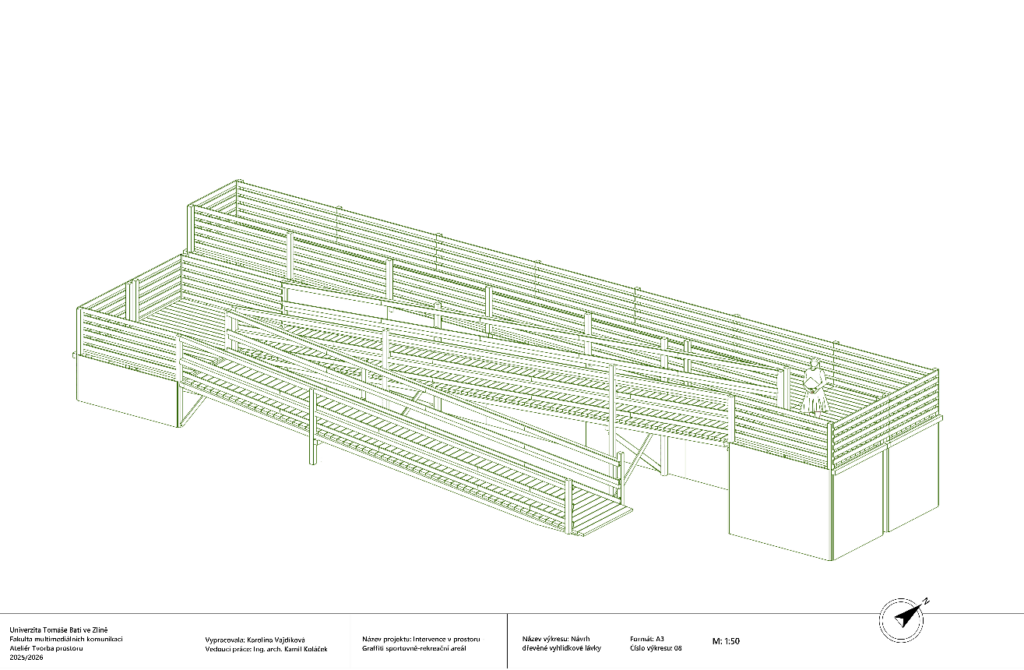
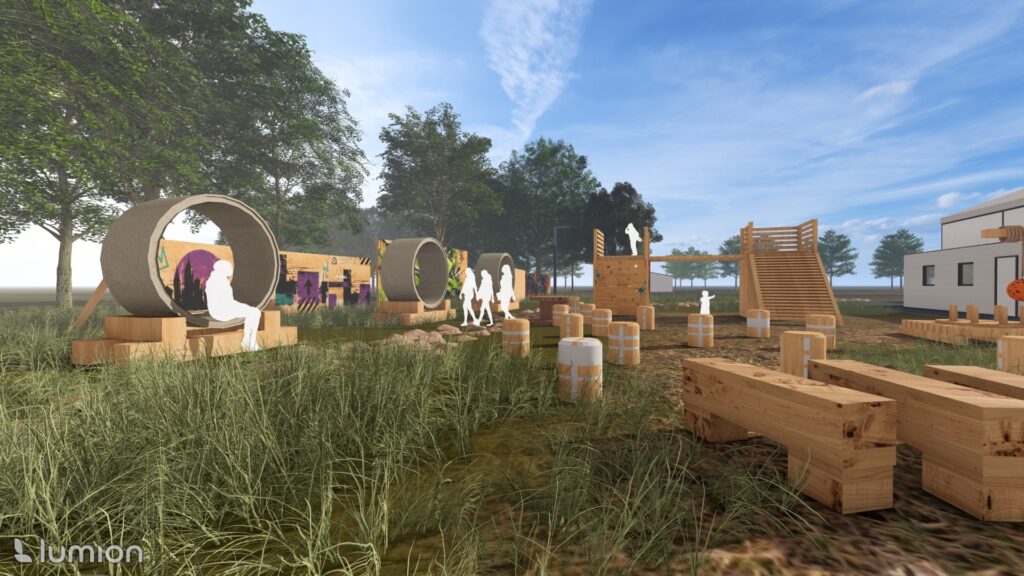
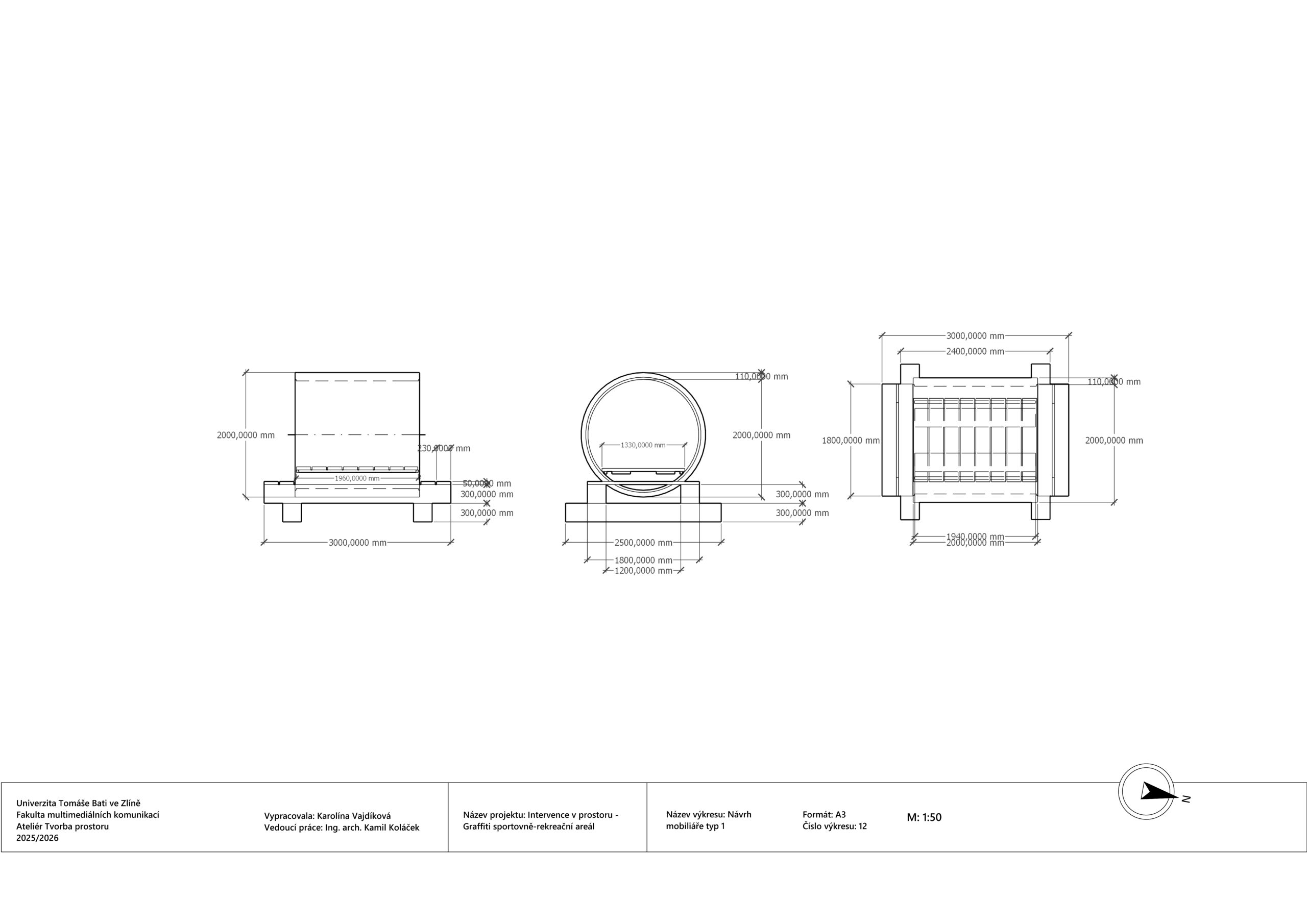
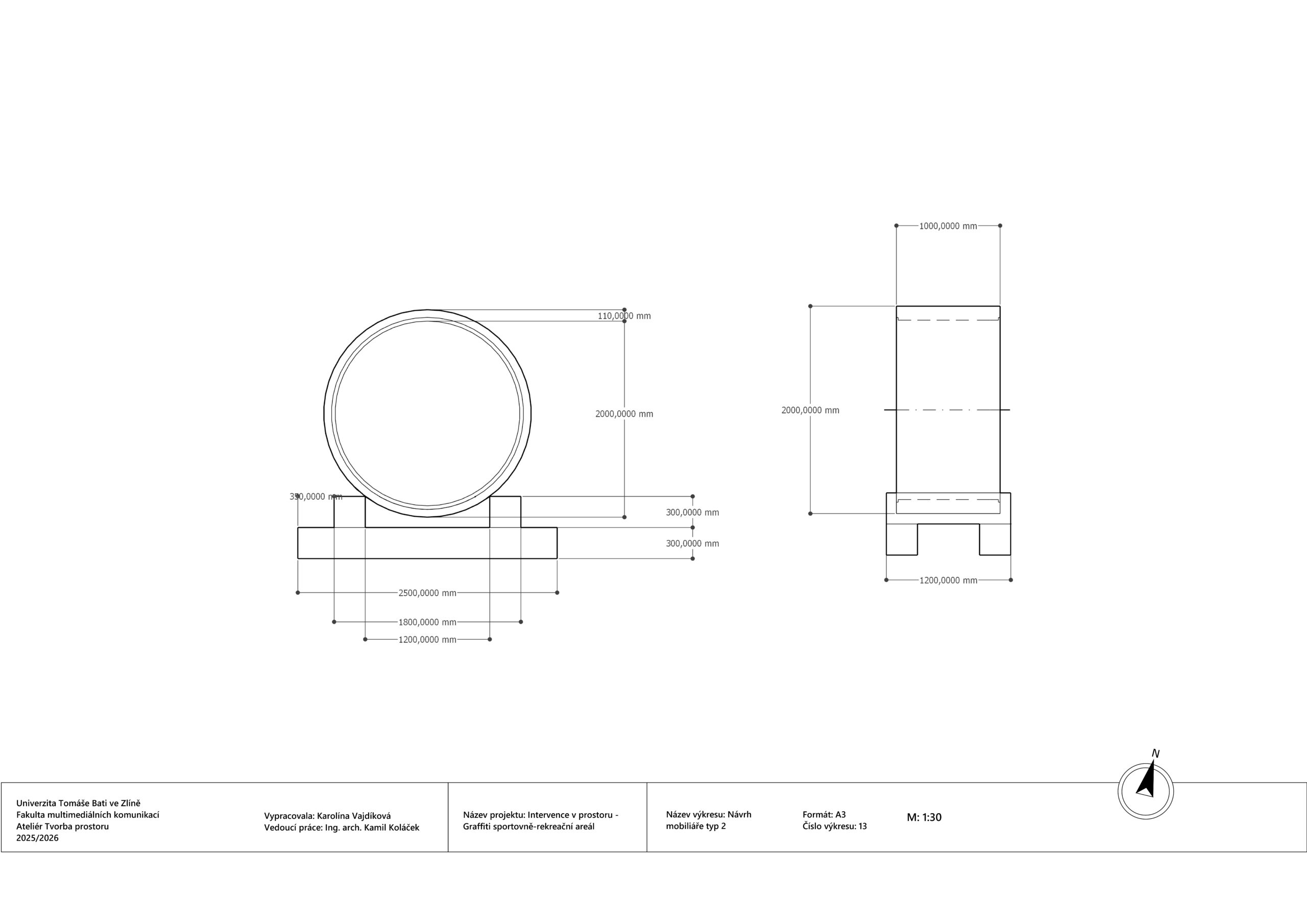
The proposal also includes a recreational and social space complemented by street furniture made from concrete rings, a children’s playground, and an observation walkway that partially covers the existing Ice Rink building and creates a new perspective of the surrounding area. The individual elements were designed to encourage social interaction among visitors, active leisure activities, and relaxation. The proposed site responds to the need for a higher-quality public space that could positively influence relationships among residents and provide a safe environment for children and adolescents.
The design incorporates solar lighting fixtures certified by DarkSky, which minimize light pollution and reduce the negative impact of lighting on the night sky and local wildlife. The planting of greenery and trees contributes to improving the microclimate of the area and provides shade.