Reuse of a historical space which doesn’t carry any current use brings up the question of how much should people intervent such space. At the same time it offers a challenge to elevate its historical value and find a new, functional solution.
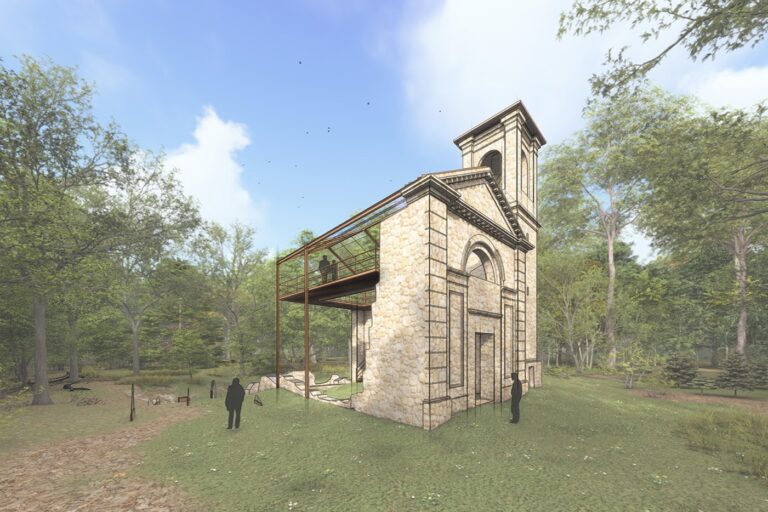
I focus on this issue in designing a multi-faith center which is located in the Italian region of Emilia Romagna. The center is situated on the ruins of the original church of Santa Maria Assunta di Settefonti. This space should serve everyone, no matter their religion, who wants to find a sanctuary and escape from everyday life and have a spiritual experience while wandering across the surrounding nature towards the very top of a viewpoint.
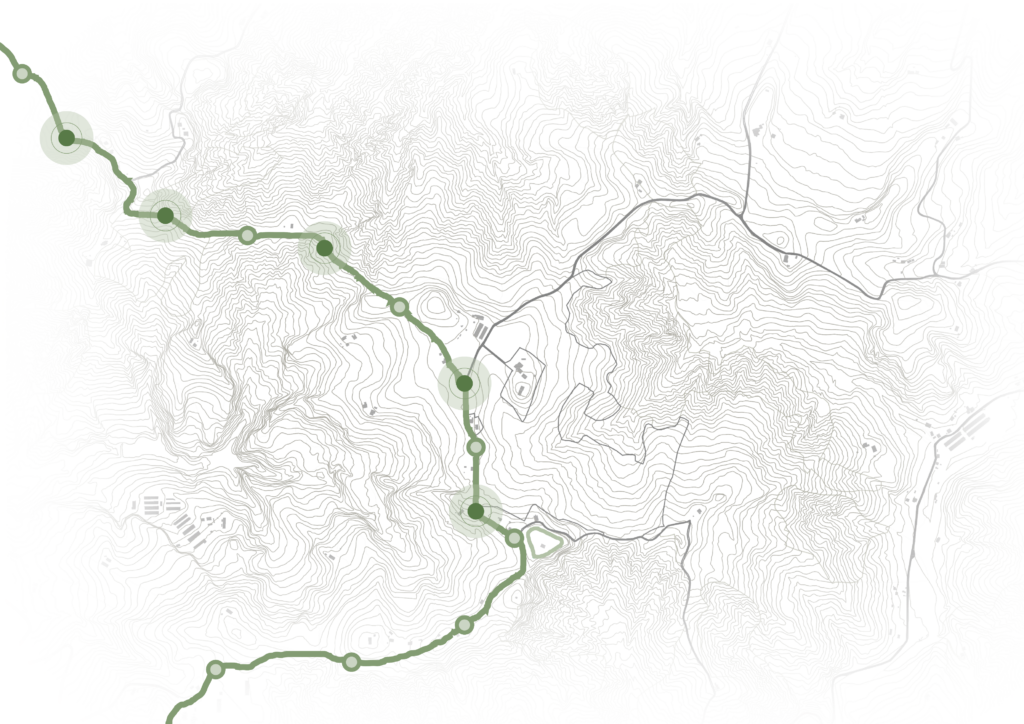
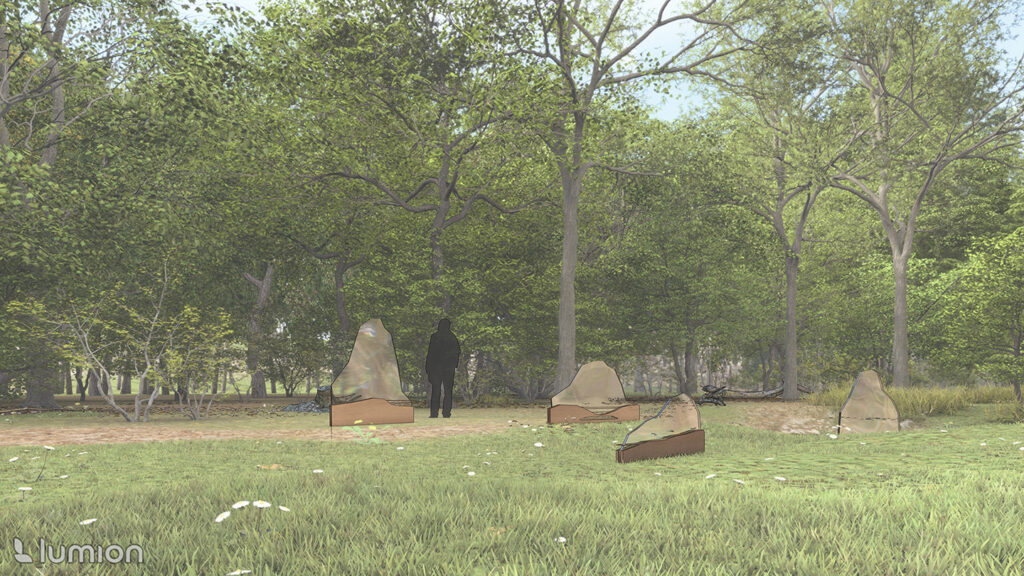
The pilgrimage route is supplemented with stops that lead the wanderer along the journey. Their visuals reflect the whole concept of a spiritual space. The stops consist of information panels and benches that offer a nice space to relax during the journey.
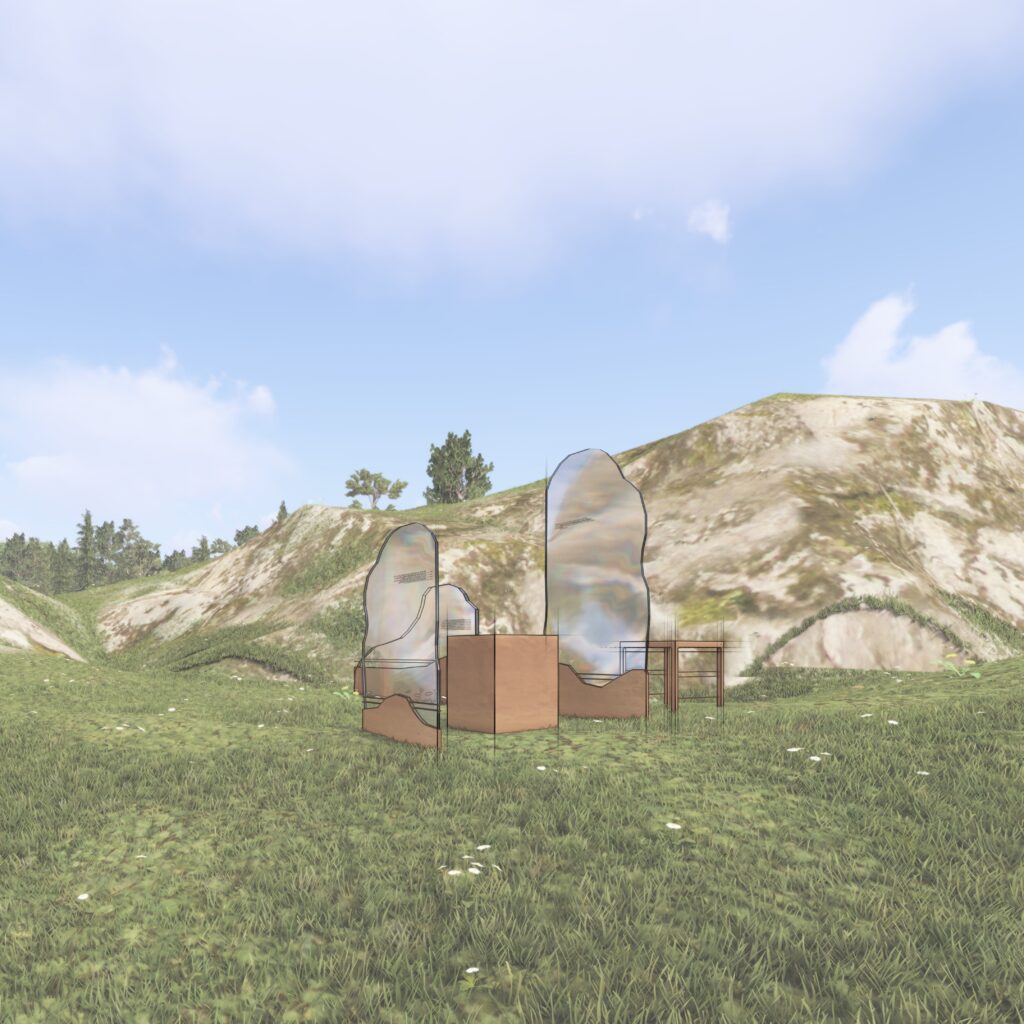
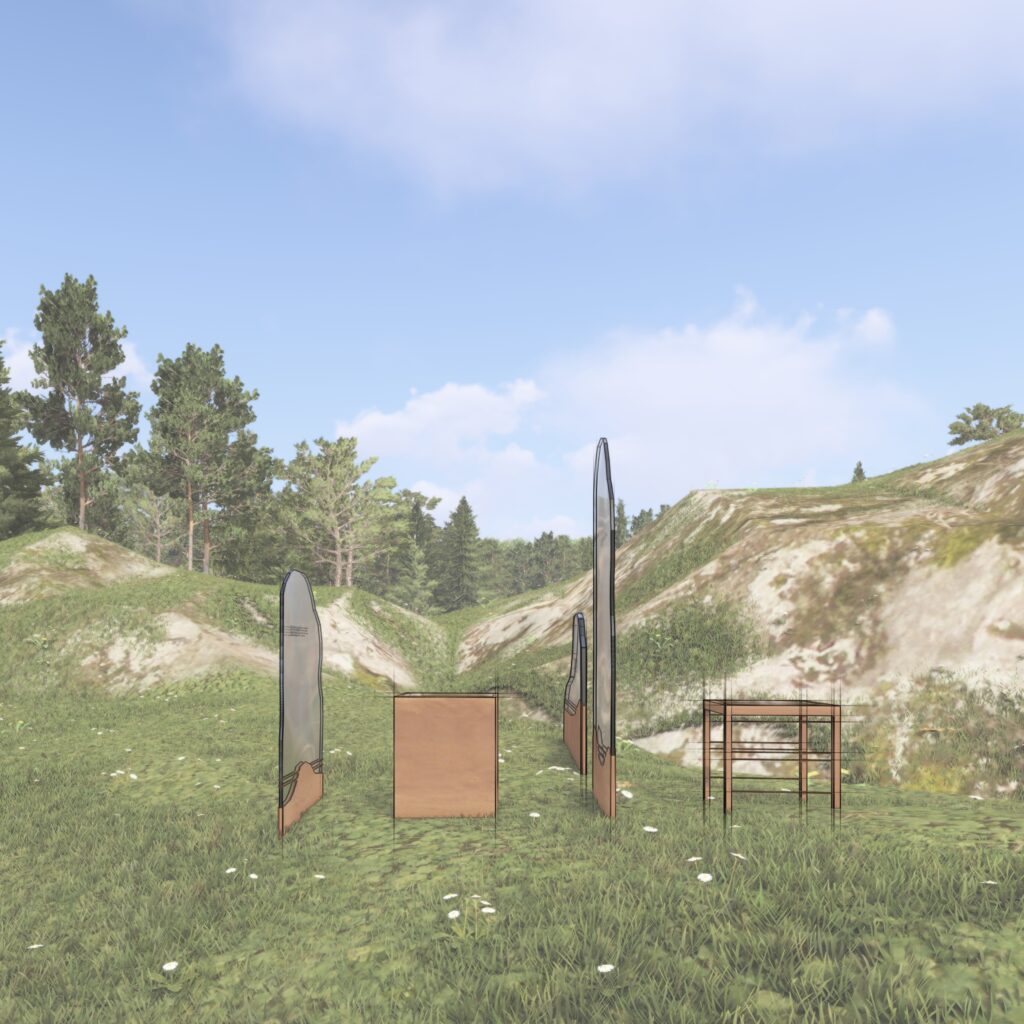
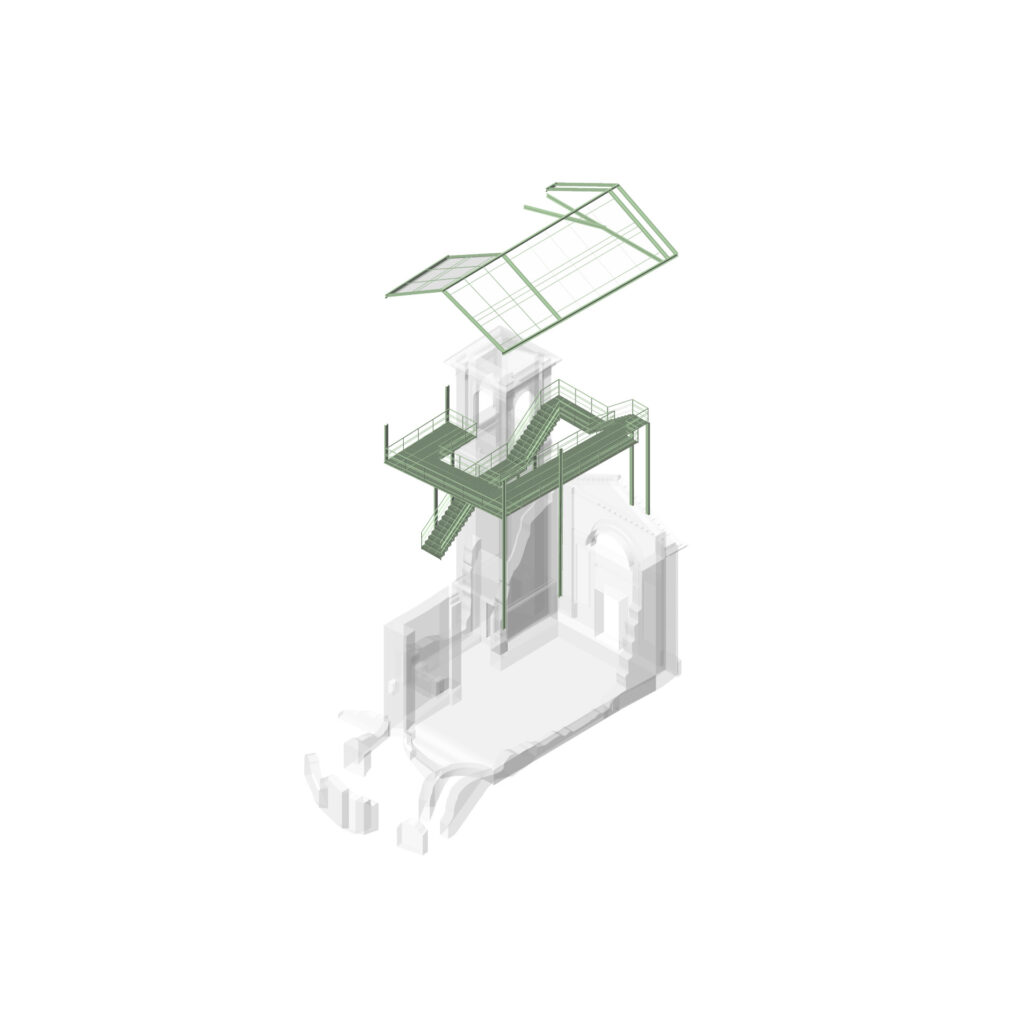
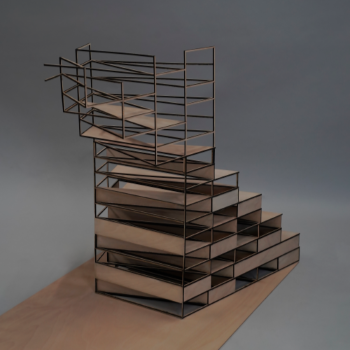
This design is based on the thought of a vertical movement as s symbolic approach upwards to the divine. Wandering across the nature and then climbing to the viewpoint then creates a spatial and spiritual experience which is an integral part of the concept. Because of this idea, each mass reacts to the other by changing its shape with gradation.

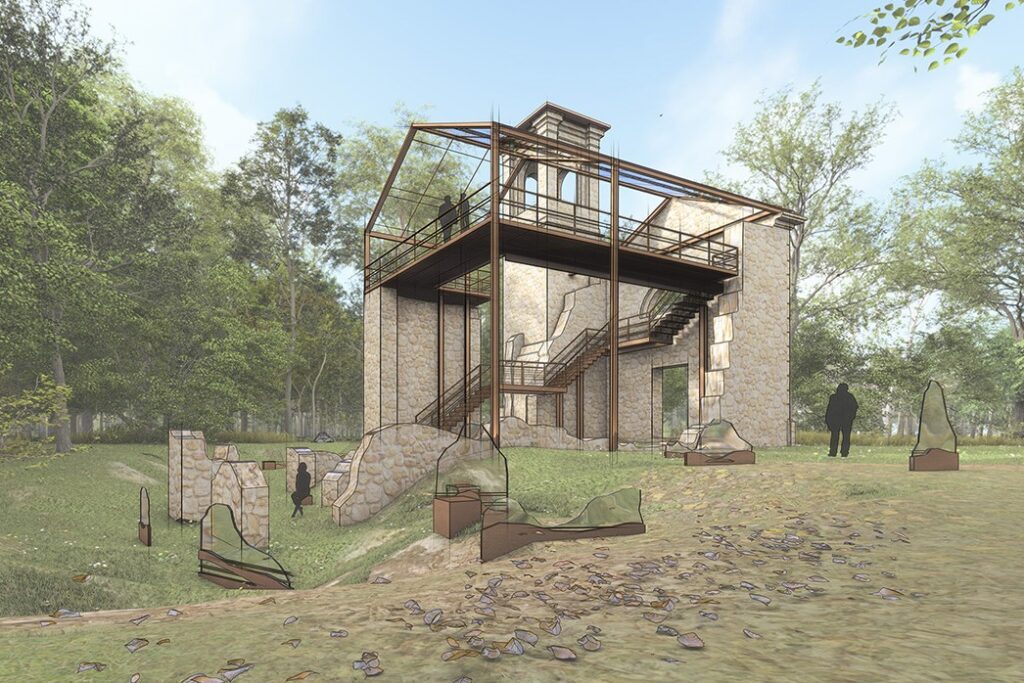
A wanderer’s first impression when arriving at the centre is seeing the original facade with the campanile. The church’s ruins are supplemented with a half-covered and half-exterior view, which is as high as the tree crowns.
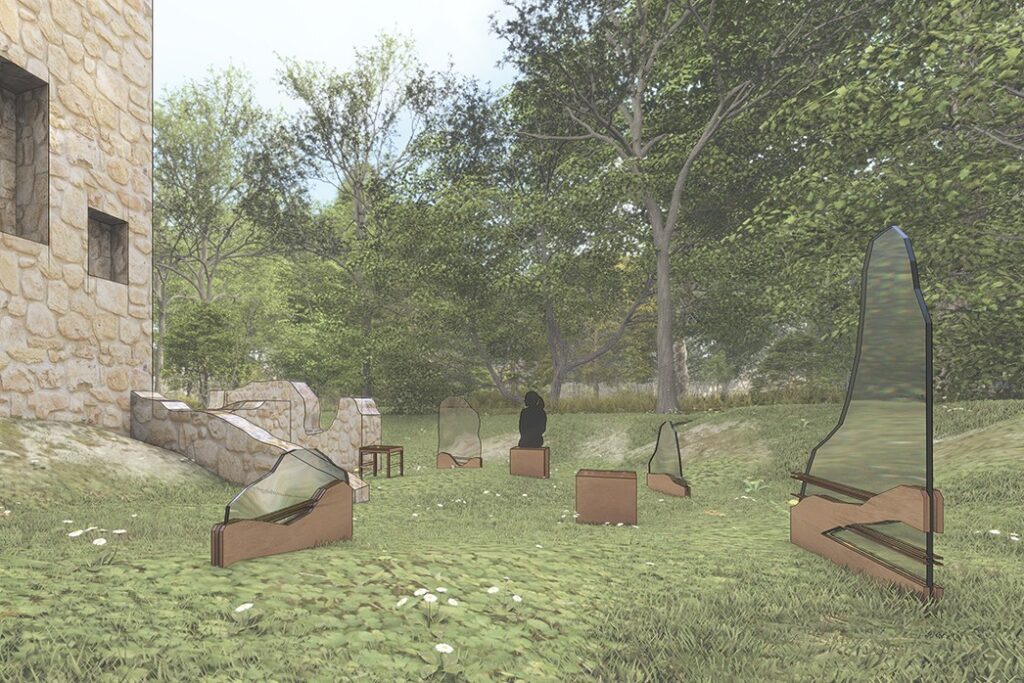
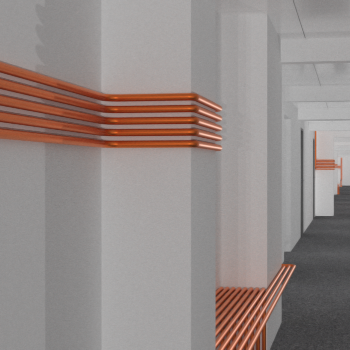
At the bottom, glass panels are located on each side of the ruin, leading the wanderer right into the spiritual space. This space is built with seven benches, identical to those that supplement the pilgrimage route.
These benches offer a private space for praying in the middle of nature. The number seven refers to a historical legend. Supposedly, there were seven drinkable springs at this exact location.
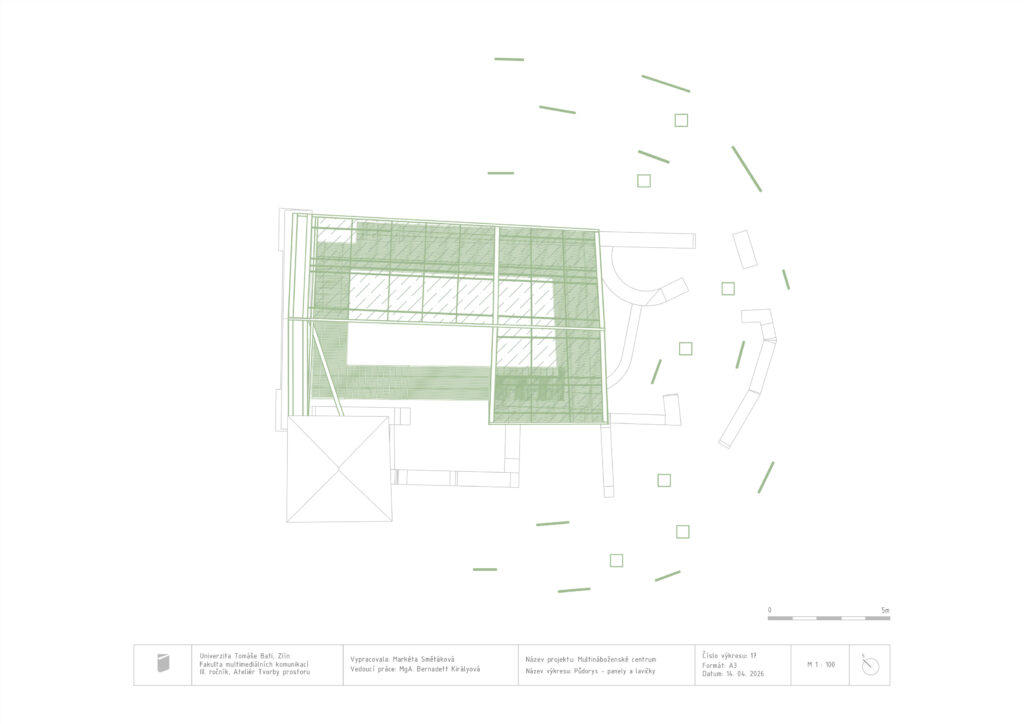
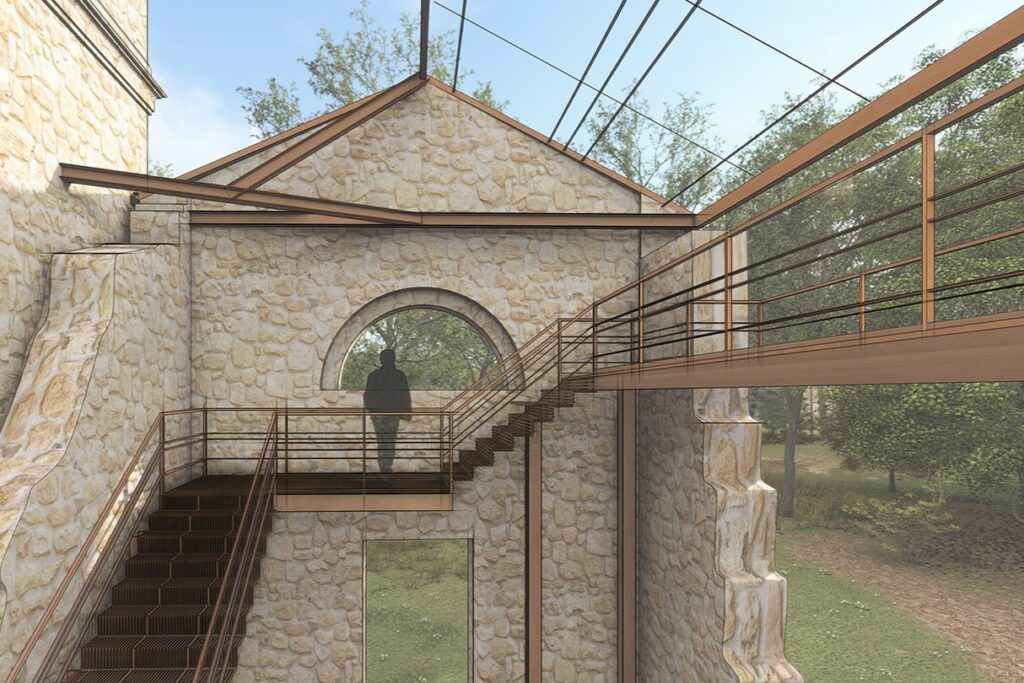
The second part of the architecture invites the visitor to continue wandering, but this time upward along the staircase to the top of the viewpoint. The vertical movement symbolically completes the long wandering at the very top.
A panoramic view is a reward for the expended effort and brings another space not only for spiritual experience.