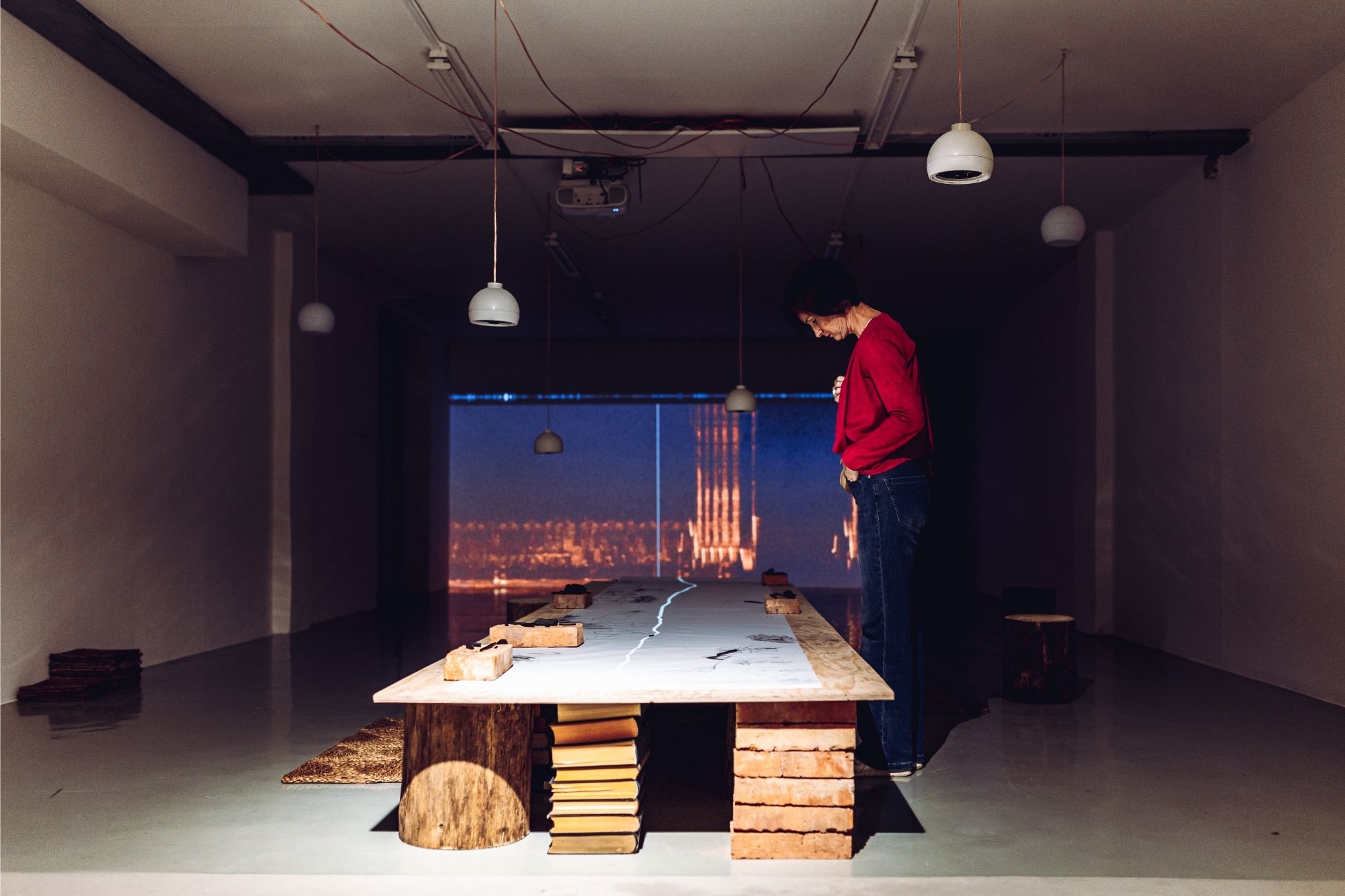
The thesis examines the possibilities, benefits and limits of implementing sound in museum exhibition installations. It draws on three sources: a theoretical analysis of psychoacoustics, museum communication and sound design; semi-structured interviews with seven professionals from Czech and Austrian museum practice; and the realisation of an original spatial sound installation. Interviews with curators, production and technical managers revealed that none of the Czech institutions surveyed has a formalised sound strategy, and that sound is incorporated into exhibitions primarily as a decorative add-on rather than a fully-fledged dramaturgical tool. The synthesis of all three sources resulted in a set of 22 benefits, 26 limits and 29 recommendations for curators and museum professionals.
The spatial sound installation Fragile Landscape, realised at Galerie Kabinet T. in Zlín in September 2025, was created as the practical component of this research and is the result of a collaboration between sound designer Leona Vyhnálková, Matyáš Adam, curator Alexandra Cihanská Machová and scenographer Lenka Jabůrková. The white cube environment of the gallery served as a real-world testing ground where it was possible to examine in practice what acoustic challenges such a space presents, how an eight-channel spatial installation functions on a limited budget, and where theoretical assumptions meet the reality of professional practice. The experience of preparing and realising the exhibition became one of the key sources for the final recommendations of the thesis.
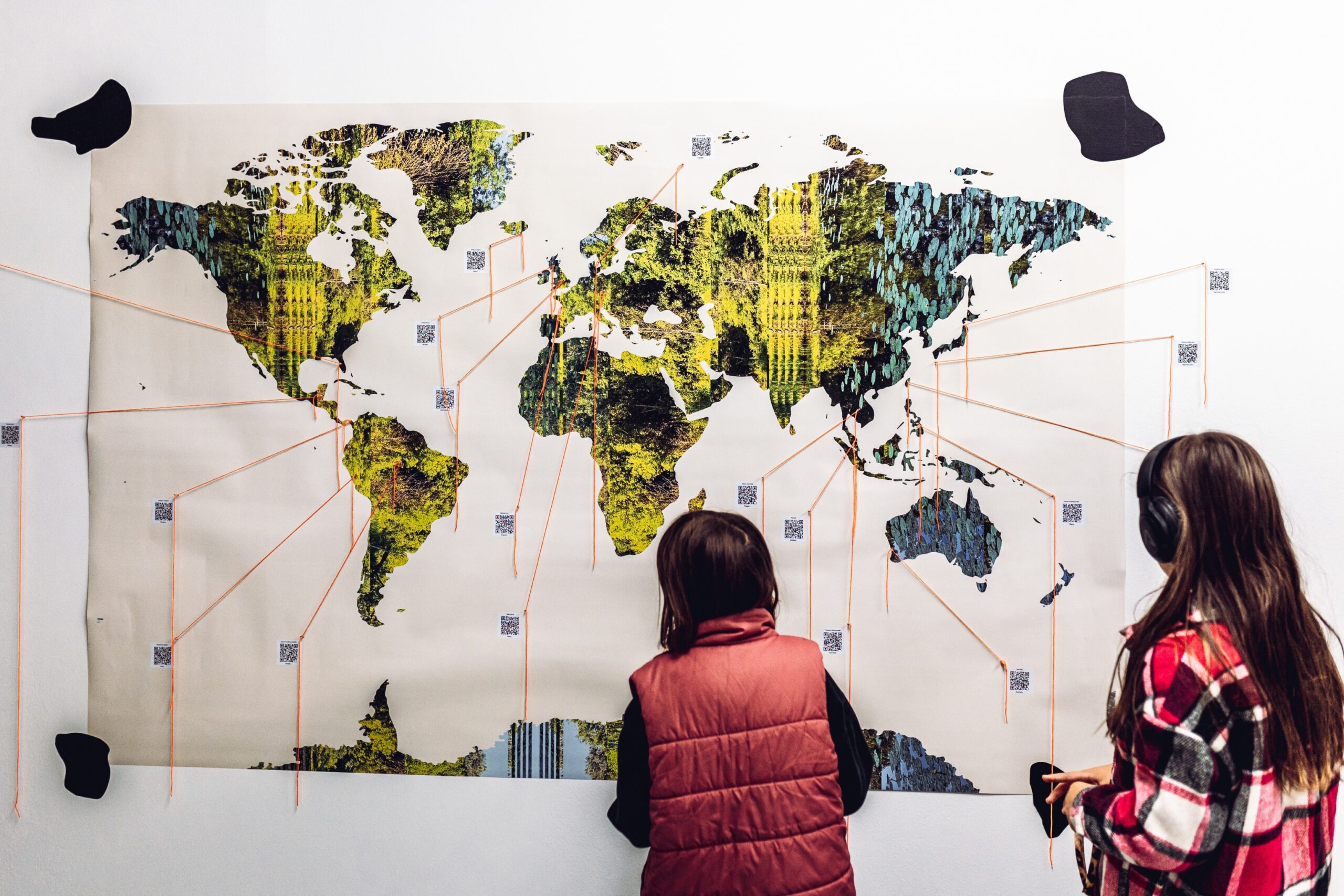
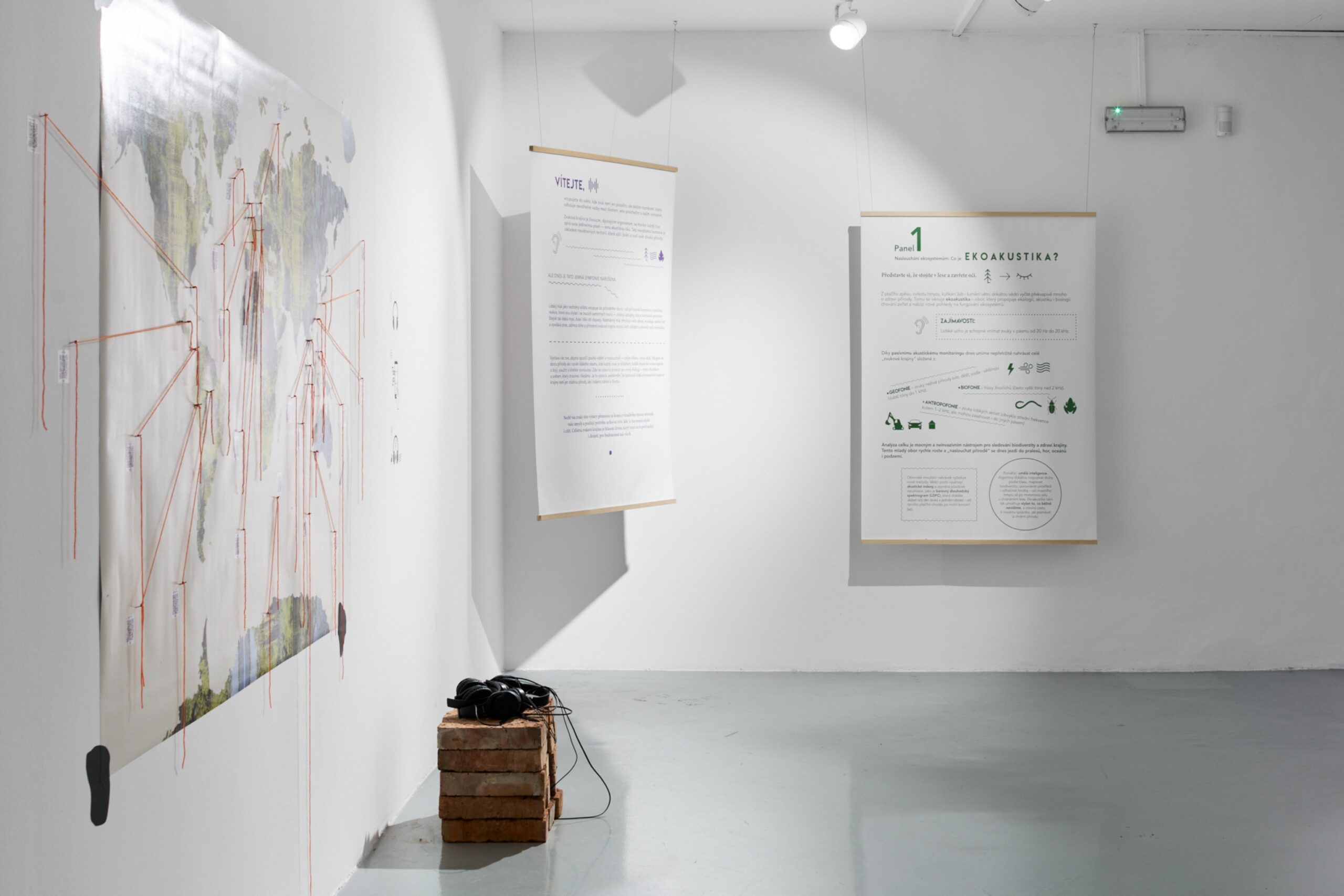
Fragile Landscape was dedicated to ecoacoustics, a field of science that studies sound as an indicator of ecosystem health and the relationships between living organisms, people and their environment. The exhibition worked across three spatial units, each with a distinct dramaturgical intention. The entrance room introduced visitors to the theme through a large-scale world map with twenty QR codes linking to one-minute atmospheric recordings from locations around the world. Before entering the installation, visitors could listen to the sounds of a jungle, a coral reef or the Arctic tundra, and gain an initial intuitive understanding of what ecoacoustics explores.
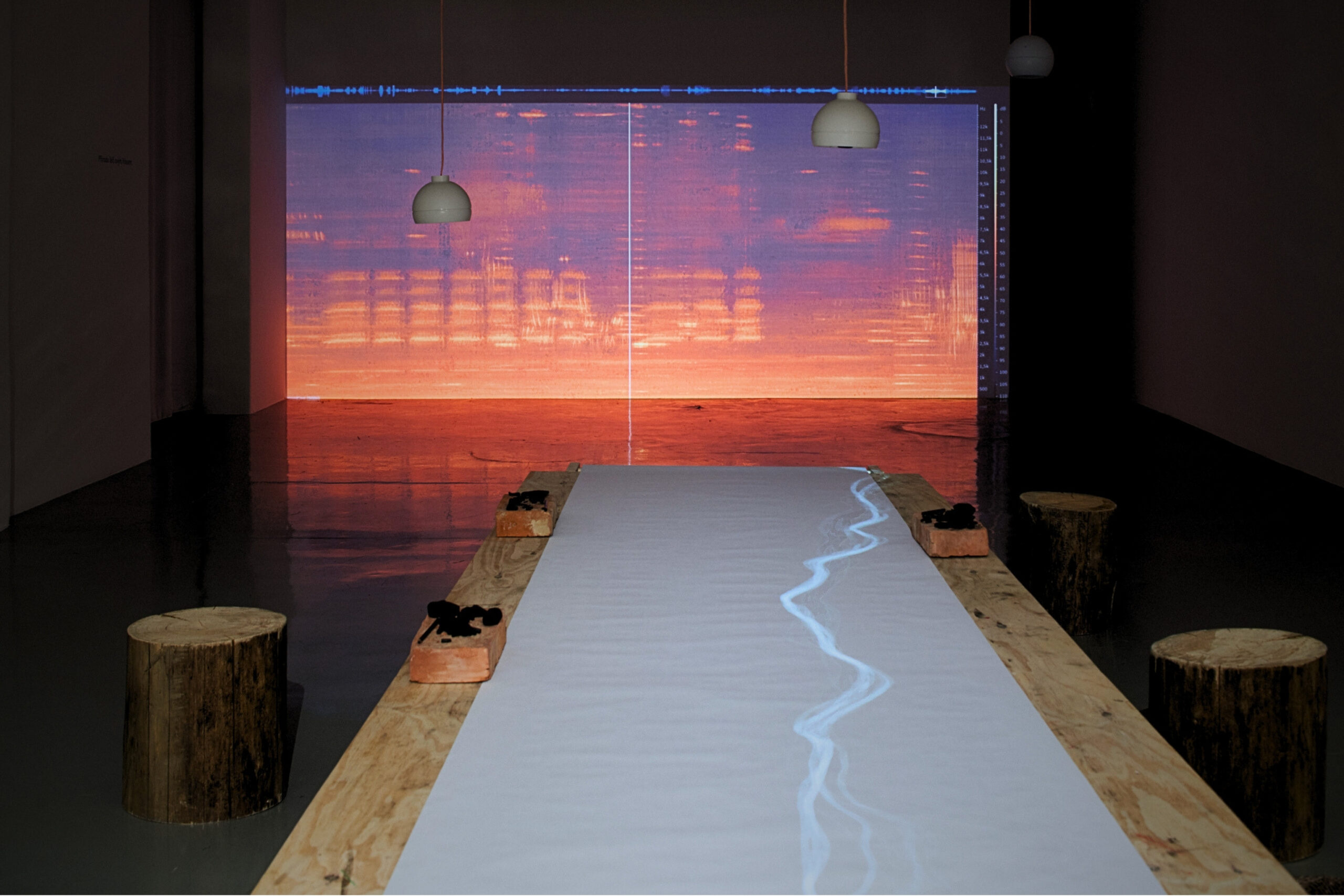
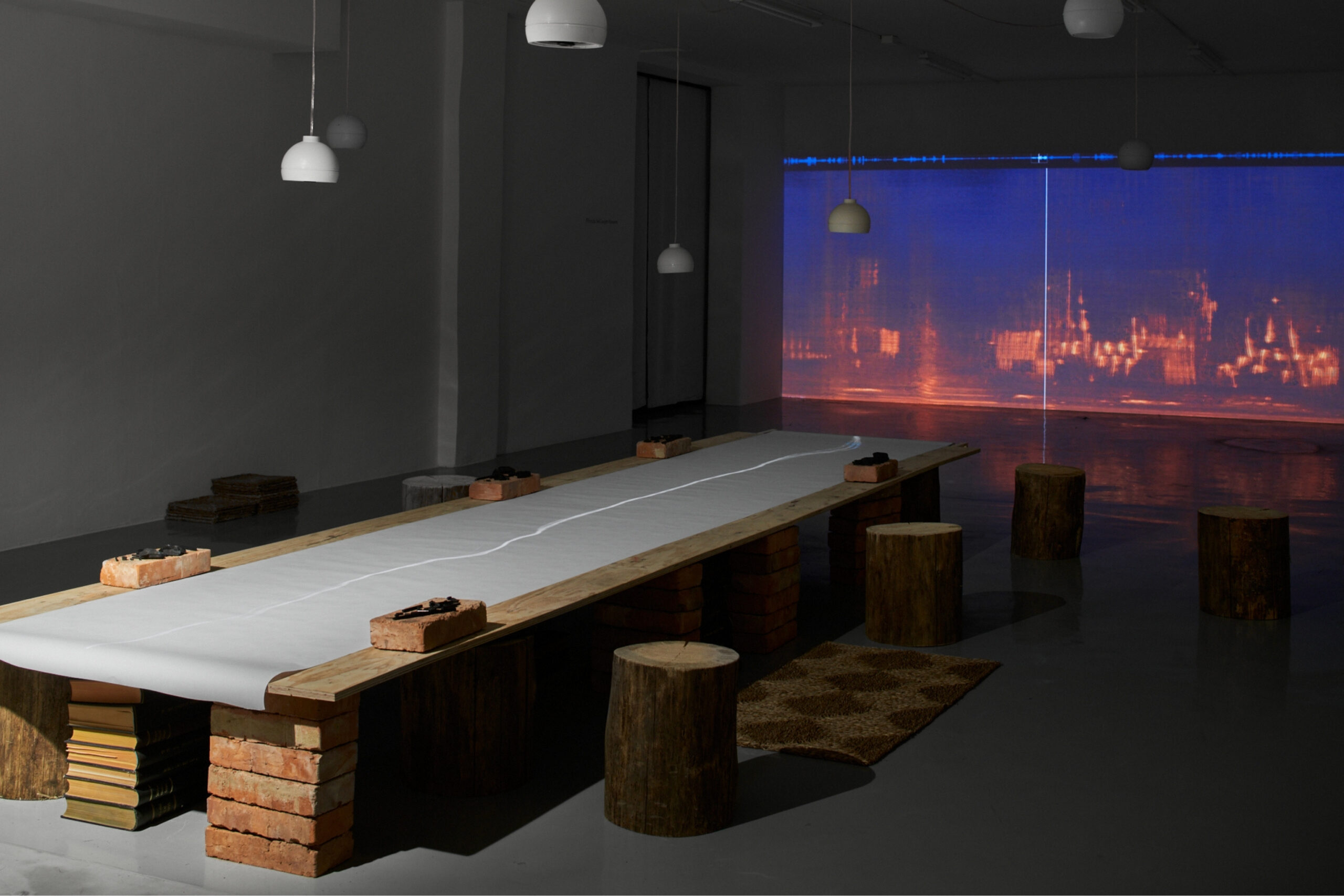
The main room presented an eight-channel spatial sound installation in which visitors were surrounded by a composition capturing the clash of the biophonic and anthropophonic worlds, that is, the sounds of nature and the sounds of civilisation. Insects, amphibians and birds collided with aircraft, cars, chainsaws and lawnmowers. The intention was to communicate through sound, rather than text, the intensity with which human noise enters the natural environment and why certain animal species are dying out as a result of noise pollution. The sonic contrast was accompanied by a spectrogram projection that made the frequency content of sound visible, allowing visitors to follow the changes in the sound field over time not only by listening, but also by seeing.
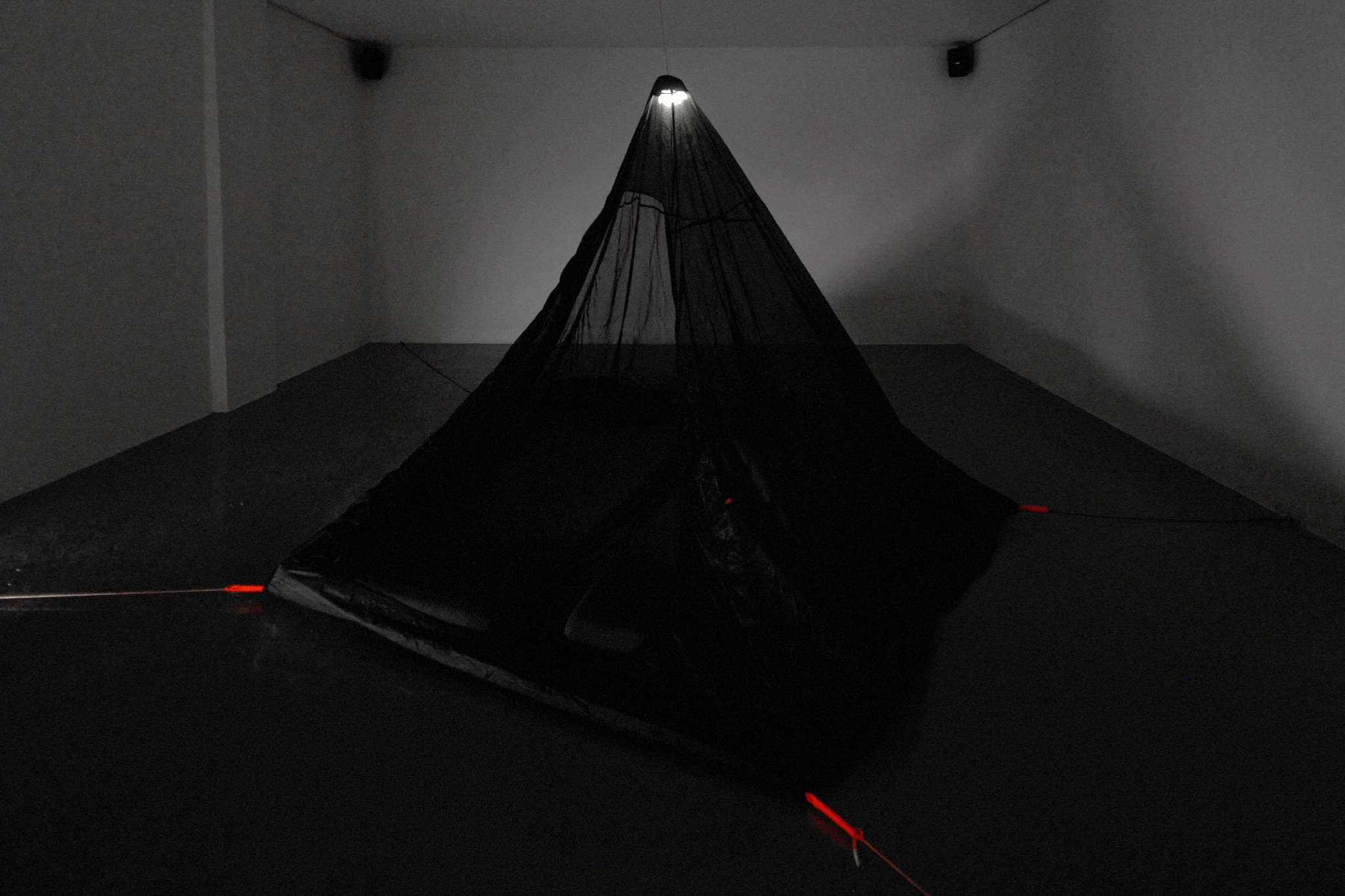
The third darkened room offered a counterpoint: focused listening to pure natural atmospheres without any anthropogenic elements, delivered through a four-channel spatial field within the intimate setting of a tent. The absence of visual stimuli was deliberate, supporting quieter and more attentive listening, and visitors left carrying the experience of nature in its balance and wholeness.
The experience of preparing the exhibition, combined with the analysis of theoretical sources and the insights gathered from interviews, made it possible to identify what sound can genuinely achieve in a museum setting, where it meets its limits, and how it can be used more effectively. The resulting recommendations are not abstract theory; they draw on a combination of what the scholarly literature says, what people who work with sound in museums every day describe, and what the author herself experienced while building an eight-channel installation in a space that was not prepared for sound at all. In the Czech museum environment, where sound still has no dedicated budget line or formalised strategy, such a combination may serve as a useful starting point for anyone who wants to begin working with sound systematically.