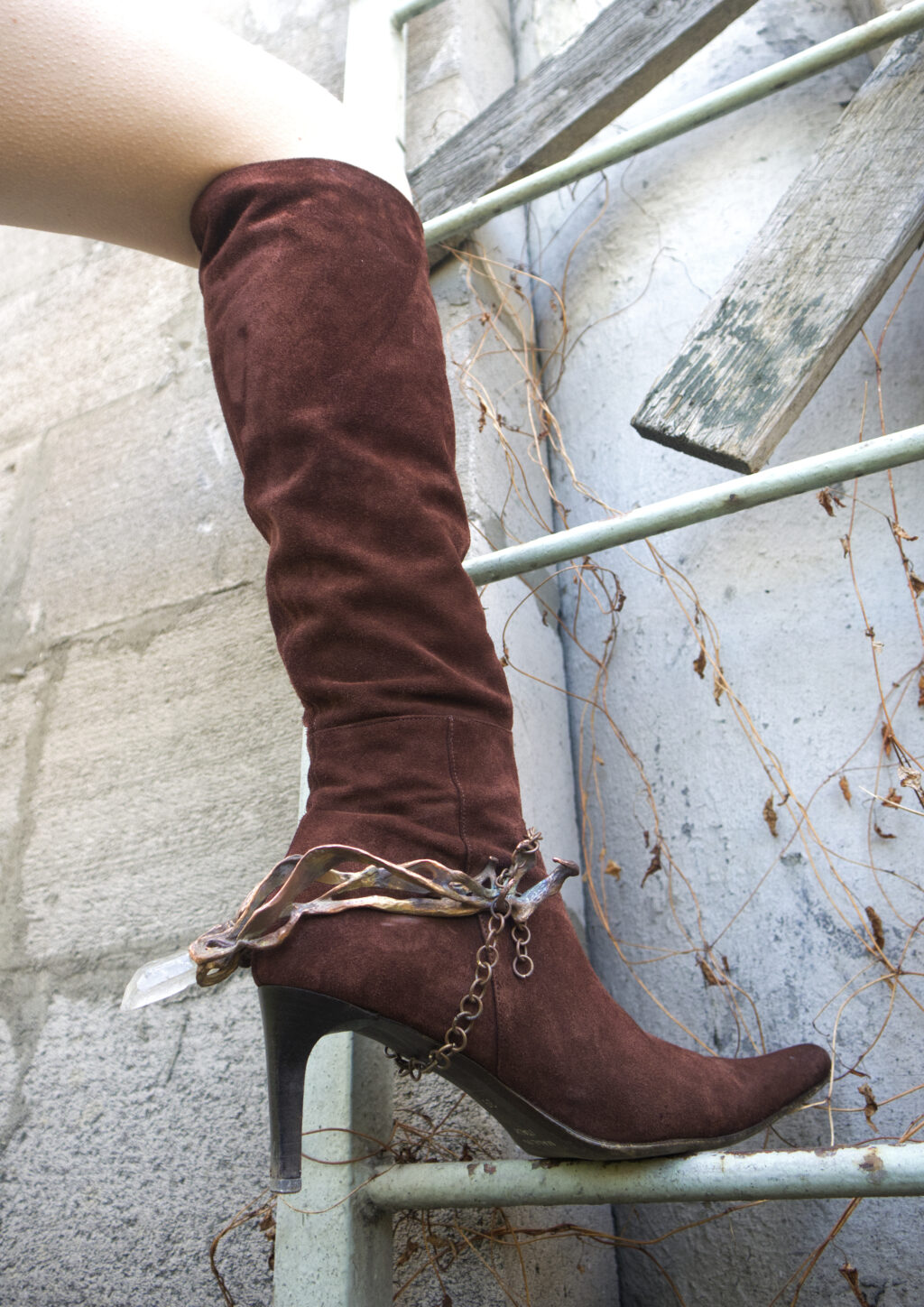
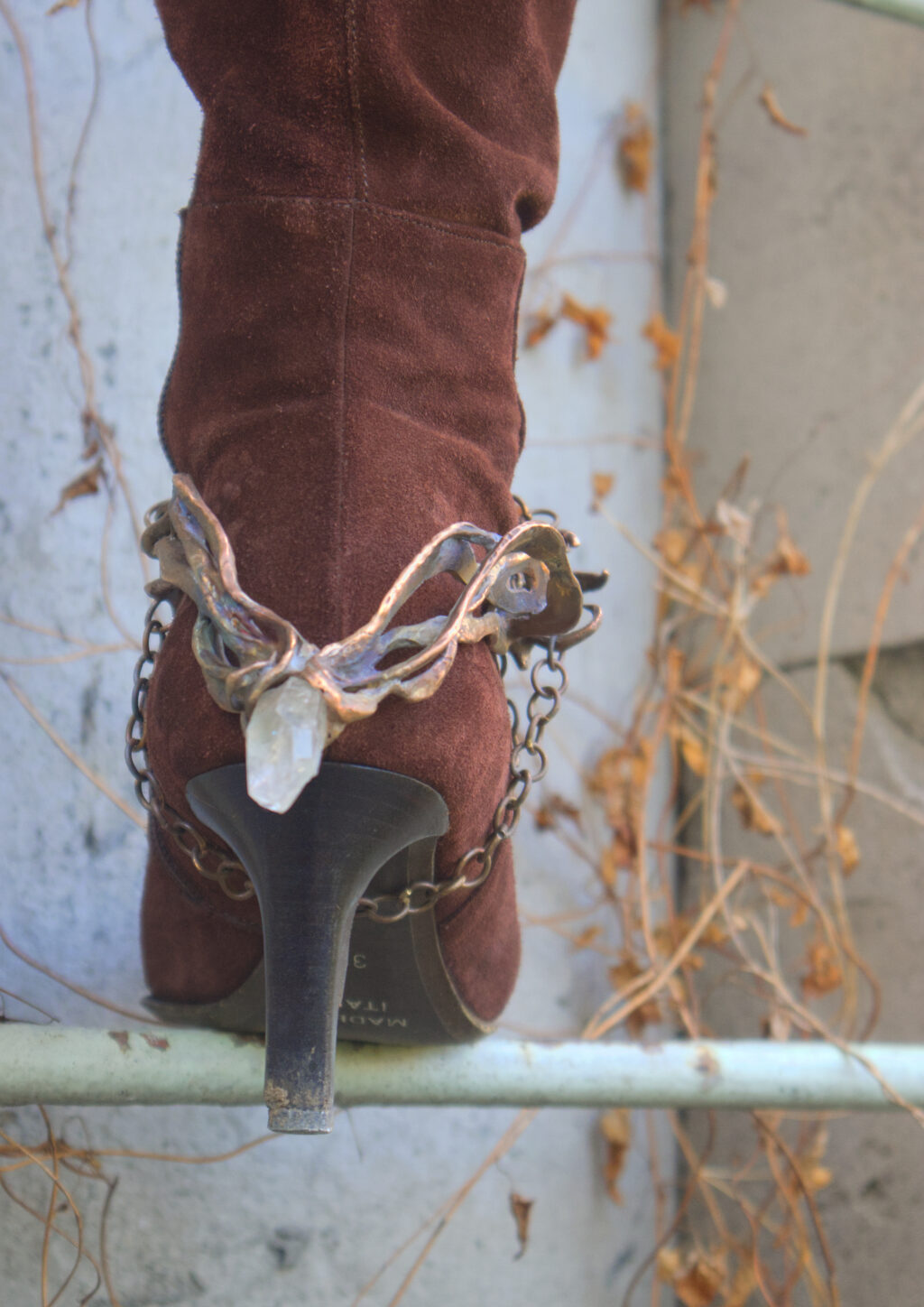
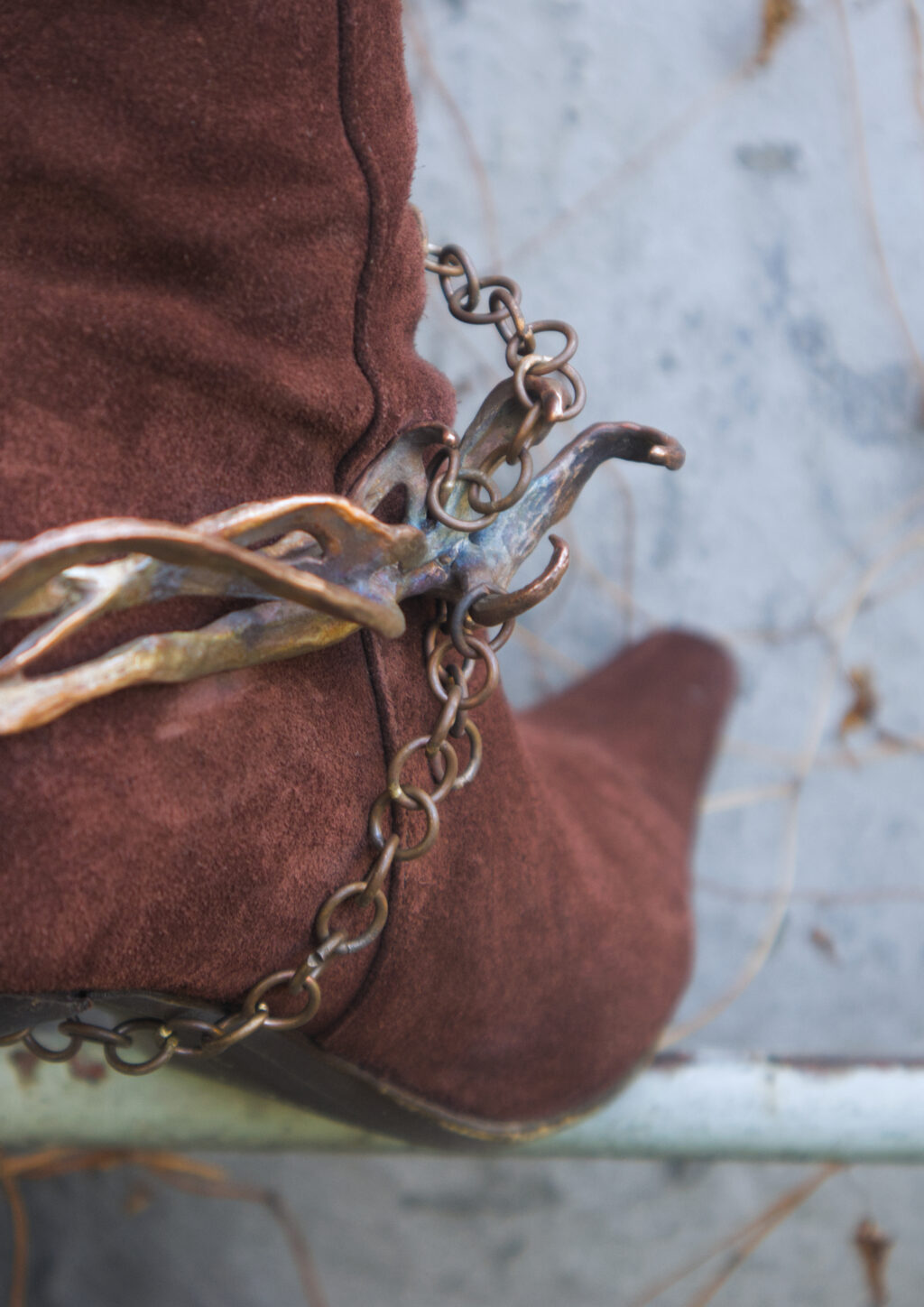
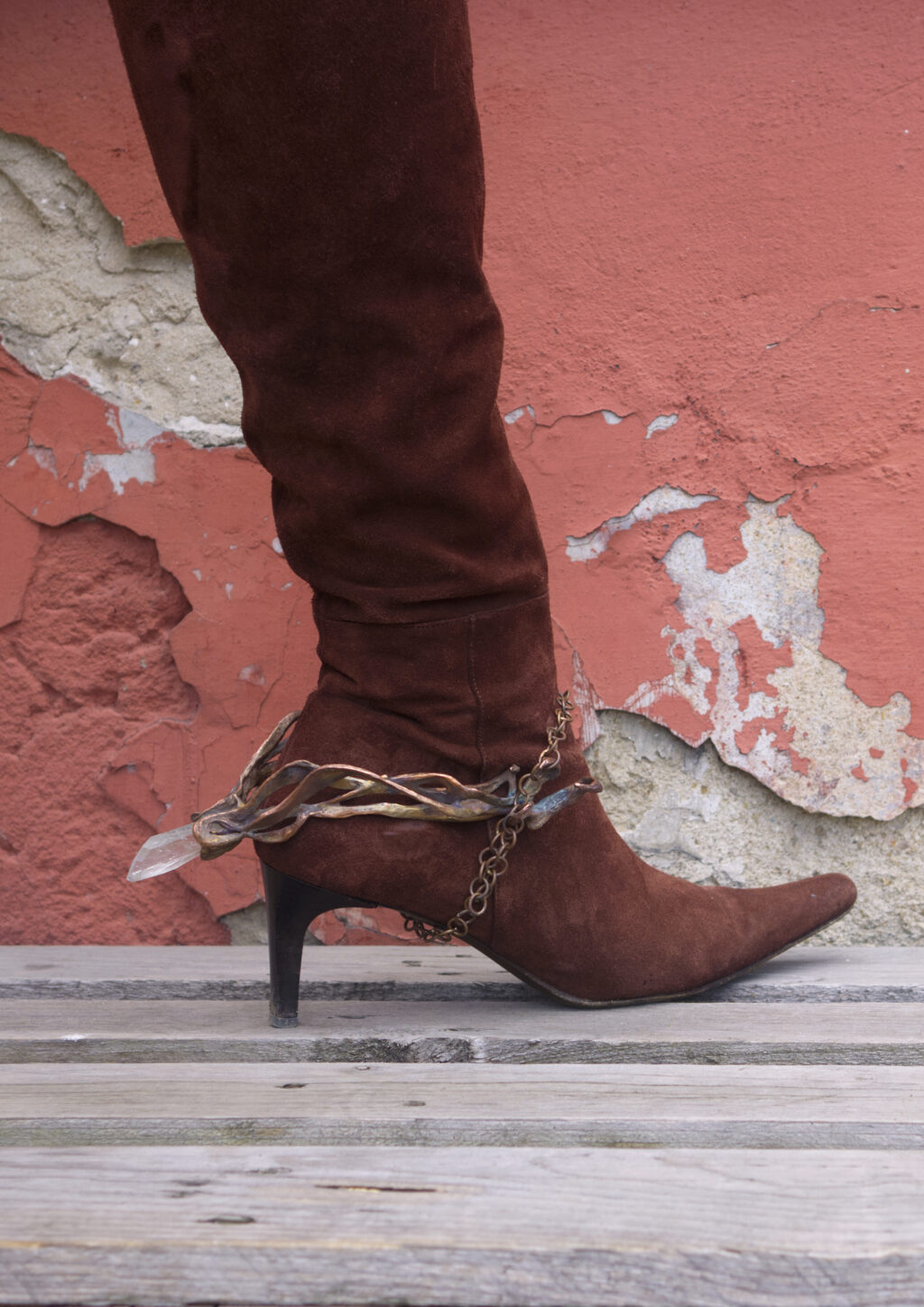
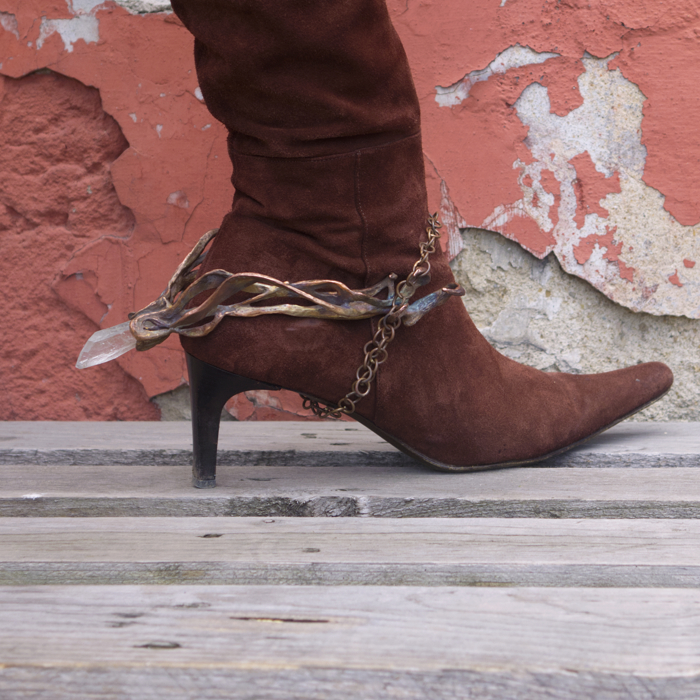
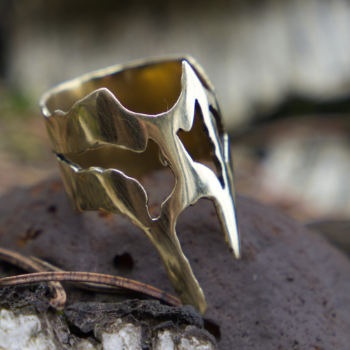
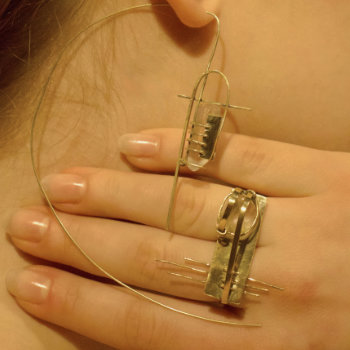
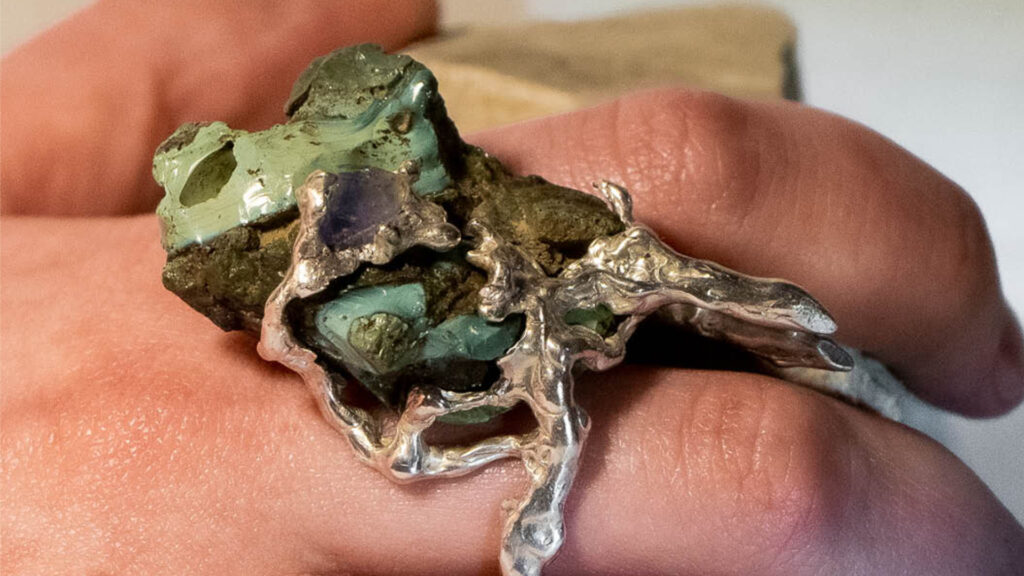
Equestrian culture during the period of Great Moravia represented an elite component of society. Horsemen belonged to the prince’s retinue and the aristocracy, while the horse itself was not merely a means of transportation, but also a symbol of power, prestige, and military authority. Part of their equipment included spurs, which are among the most common archaeological findings and point to the need for control during a time of frequent conflicts. The object draws from this historical context and transforms the spur into a contemporary form. The crystal spike works with the symbolism of control and superiority. Organically shaped bronze contrasts with the raw, unprocessed crystal, creating tension between shaping and naturalness. The horse, as a living symbol of nature, strength, and freedom, became throughout history a tool for humanity’s desire for power and representation. The tension between its natural essence and the human effort to control it creates a contrast that persists to this day. The spur does not refer only to the past but also reflects contemporary society, where visual signs of luxury continue to function as instruments of power and social distinction. Just as in the past, status is still expressed through symbols today; only their form changes, not their meaning. The spur therefore ceases to be a functional object and becomes a symbol that reveals the mechanisms of hierarchy. The project is based on the idea that humans are naturally inclined to perceive social status through visual cues. In the past, higher status meant a greater chance of survival, access to resources, and protection. Today, these mechanisms manifest through material symbols that construct identity and social standing without words. Luxury objects therefore do not merely express wealth, but also a need for value, visibility, and control over one’s own image. The project highlights the timelessness of these mechanisms: history itself does not change — only the objects through which we prove our worth do.