The revitalization of Komenského Street responds to a problem typical of many contemporary Czech towns – the disappearance of human scale and space for movement from streets. In many cases, a street is perceived merely as a corridor connecting one point to another, rather than as a place for staying or social encounter.
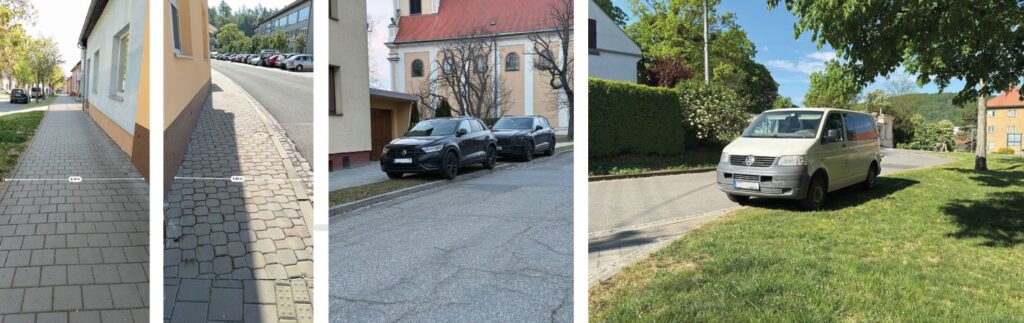
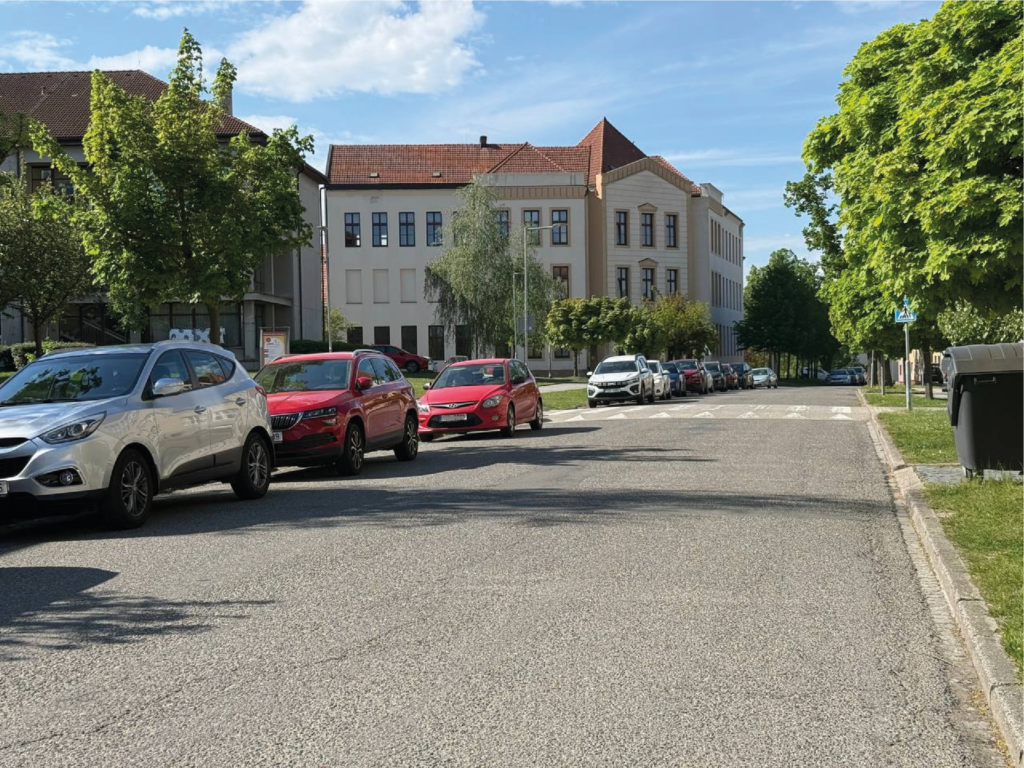
In the specific case of Komenského Street in Napajedla, in addition to this general tendency, several other problematic conditions were identified: narrow sidewalks, parking that creates confusing and unsafe situations for pedestrians, the expansion of parked cars onto sidewalks, and an overall lack of attractiveness in the public space, with minimal places to stop and stay.
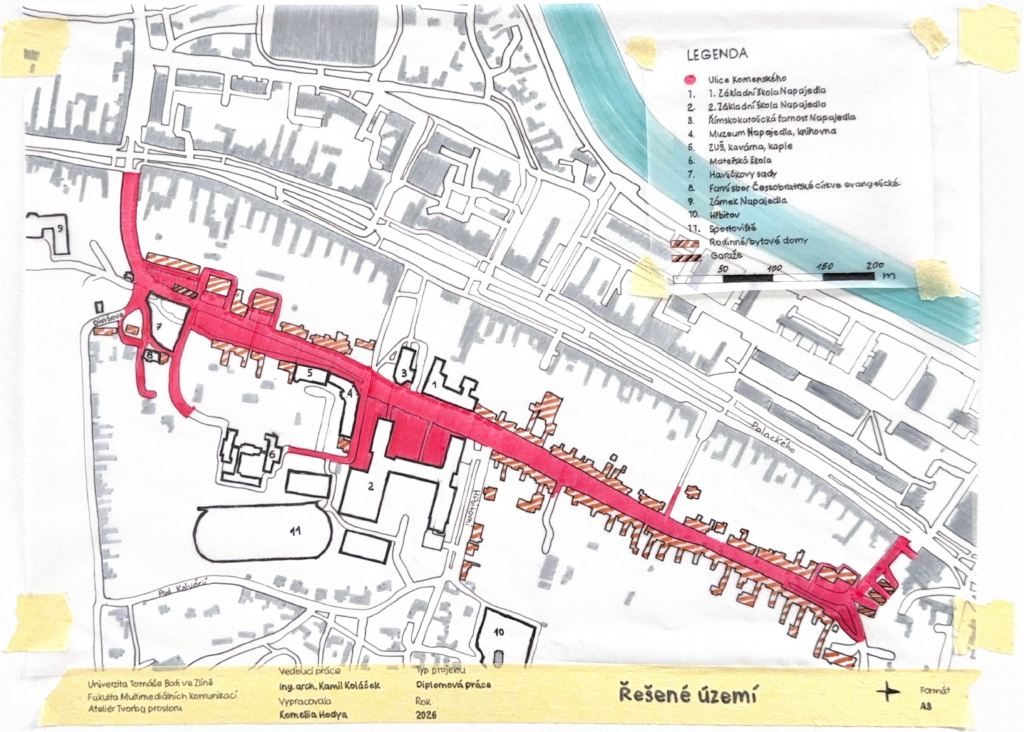
Given that Komenského Street serves as a focal point for a wide range of educational, cultural, and spiritual institutions, its current condition does not correspond to the significance it holds within the town.
Traffic Solution
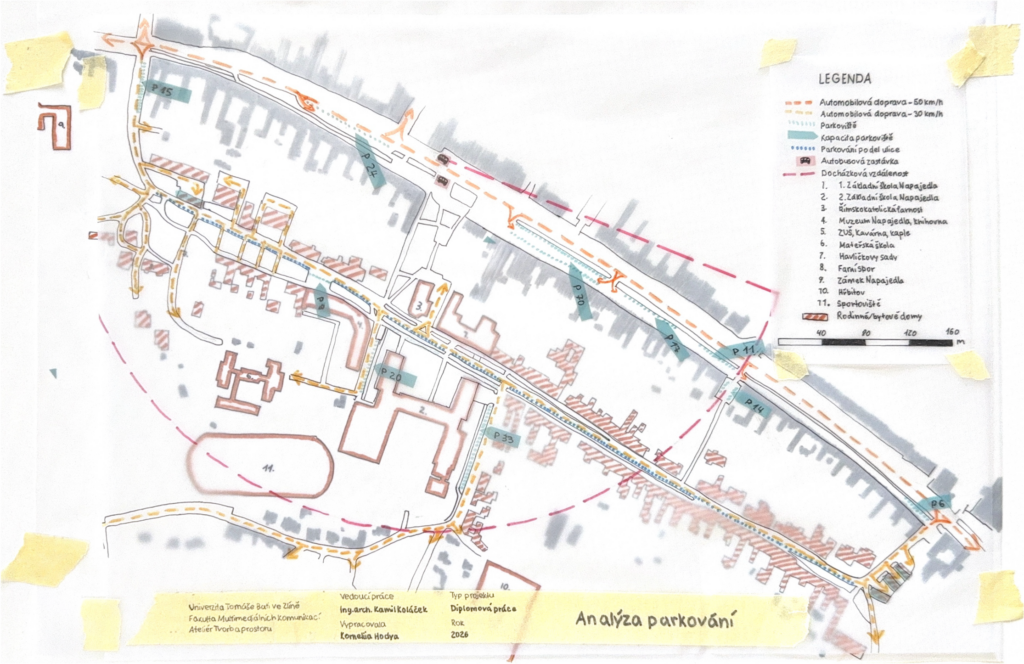
Based on the mapping and analysis of problematic locations, traffic was identified as one of the key obstacles to the street’s functioning. It was therefore necessary to consider new approaches to movement within the street that would slow down the rhythm of both pedestrian and vehicular traffic.
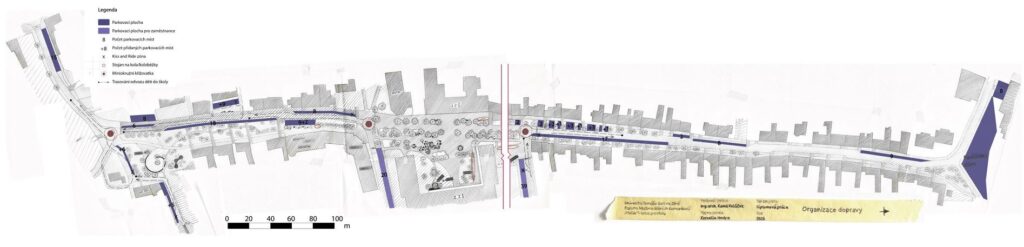
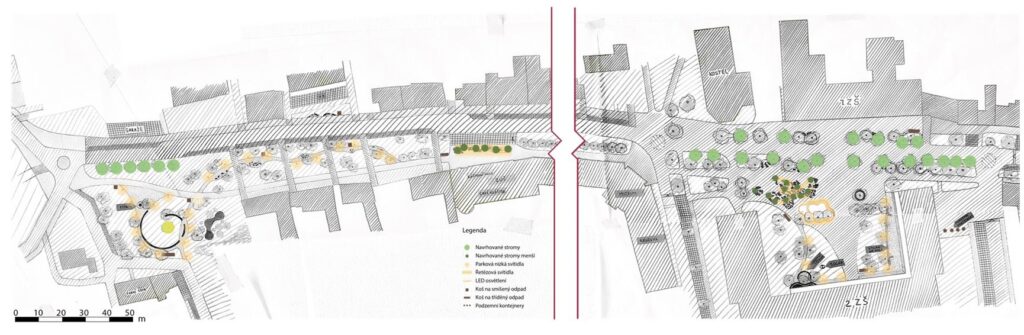
In the section near Havlíčkovy sady and the elementary schools, a transformation of the traffic logic is proposed in the form of a shared space – a shared environment without strict separation between pedestrians and vehicles. This regime is supported by additional traffic-calming elements, such as mini roundabouts, chicanes, and the material treatment of surfaces.
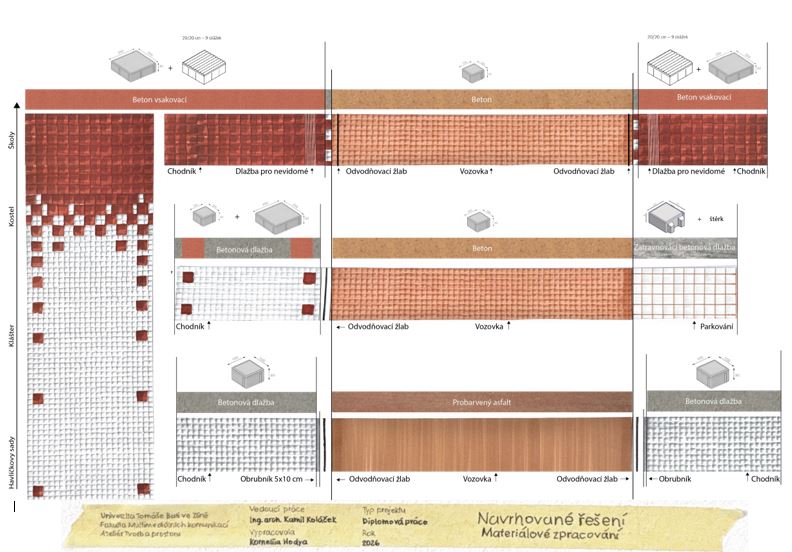
To create a residential character for the environment, concrete paving was chosen, which, through different shades and formats, distinguishes the individual functions of the space – pedestrian movement, vehicular movement, and parking areas. This material solution also transforms the psychological perception of the environment and increases its clarity and legibility, thereby enhancing the safety and friendliness of the space for its users.
The design expands parking areas, particularly near the kindergarten in Havlíčkovy sady and at other locations where spatial conditions allow without reducing the attractiveness of the public space. At the same time, kiss and ride zones are proposed at several points along the street, with the aim of relieving vehicular traffic immediately in the vicinity of the elementary schools.
Public Amenities
After addressing traffic organization, it was equally important to focus on the public amenities along the street. Within this theme, the project addressed three areas – Havlíčkovy sady, the central part of the street, and the space in front of the residential buildings.
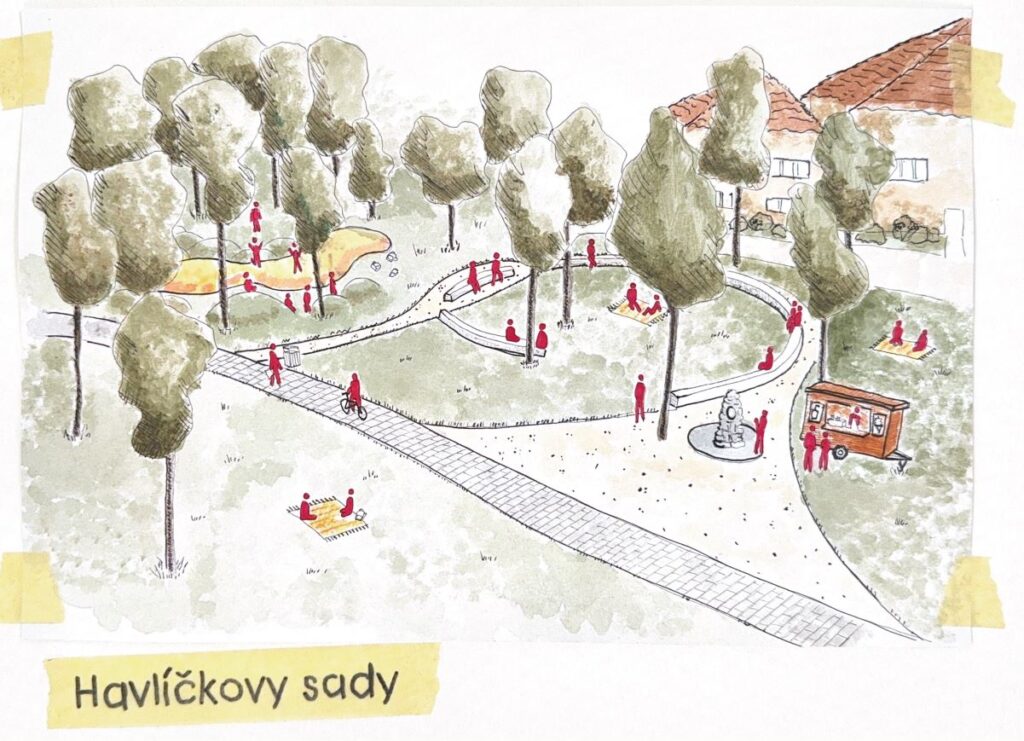
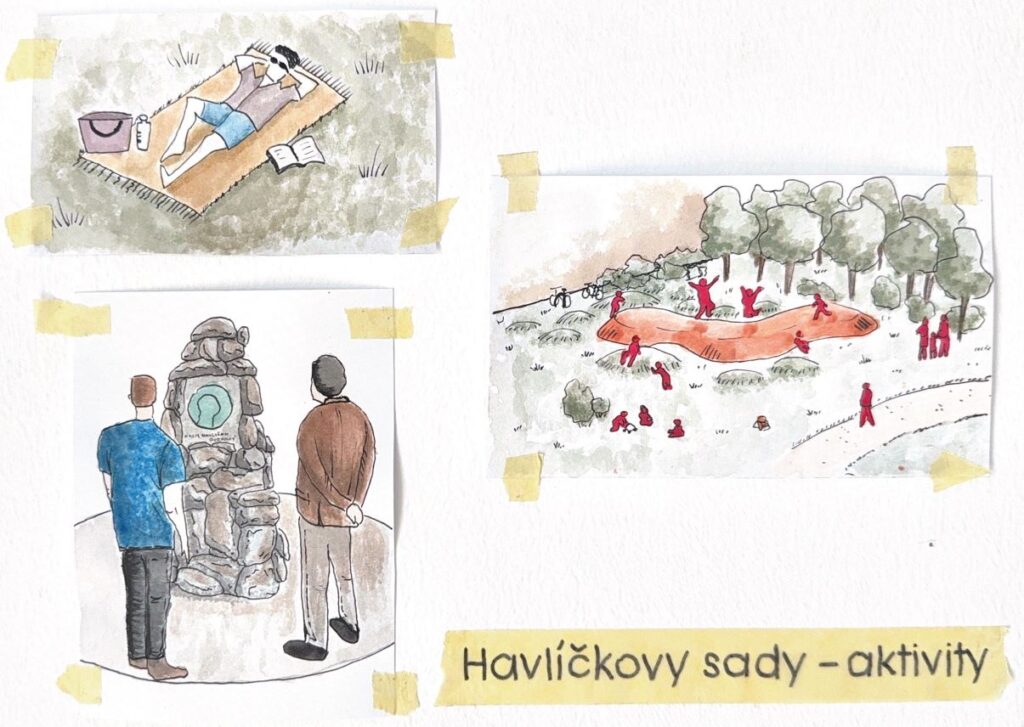
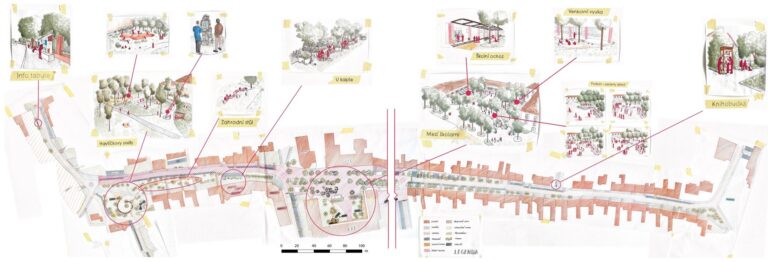
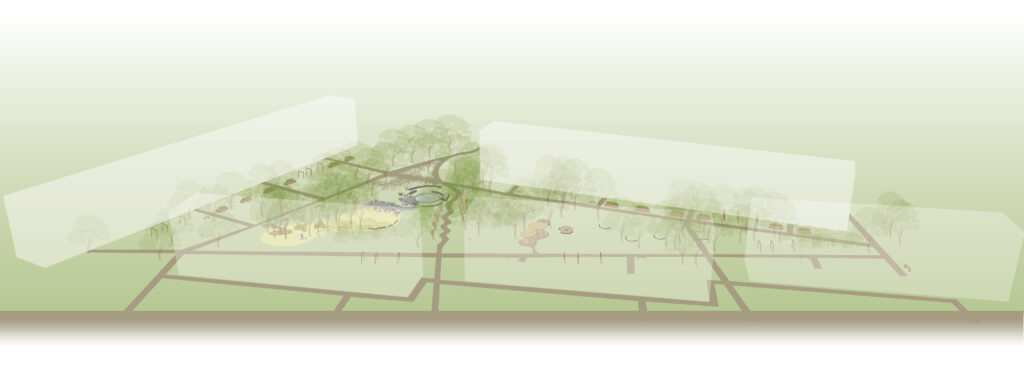
In Havlíčkovy sady, new paths were added, which also gave the existing Borovský memorial a more dignified setting. A spiral seating area and a jumping area with terrain mounds were added as well.
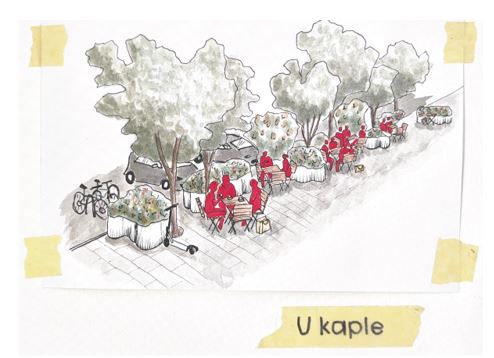
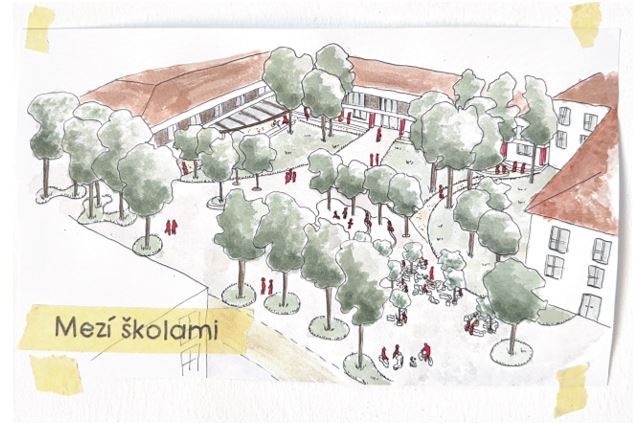
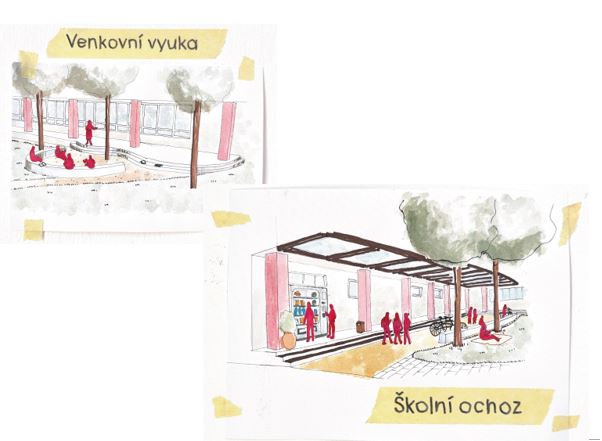
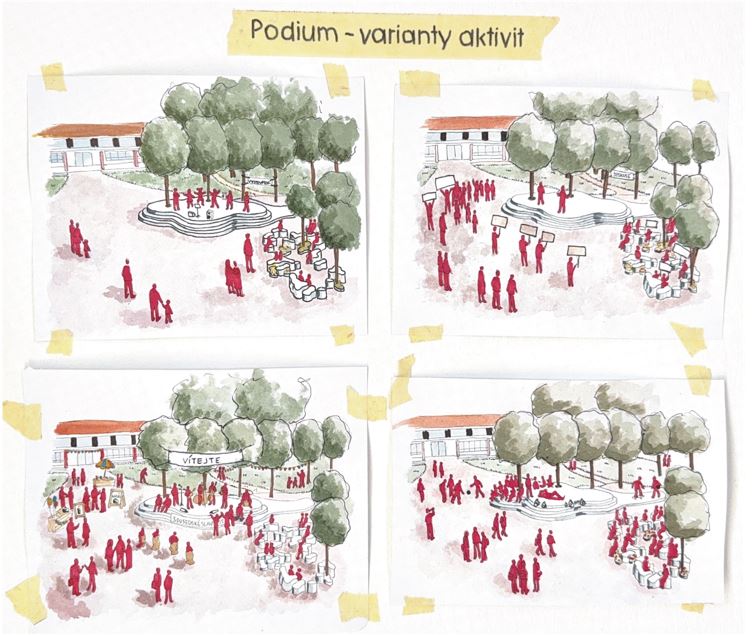
In the central part, near the monastery, a new outdoor terrace was designed for the existing café. In the space between the schools, the reduction of unused greenery created a multi-level seating area and a podium, which serves a range of uses – either by the school or by residents of the street. At the second elementary school, the walkway was made accessible through seating areas, creating a natural vantage point for observing street life as well as a space for outdoor teaching.
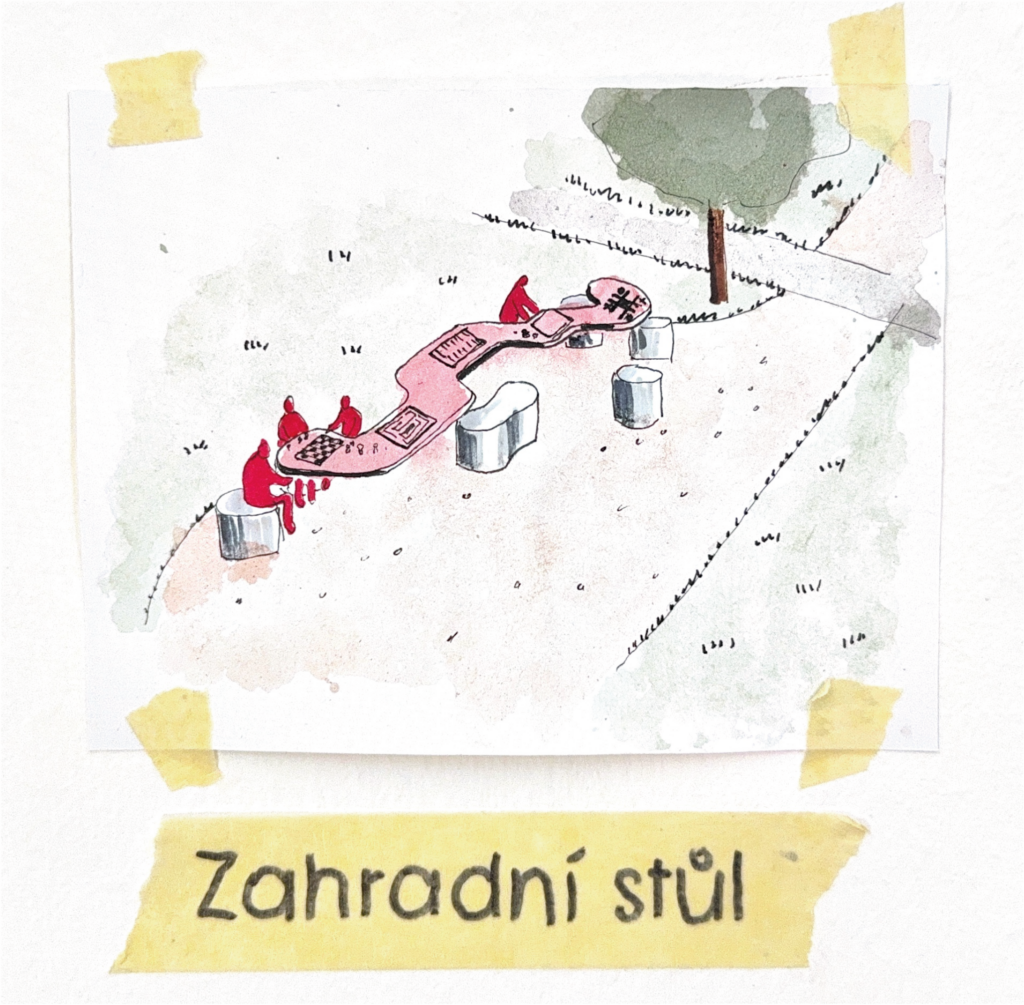
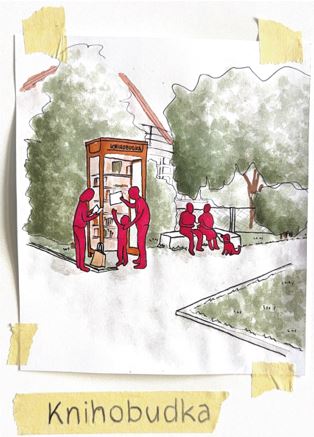
Near the residential buildings, the design includes a garden table for neighborhood gatherings, as well as a little free library as another point for stopping and interaction.
In addition to the topics described above, the design also briefly addresses lighting, greenery, and waste management. These areas are not part of the detailed solution within the thesis but were considered at a basic conceptual level to ensure consistency with the overall character of the proposed space.
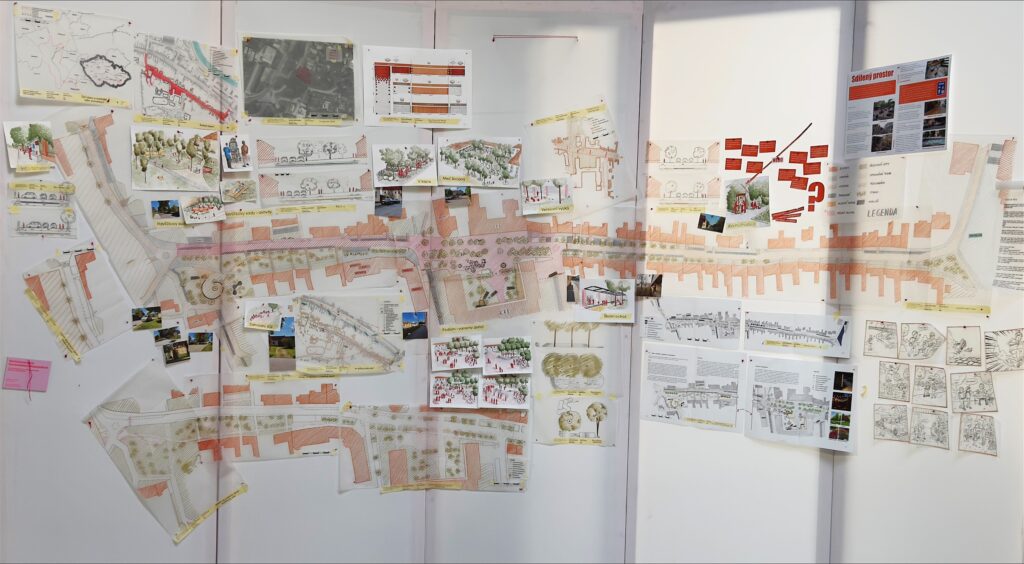
The hand-made execution of the entire visual presentation of the thesis is a deliberate commentary on the era in which it was created. In an environment where creative work itself increasingly takes place through a screen, the hand-drawn line represents a small act of resistance – a return to slowness, physicality, and direct contact with material, qualities that are gradually disappearing from both public and personal space.
Just as the thesis itself addresses the question of how to restore human scale and space for genuine encounter to the street, its form also seeks to step outside the digital bubble and offer an alternative to the speed and mediation that define most visual production today. The hand-drawn line thus carries the same message as the proposed public space – to slow down, to be present, and to relearn how to pay attention to what is real.