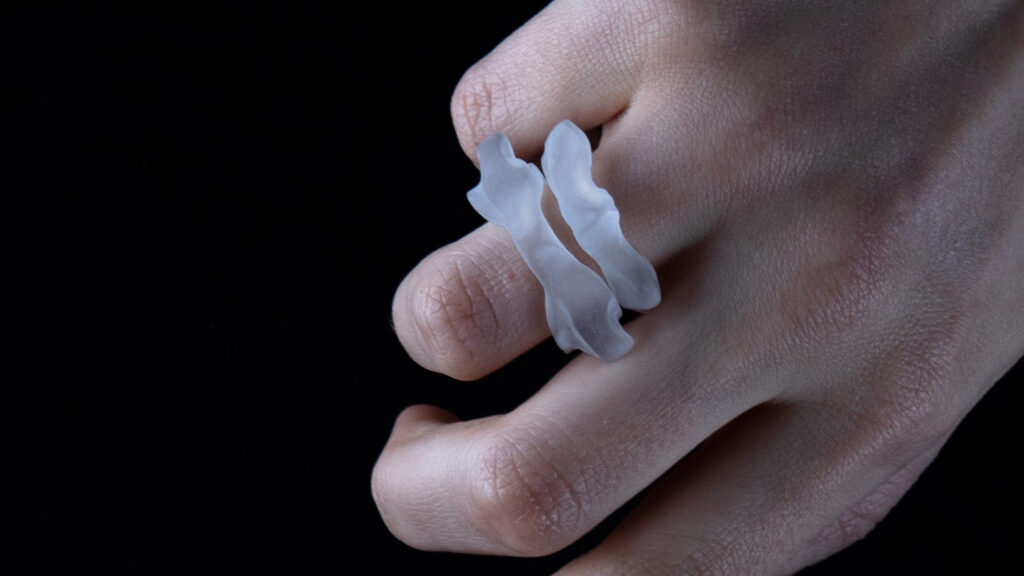
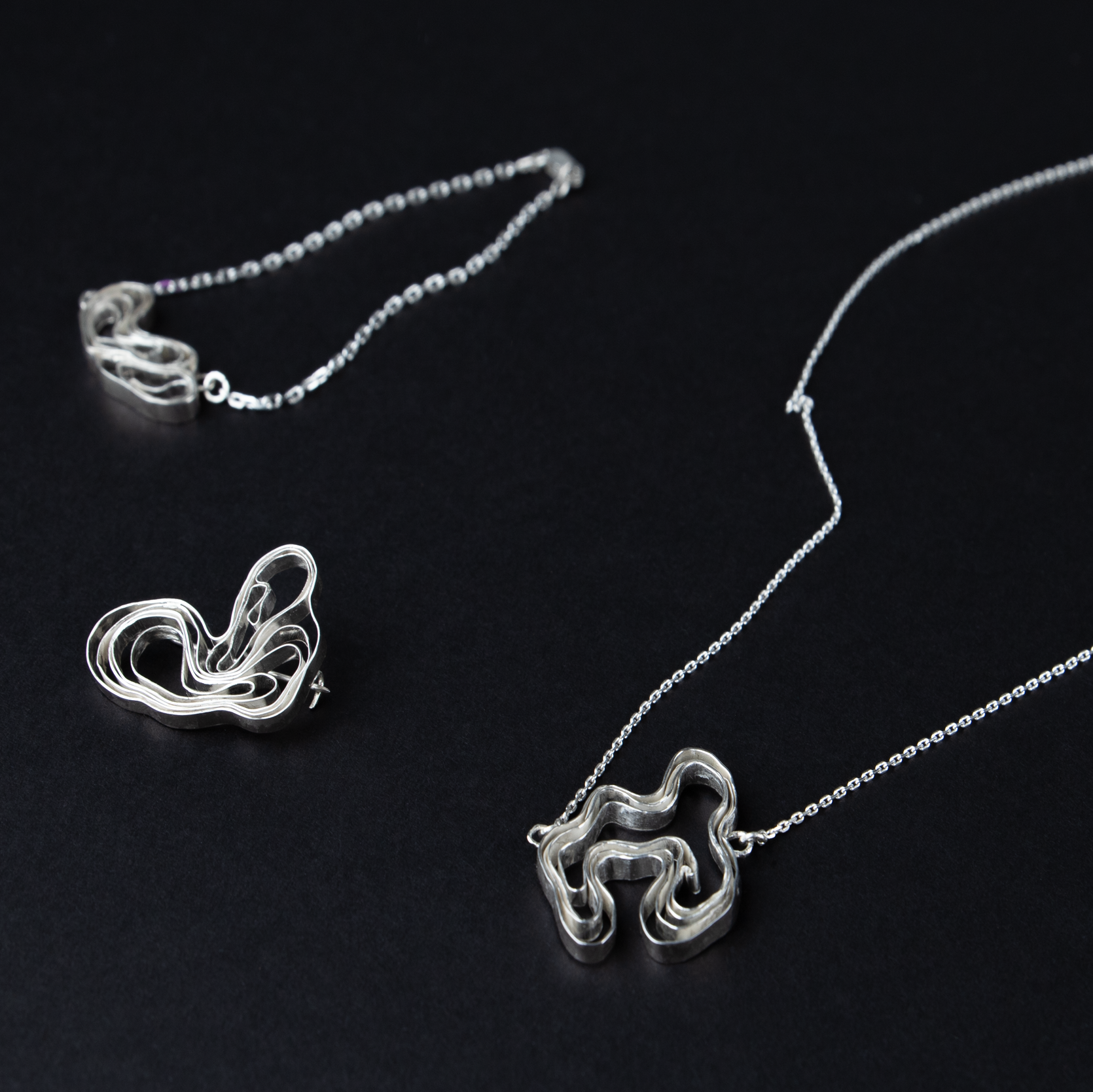
The collection of silver jewellery is based on the social structure of Great Moravia and translates it into contemporary jewellery design. It focuses on three main layers of society at that time: the common people, the Church, and the aristocracy.
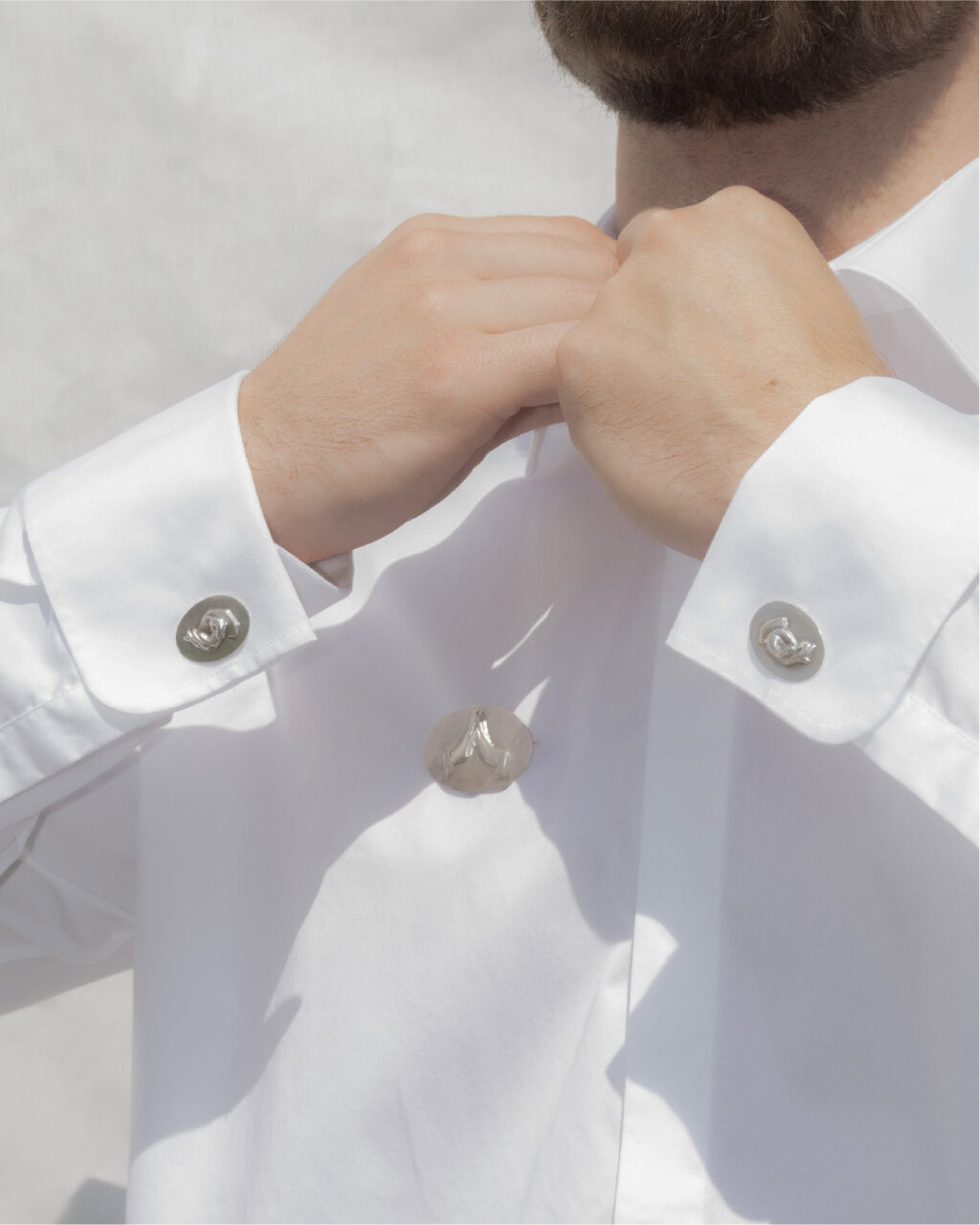
The collection consists of cufflinks, a brooch, and a pendant. Each piece represents a different relationship between the individual and power, work, spiritual authority, or social status.
The unifying motif of the collection is the human palm. Here, it functions as a symbol of gesture, power, service, and identity. The hands refer to the way social roles are expressed through the body, posture, and external signs.
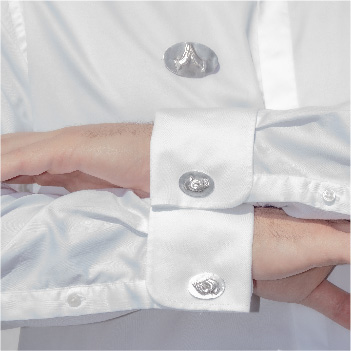
The common people represented the largest group within Great Moravian society. Their position was mainly connected with work, service, and the everyday provision of life. The cufflinks refer to hands as tools of labour. They are placed on the wrists, at the point of movement and activity. The gesture of an open palm symbolises acceptance and a subordinate position within the social hierarchy of the time.
The Church held an important spiritual and political position in Great Moravia. It was associated with education, faith, and the spread of Christianity, which shaped the character of society at that time. The brooch is based on the motif of the hand as a gesture of blessing, guidance, and spiritual authority. Its placement on the chest refers to faith, inner conviction, and a visible sign of belonging.
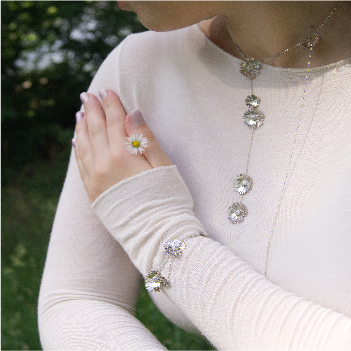
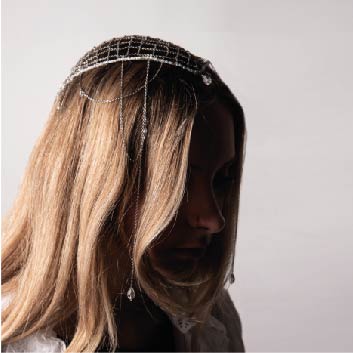
The aristocracy and the ruler stood at the top of society. Their power was political, military, and representative. This social layer determined the order of society. In the collection, it is represented by a piece of jewellery placed near the head, as a motif of power.