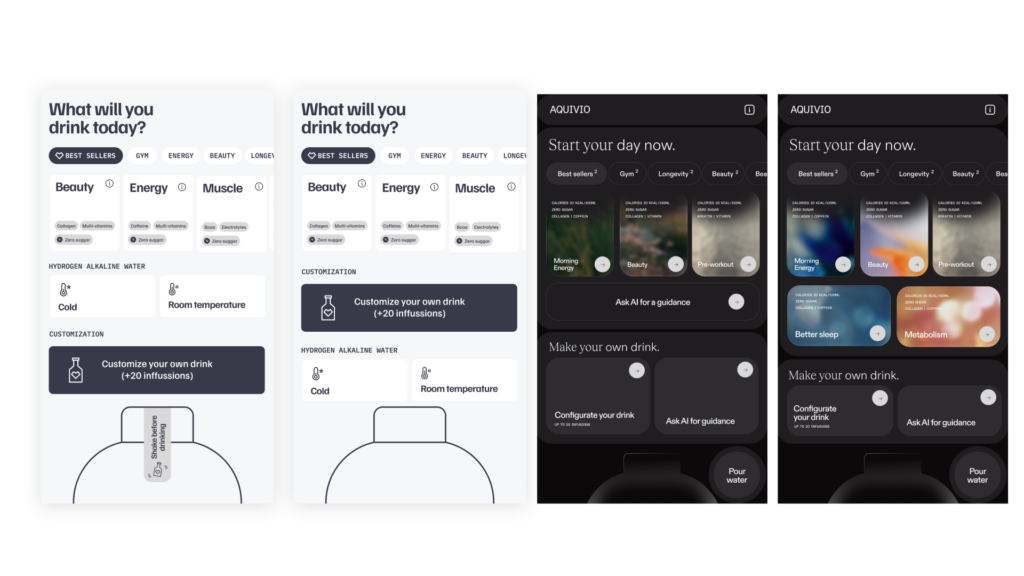
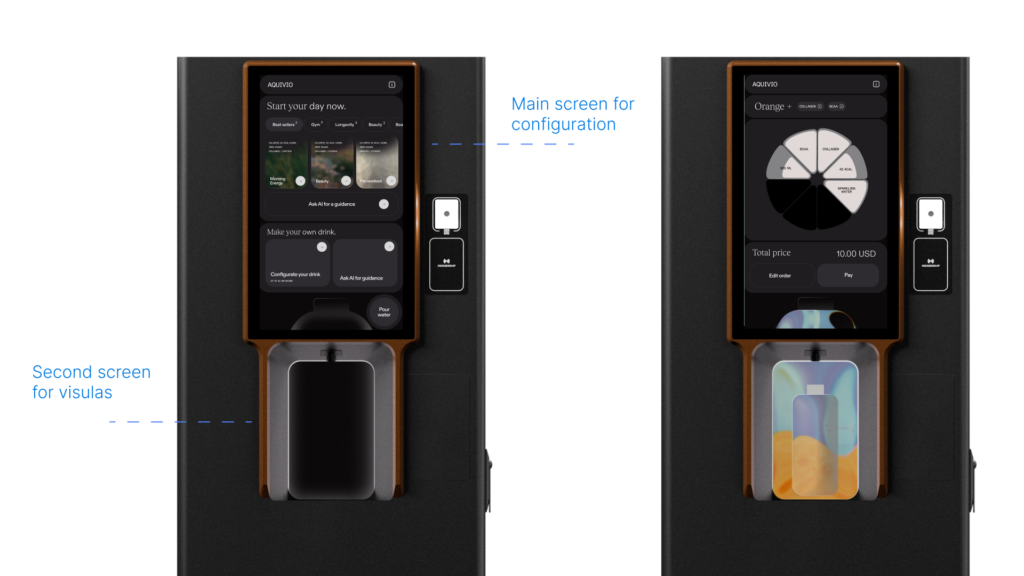
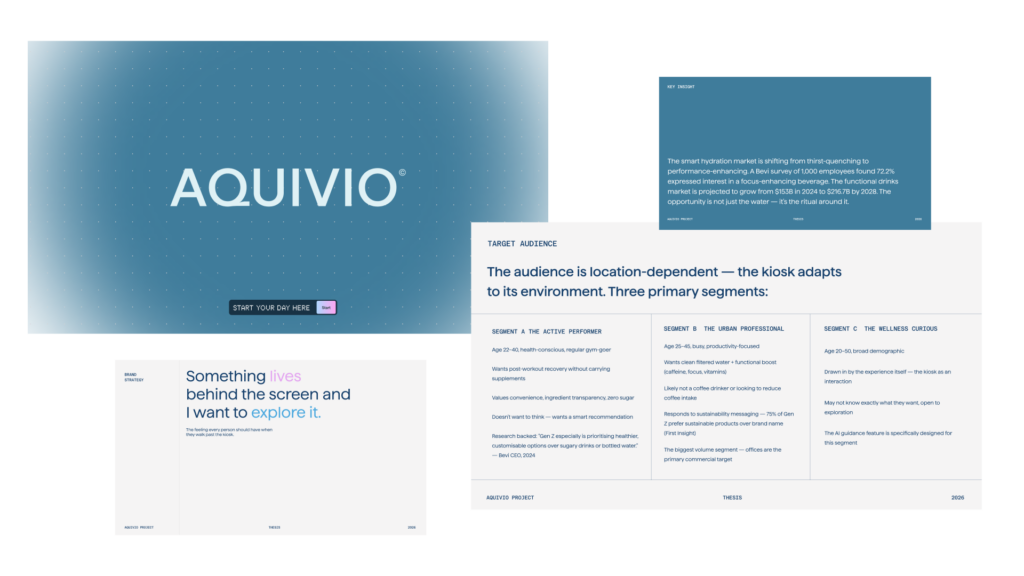
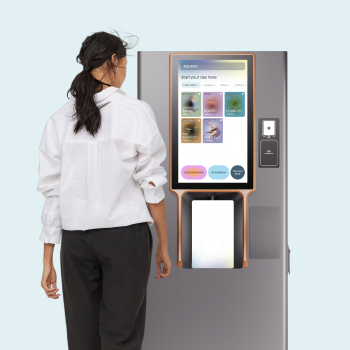
My diploma thesis explores how an immersive web experience can transform the shopping interface in e-commerce. Instead of the classic “add to cart,” I designed and coded an interactive Aquivio kiosk, a touch interface for mixing your own flavored water to order.
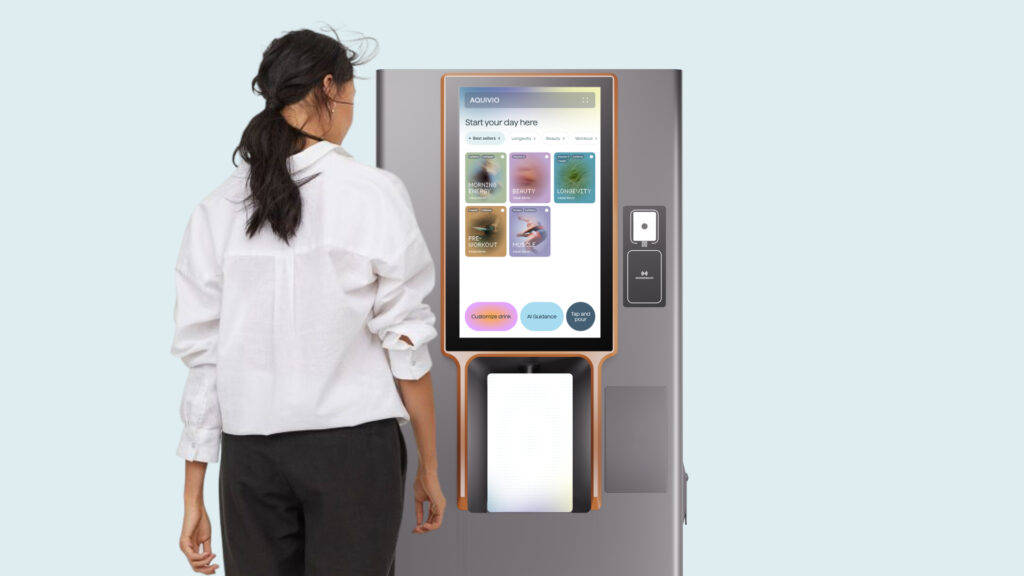
The project is built as a working prototype in React and Vite for a portrait touchscreen display (1080 × 1920). The entire interface runs on a custom design system with tokens.css as the single source of truth, which keeps the visual language consistent across all screens.
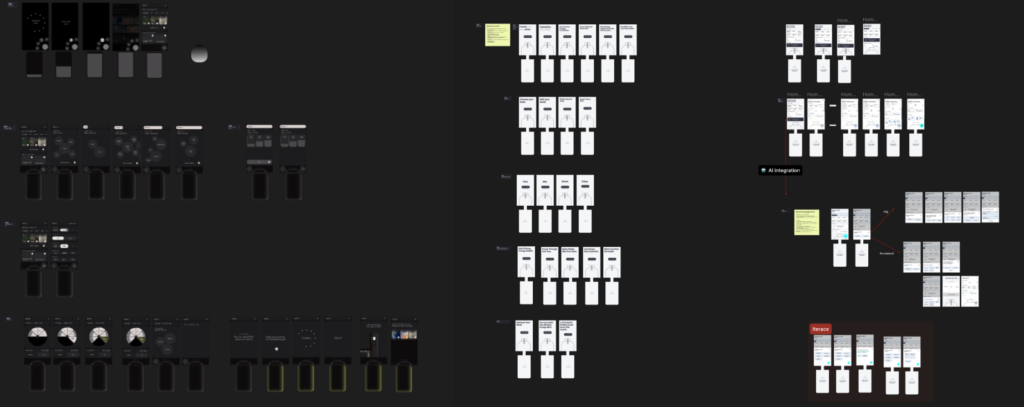
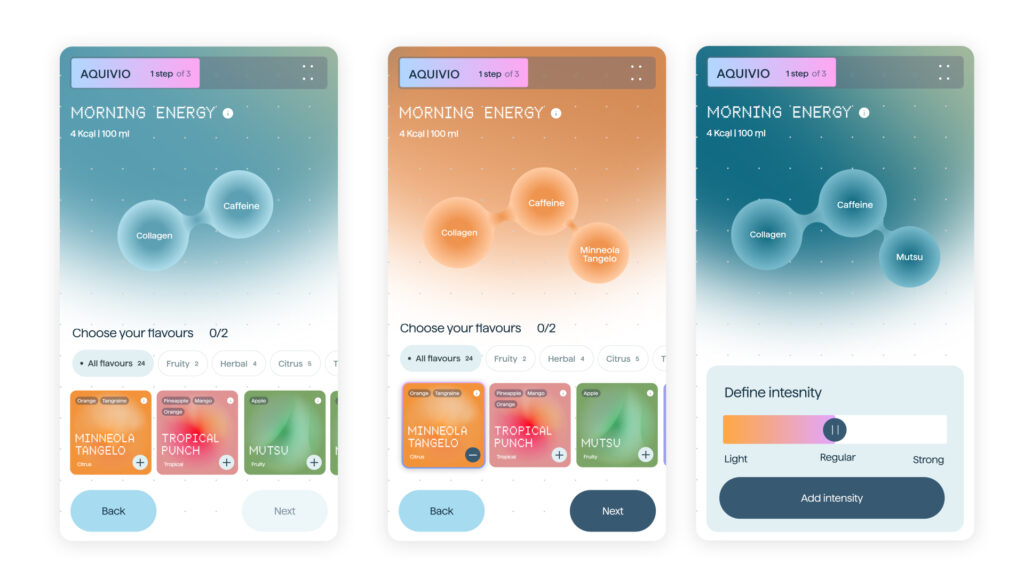
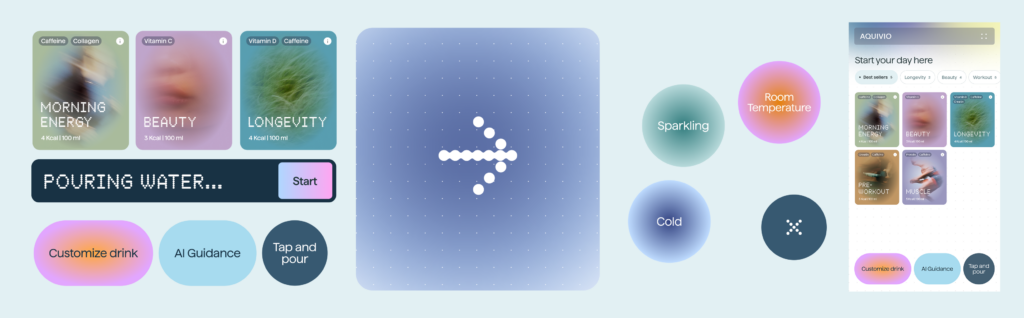
The user moves through the whole journey: from a home screen with an animated aurora background and frosted-glass elements, through a configurator with fluid “metaball” bubbles and infusion selection, all the way to review, payment, and the pouring phase itself with its animations. There’s also an AI Guidance quiz that recommends a drink based on your mood and needs.
This project was a breakthrough for me. As a designer, I’ve always worked somewhere in the gap between vision and what’s technically feasible. But working with Claude Code, I was able to translate the design into a functional prototype one to one, with no compromises and without having to rely on someone else. I could test the design in real time directly in the browser, immediately see what worked and what didn’t, and gradually refine and improve it. The design stopped being a static image and became a living thing I could touch and keep developing.
All animations and effects are written cleanly, with no external UI libraries. The focus was on smoothness, kiosk performance, and a sensory, “juicy” attention to detail that turns shopping into an experience rather than a transaction.